How to Write Project Chapter Two (Literature Review) in Nigeria Step-by-Step
Learn how to write Project Chapter Two (Literature Review) in Nigeria with the correct structure, examples, empirical review steps, common mistakes, and supervisor-approved format.

Project Chapter Two, known as the Literature Review, is one of the most important chapters in a Nigerian final year project, thesis, or dissertation. It shows your supervisor that you understand existing research, relevant theories, and how your study fits into what has already been done.
Many Nigerian students fail Chapter Two not because their topic is bad, but because they summarize blindly, arrange literature author by author, or fail to identify a clear research gap.
This guide explains exactly how to write Chapter Two in Nigeria, using the structure accepted by most Nigerian universities, polytechnics, and colleges of education.
What Is Project Chapter Two (Literature Review)?
Chapter Two is the section of your project where you review existing scholarly works related to your study. These works include textbooks, journals, theses, dissertations, and credible academic articles.
The purpose is not to copy what others have written, but to:
- Show what has already been studied
- Compare findings, theories, and methods
- Identify gaps your research will fill
- Build a solid foundation for your own study
In Nigerian institutions, Chapter Two is usually structured into conceptual, theoretical, and empirical reviews.
Standard Structure of Project Chapter Two in Nigeria
Most Nigerian supervisors expect Chapter Two to follow this format:
2.0 Introduction or Preamble
2.1 Conceptual Review
2.2 Theoretical Framework
2.3 Empirical Review of Related Studies
2.4 Appraisal, Summary, and Research Gap
The headings may be slightly adjusted depending on your school, but the content remains the same.
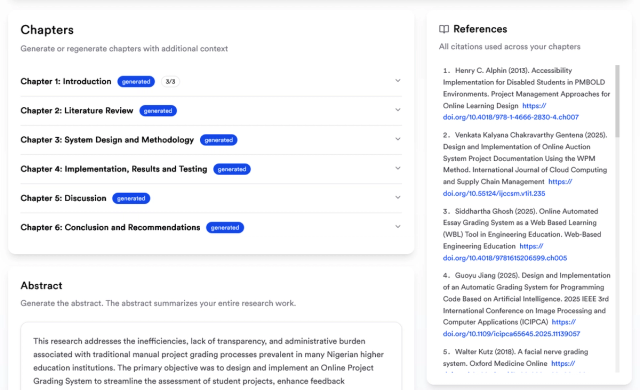
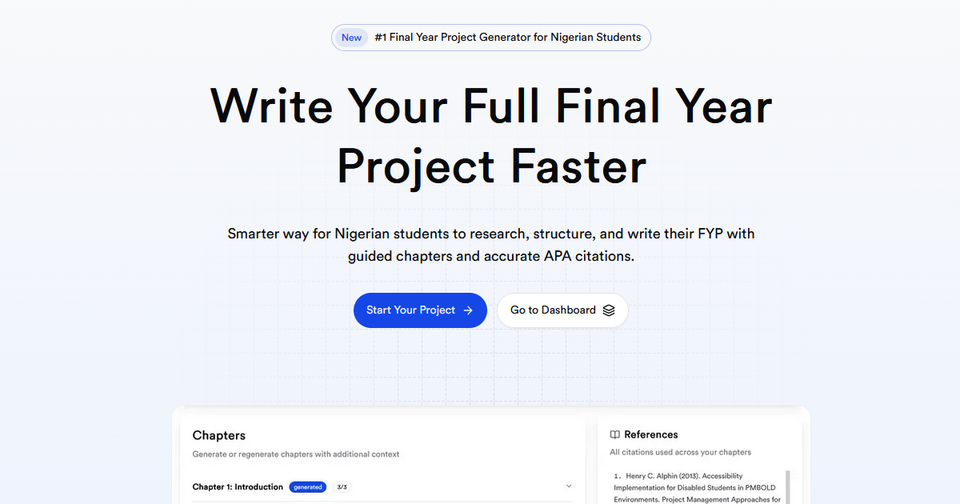
🔥 This same structure is already built into tools such as the MonoEd Final Year Project Generator, which guides students through conceptual, theoretical, and empirical reviews using formats accepted by Nigerian universities.
2.0 Introduction to Chapter Two
The introduction briefly explains what Chapter Two covers. It reassures your supervisor that you understand the structure of academic research.
Example Introduction
This chapter reviews literature relevant to the study. The review is discussed under the following sub-headings: conceptual framework, theoretical framework, empirical review of related studies, and appraisal of the reviewed literature.
Keep it short. One or two paragraphs is enough.
2.1 Conceptual Review
The conceptual review explains and defines key concepts and variables related to your study. This section answers the question: What do the major terms in my topic mean?
What to Include
- Definitions from multiple scholars
- Explanation of independent and dependent variables
- Relationships between concepts
- Conceptual models or diagrams if required
Example
If your topic is The Effect of Study Habits on Academic Performance, concepts to review include:
- Study habits
- Academic performance
- Learning outcomes
- Time management
Always cite authors and compare definitions instead of using one source.
2.2 Theoretical Framework
The theoretical framework discusses the theories or models that support your research.
What Nigerian Supervisors Expect
- Name of the theory
- Origin and main assumptions
- Key proponents
- Relevance of the theory to your study
Example
For education or management topics, common theories include:
- Maslow’s Hierarchy of Needs
- Spillover Theory
- Human Capital Theory
- Theory of Planned Behavior
You must clearly explain why the theory fits your research, not just describe it.
2.3 Empirical Review of Related Studies
This is the most important part of Chapter Two.
The empirical review discusses previous studies that are similar to your research, focusing on how they were conducted and what they found.
What an Empirical Review Should Contain
For each study, mention:
- Author and year
- Purpose of the study
- Research design
- Population and sample size
- Data collection instrument
- Method of data analysis
- Major findings
💡 Many Nigerian students struggle with sourcing relevant empirical studies and formatting citations correctly in Chapter Two. Tools like the Nigerian Final Year Project Generator help students research credible literature, structure Chapter Two properly, and generate empirical reviews with accurate APA citations in minutes.
Correct Way to Write Empirical Review in Nigeria
Organize studies by themes, not author by author.
Example Theme
Studies on Study Habits and Academic Performance
Then review multiple studies under that theme, comparing findings and methods.
Wrong Approach
- Author A said this
- Author B said that
- Author C said something else
Correct Approach
- Several studies have examined the relationship between study habits and academic performance. While some researchers found a strong positive relationship, others reported moderate or insignificant effects, depending on methodology and sample size.
This shows synthesis and critical thinking.
2.4 Appraisal of Reviewed Literature and Research Gap
This section summarizes the reviewed literature and clearly identifies what previous studies failed to address.
How to Identify a Research Gap
You can identify gaps based on:
- Location, for example lack of Nigerian studies
- Methodology used
- Variables not considered
- Outdated data
- Population differences
Example Gap Statement
Despite numerous studies on study habits and academic performance, few studies have examined this relationship among public secondary school students in South-West Nigeria using mixed research methods. This study seeks to fill this gap.
This statement justifies your research.
Key Writing Tips for Chapter Two in Nigeria
- Organize literature by themes, not authors
- Critique studies instead of summarizing them
- Use recent and credible sources
- Paraphrase properly and cite all sources
- Ensure Nigerian context is well represented
- Use linking words like however, similarly, in contrast
Common Mistakes Nigerian Students Should Avoid
- Listing authors one after another
- Copying literature verbatim
- Using irrelevant studies
- Failing to identify a clear research gap
- Ignoring supervisor or departmental format
These mistakes are the main reasons Chapter Two gets rejected.
Conclusion
Writing Project Chapter Two in Nigeria requires planning, structure, and critical thinking. When done properly, it strengthens your entire project and makes Chapter Three easier to write.
If you organize your literature by themes, critique previous studies, and clearly identify a research gap, your supervisor will approve your Chapter Two with minimal corrections.
If you want to write Chapter Two faster without struggling with structure, citations, or formatting, the Final Year Project Generator for Nigerian Students allows you to generate guided chapters, empirical reviews, and APA-formatted references in a clean Word document.
👉 You can also read on: How to Write Your Final Year Project in Nigeria: Complete Step-by-Step Guide
FAQs
How long should Chapter Two be in Nigeria?
There is no fixed length. It depends on your institution. Undergraduate projects may have 20 to 40 pages, while postgraduate theses may exceed 100 pages.
Can I include foreign studies?
Yes. Start with global studies, then African studies, and finally Nigerian studies.
Is it compulsory to include theories?
Yes. Most Nigerian supervisors require at least one relevant theory.
Can research gap be a separate heading?
Some schools allow it, especially for postgraduate research. Follow your departmental guideline.
About the Author
Mohammad-Jamiu B. Balogun, GMNSE
AI Security Researcher · Founder, MonoEd Africa
Mohammad-Jamiu is a First-Class Telecommunications Engineer and Best Graduating Student (BUK), and an AI security researcher. He founded MonoEd Africa to give Nigerian students AI-powered academic tools — from SIWES logbooks to final year projects. His work has reached over 10,000 students across Nigeria.