How to Write a Statement of the Problem for a Final Year Project in Nigeria (2026)
Learn how to write a clear statement of the problem for your final year project in Nigeria, with a simple structure, examples, template and common mistakes to avoid.

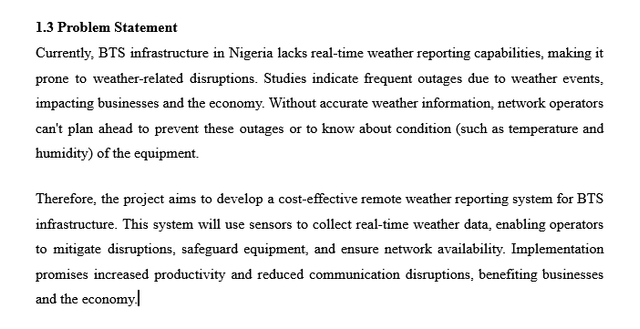
Quick Summary
A statement of the problem is the part of Chapter One that clearly explains the issue your final year project will study. It should show the ideal situation, the actual problem, who is affected, the gap in knowledge or practice, and why the study is necessary.
How to Write a Statement of the Problem for a Final Year Project in Nigeria
Many final year students have an approved topic but still get stuck when their supervisor asks, “What exactly is the problem you are trying to solve?”
That answer becomes your statement of the problem.
It is one of the most important parts of Chapter One because it gives your whole project a direction. If the problem is unclear, your objectives, research questions, methodology and conclusion may also become confusing.
This guide explains how to write a strong statement of the problem for a final year project in Nigeria, with a simple structure, examples and a copy-friendly template.
Your department may use a slightly different Chapter One format. Always follow your supervisor’s instructions and departmental guide first.
What Is a Statement of the Problem?
A statement of the problem is a short and focused explanation of the issue your research wants to investigate.
It explains:
- What should normally be happening
- What is actually happening
- Why the situation is a concern
- Who is affected
- Why the research is needed
For example, if your topic is about the effect of social media on students’ academic performance, the problem is not simply that students use social media.
The real problem may be that students spend a large part of their study time on social media, but there is not enough clear evidence about how this affects their academic performance in a particular institution, department or location.
Where Does the Statement of the Problem Go in Chapter One?
In most Nigerian university and polytechnic project formats, the statement of the problem comes after the background of the study and before the aim and objectives.
A common Chapter One order is:
- Background of the study
- Statement of the problem
- Aim and objectives of the study
- Research questions
- Research hypotheses, where required
- Significance of the study
- Scope of the study
- Definition of key terms
For a wider explanation of the whole chapter, read our guide on how to write Chapter One of a final year project in Nigeria.
Statement of the Problem vs Background of the Study
Students often mix up these two sections.
The background of the study introduces the topic. It gives context, explains important concepts and shows what previous studies or reports have said.
The statement of the problem narrows everything down. It points directly to the issue that needs to be studied.
| Background of the study | Statement of the problem |
|---|---|
| Introduces the broad topic | Identifies the specific issue |
| Explains what is already known | Shows what is missing, wrong or unclear |
| Can cover history and previous studies | Focuses on why this exact study is needed |
| Usually longer | Usually shorter and more direct |
The Simple Structure to Follow
A good statement of the problem usually has four parts.
1. Start with the expected or ideal situation
Briefly explain what should normally happen.
For example:
Effective record management is expected to help organisations keep accurate information, make quicker decisions and reduce errors.
2. Show the actual situation or concern
Explain what is happening instead.
However, many small organisations still depend on paper files and scattered records, which can lead to missing information, delays and poor access to important documents.
3. Explain the effect of the problem
Show why the issue matters.
This may affect the quality of decisions, customer service and the overall efficiency of the organisation.
4. State the gap and need for the study
End by showing what the research will examine.
Although digital record systems are becoming more common, there is still a need to examine the factors affecting the adoption of electronic record management among small businesses in Kano metropolis.
That is the basic flow:
Expected situation → actual issue → effect of the issue → need for the study
How to Write Your Statement of the Problem Step by Step
Step 1: Understand your approved topic
Before writing, break your topic into three parts:
- The main issue
- The people, place or organisation involved
- What you want to examine
For example:
Topic: Effect of social media use on academic performance among undergraduate students of [Institution Name].
The main issue is social media use and academic performance.
The group is undergraduate students.
The setting is your institution.
Step 2: Find evidence that the problem exists
Do not write a problem statement based only on personal opinion.
Use credible journal articles, textbooks, official reports, institutional records or past studies to understand the issue. You may also use observations from your school or field, but do not invent statistics, survey results or references.
Good questions to ask are:
- What have researchers already said about this issue?
- What negative effect does the issue create?
- What is still unclear?
- Has the issue been studied in my location, department or target group?
Step 3: Identify the real gap
The gap is what your study adds.
It may be:
- A population that has not been studied enough
- A location that previous studies did not cover
- A current issue that needs fresh evidence
- Conflicting findings from earlier studies
- A practical problem that has not been properly examined
For example:
Several studies have examined social media use and academic performance. However, there is limited recent evidence on how the use of short-form video platforms affects the study habits of undergraduate students in [Institution Name].
Step 4: Write one focused problem
Do not try to solve every problem in your field.
Your statement of the problem should connect directly to your title and later objectives. If your project is about online learning, do not suddenly discuss unemployment, insecurity and poor roads unless they are directly connected to the study.
Step 5: Check that it leads naturally to your objectives
After writing it, ask yourself:
Can my research objectives realistically investigate this problem?
If the answer is no, adjust the problem statement or refine your topic.
Statement of the Problem Template
You can use this template as a starting point. Replace the words in brackets with details from your own study and support important claims with real sources.
[Topic area] is important because [explain the expected or ideal situation]. However, [state the actual issue or concern]. This problem may lead to [mention the effects on students, organisations, communities or another group]. Although [mention what is already known or what has been done], there is still limited information about [state the specific gap] among [target group] in [location or institution]. This study therefore examines [your exact focus].
Example 1: Computer Science Project
Topic: Design and Implementation of an Online Student Attendance Management System
Attendance is an important part of academic administration because it helps lecturers and departments monitor students’ participation in lectures and other academic activities. However, in many tertiary institutions, attendance is still recorded manually using paper sheets or class registers. This method can be time-consuming, difficult to organise and open to errors or inaccurate records. It may also make it difficult for lecturers and departments to retrieve attendance information when needed. Although different digital attendance solutions exist, some departments still lack a simple system designed around their own class structure and needs. This project therefore focuses on the design and implementation of an online student attendance management system for [Department or Institution].
Example 2: Business Administration Project
Topic: Effect of Digital Payment Systems on the Performance of Small Businesses in Kano Metropolis
Digital payment systems are expected to make business transactions faster, easier to track and more convenient for customers. However, some small businesses still rely mainly on cash transactions despite the growing use of bank transfers, point-of-sale terminals and mobile payment platforms. Challenges such as transaction charges, network failure, limited trust and poor knowledge of digital tools may affect adoption. This can limit the ability of small businesses to serve customers conveniently and keep proper transaction records. While previous studies have discussed digital payments in Nigeria, there is a need to examine how these systems affect the performance of small businesses in Kano metropolis. This study therefore investigates the effect of digital payment systems on the performance of selected small businesses in Kano metropolis.
Example 3: Mass Communication Project
Topic: Influence of Social Media News on Students’ Perception of National Issues
Social media platforms have become an important source of news and discussion for many students. Through platforms such as X, Facebook, Instagram, TikTok and WhatsApp, students can receive information about national events within minutes. However, the speed at which information spreads online also creates concerns about misinformation, incomplete reports and content shared without proper verification. This may affect how students understand and respond to national issues. Although social media news has been widely discussed, there is still a need to examine its influence on the perception of undergraduate students in [Institution Name]. This study therefore investigates the influence of social media news on students’ perception of national issues.
Example 4: Education Project
Topic: Influence of Artificial Intelligence Tools on Students’ Study Habits
Artificial intelligence tools are increasingly being used by students to explain difficult topics, summarise materials, generate study plans and support academic writing. When used responsibly, these tools may help students learn more effectively. However, there are concerns that some students may depend on AI tools without properly reading, thinking through ideas or checking the accuracy of generated content. This may affect independent learning and study habits. Although AI tools are now widely available to students, there is still a need to understand how their use influences the study habits of undergraduates in [Institution Name]. This study therefore examines the influence of artificial intelligence tools on students’ study habits.
Common Mistakes to Avoid
Writing only a general introduction
Do not spend the whole section explaining the history of your topic. Move quickly to the exact issue your study will investigate.
Adding your objectives inside the problem statement
Statements like “The study aims to examine” belong more naturally under the aim and objectives section. Your problem statement should first establish why the study is needed.
Claiming things without evidence
Avoid statements such as “most students are addicted to social media” unless you can support them with a credible source or your own properly collected research data.
Inventing statistics or references
Never add figures, survey results or citations that you cannot verify. Your supervisor can easily ask where they came from.
Giving the solution before explaining the problem
First explain the issue. Your project can later recommend or build a solution, but the statement of the problem should make the need clear.
Making the problem too broad
A topic about students in one institution should not suddenly become a study of all Nigerian students unless your study is actually designed that way.
Quick Checklist Before You Submit
Before you move to your objectives, check that your statement of the problem:
- Clearly identifies one researchable issue
- Matches your approved topic
- Explains why the issue matters
- Identifies the people, place or group affected
- Shows the gap your study will address
- Uses evidence where needed
- Does not include invented facts or references
- Leads naturally to your research objectives and questions
Need Help Turning Your Topic Into a Clear Project Structure?
Once your topic is approved, the next challenge is usually connecting the problem, objectives, literature review and methodology without losing direction.
MonoEd Final Year Project Generator can help you organise your approved topic and genuine source notes into a structured project draft. Review every section, use real references, edit it in your own words and follow your supervisor’s corrections before submission.
Frequently Asked Questions
How long should a statement of the problem be?
For many undergraduate projects, one to three focused paragraphs is enough. The exact length depends on your department, topic and supervisor’s instructions. Clarity matters more than making it long.
Can I write the statement of the problem in bullet points?
Most departments expect it in clear paragraphs, not bullet points. Use bullets only if your departmental guide or supervisor specifically requests them.
Does every final year project need a statement of the problem?
Most research-based final year projects do. However, the exact heading and placement can differ across departments. Confirm with your supervisor if your guide uses another format.
What is the difference between a research problem and a statement of the problem?
The research problem is the actual issue you want to study. The statement of the problem is the written explanation that clearly presents that issue and shows why it needs research.
Should I add citations to my statement of the problem?
Yes, especially when you make a factual claim, refer to previous studies, use statistics or describe a situation that needs evidence. Use credible and verifiable sources.
Can AI write my statement of the problem for me?
AI can help you organise your ideas or improve a rough draft, but it should not replace your understanding of the topic. Use real sources, check every claim and edit the final version to match your actual study and your supervisor’s requirements.
About the Author
Mohammad-Jamiu B. Balogun, GMNSE
AI Security Researcher · Founder, MonoEd Africa
Mohammad-Jamiu is a First-Class Telecommunications Engineer and Best Graduating Student (BUK), and an AI security researcher. He founded MonoEd Africa to give Nigerian students AI-powered academic tools — from SIWES logbooks to final year projects. His work has reached over 10,000 students across Nigeria.