NJFP Current Affairs Questions and Answers 2026 (50 Likely CBT Questions)
Practice 50 likely NJFP current affairs questions and answers for the 2026 CBT assessment. Covers Nigerian government, history, national institutions, Democracy Day, ICPC, EFCC, INEC, and more.

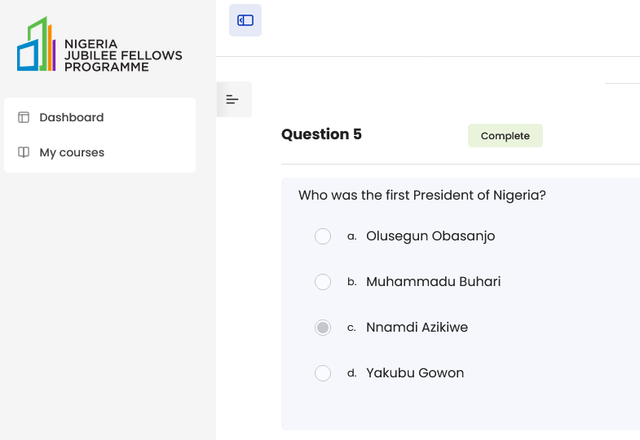
Preparing for the Nigeria Jubilee Fellows Programme CBT? One area many candidates overlook is current affairs.
The NJFP assessment often includes questions about Nigerian history, government institutions, national symbols, public agencies, and important national events. These questions are usually straightforward, but they can cost valuable marks if you are not prepared.
This guide contains 50 likely NJFP current affairs questions and answers based on topics that frequently appear in aptitude tests and fellowship assessments.
Quick Summary
If you are short on time, focus on these topics first:
- Democracy Day (June 12)
- Nigerian President and Vice President
- INEC, EFCC, ICPC, NDLEA, and CBN
- Nigerian independence and republic dates
- National symbols
- NYSC history
- Nigerian Constitution and government structure
- Important historical figures such as Mary Slessor and Nnamdi Azikiwe
You should also practice the full CBT format using our guide on NJFP CBT Assessment Questions and Answers.
Why Current Affairs Matter in NJFP CBT
Many applicants spend all their preparation time on mathematics and verbal reasoning.
However, current affairs questions are often easier to answer and can significantly improve your overall score.
Since the CBT is timed, having strong knowledge of Nigerian current affairs allows you to answer questions quickly and save time for more difficult sections.
NJFP Current Affairs Practice Questions and Answers
1. Who is the President of Nigeria?
A. Muhammadu Buhari
B. Bola Ahmed Tinubu
C. Goodluck Jonathan
D. Olusegun Obasanjo
Answer: B. Bola Ahmed Tinubu
2. What is the capital city of Nigeria?
A. Lagos
B. Kano
C. Abuja
D. Ibadan
Answer: C. Abuja
3. How many states are there in Nigeria?
A. 35
B. 36
C. 37
D. 38
Answer: B. 36
4. When is Democracy Day celebrated in Nigeria?
A. May 29
B. October 1
C. June 12
D. July 1
Answer: C. June 12
5. Who is the Vice President of Nigeria?
A. Atiku Abubakar
B. Yemi Osinbajo
C. Namadi Sambo
D. Kashim Shettima
Answer: D. Kashim Shettima
6. What is Nigeria's official currency?
A. Dollar
B. Pound
C. Euro
D. Naira
Answer: D. Naira
7. Which body conducts elections in Nigeria?
A. EFCC
B. ICPC
C. INEC
D. CBN
Answer: C. INEC
8. What does INEC stand for?
A. Independent National Electoral Commission
B. Internal National Election Council
C. Independent Nigerian Election Committee
D. International Election Commission
Answer: A. Independent National Electoral Commission
9. What does EFCC stand for?
A. Economic and Financial Crimes Commission
B. Economic Fraud Control Commission
C. Federal Crime Commission
D. Financial Enforcement Commission
Answer: A. Economic and Financial Crimes Commission
10. What does ICPC stand for?
A. Independent Corrupt Practices and Other Related Offences Commission
B. Internal Corruption Prevention Council
C. Independent Crime Prevention Commission
D. Integrity Practices Council
Answer: A. Independent Corrupt Practices and Other Related Offences Commission
11. Which agency is responsible for fighting drug trafficking in Nigeria?
A. NDLEA
B. EFCC
C. INEC
D. NNPC
Answer: A. NDLEA
12. What does CBN stand for?
A. Central Budget Network
B. Central Bank of Nigeria
C. Commercial Bank of Nigeria
D. Currency Bank Network
Answer: B. Central Bank of Nigeria
13. What is the primary responsibility of the Central Bank of Nigeria?
A. Conducting elections
B. Managing monetary policy
C. Building roads
D. Collecting taxes
Answer: B. Managing monetary policy
14. In what year did Nigeria gain independence?
A. 1959
B. 1960
C. 1963
D. 1970
Answer: B. 1960
15. On what date did Nigeria gain independence?
A. October 1, 1960
B. June 12, 1960
C. January 1, 1960
D. October 1, 1963
Answer: A. October 1, 1960
16. In what year did Nigeria become a republic?
A. 1960
B. 1961
C. 1963
D. 1966
Answer: C. 1963
17. The amalgamation of Northern and Southern Nigeria took place in:
A. 1910
B. 1914
C. 1920
D. 1935
Answer: B. 1914
18. Who was Nigeria's first President?
A. Tafawa Balewa
B. Nnamdi Azikiwe
C. Yakubu Gowon
D. Olusegun Obasanjo
Answer: B. Nnamdi Azikiwe
19. Who was Nigeria's first Prime Minister?
A. Nnamdi Azikiwe
B. Tafawa Balewa
C. Ahmadu Bello
D. Yakubu Gowon
Answer: B. Tafawa Balewa
20. Who designed the Nigerian flag?
A. Chinua Achebe
B. Wole Soyinka
C. Michael Taiwo Akinkunmi
D. Herbert Macaulay
Answer: C. Michael Taiwo Akinkunmi
21. What does the green colour on the Nigerian flag represent?
Answer: Agriculture
22. What does the white colour on the Nigerian flag represent?
Answer: Peace
23. How many chambers make up the National Assembly?
Answer: Two
24. What are the two chambers of the National Assembly?
Answer: Senate and House of Representatives
25. What is the official language of Nigeria?
Answer: English
26. What is the highest court in Nigeria?
Answer: Supreme Court
27. Who heads the Nigerian judiciary?
Answer: The Chief Justice of Nigeria
28. What is the name of Nigeria's national youth service scheme?
Answer: NYSC
29. What does NYSC stand for?
Answer: National Youth Service Corps
30. In what year was NYSC established?
Answer: 1973
31. What does NNPC stand for?
Answer: Nigerian National Petroleum Company Limited
32. Which sector does NNPC operate in?
Answer: Petroleum and energy
33. What is the national currency symbol of Nigeria?
Answer: ₦
34. Which city was Nigeria's capital before Abuja?
Answer: Lagos
35. What is Nigeria's national anthem called?
Answer: Nigeria, We Hail Thee
36. How many geopolitical zones are there in Nigeria?
Answer: Six
37. Which geopolitical zone is Lagos State located in?
Answer: South West
38. Which agency is responsible for university admissions in Nigeria?
Answer: JAMB
39. What does JAMB stand for?
Answer: Joint Admissions and Matriculation Board
40. What does NAFDAC stand for?
Answer: National Agency for Food and Drug Administration and Control
41. Which agency regulates food and drugs in Nigeria?
Answer: NAFDAC
42. What is the full meaning of DSS?
Answer: Department of State Services
43. Which agency protects Nigeria against internal security threats?
Answer: DSS
44. Who stopped the killing of twins in Calabar?
A. Henry Townsend
B. Mungo Park
C. Mary Slessor
D. Herbert Macaulay
Answer: C. Mary Slessor
45. Which national day commemorates Nigeria's independence?
Answer: Independence Day
46. When is Independence Day celebrated?
Answer: October 1
47. Which arm of government makes laws?
Answer: Legislature
48. Which arm of government interprets laws?
Answer: Judiciary
49. Which arm of government implements laws?
Answer: Executive
50. Which anti-corruption agency works alongside the EFCC in Nigeria?
Answer: ICPC
Tips for Passing the Current Affairs Section
Focus on Government Agencies
Questions about INEC, EFCC, ICPC, CBN, NAFDAC, NDLEA, and DSS appear regularly in aptitude tests.
Know Important National Dates
Memorize:
- Independence Day: October 1
- Democracy Day: June 12
- NYSC Establishment: 1973
- Independence Year: 1960
- Republic Year: 1963
Study National Symbols
Review the Nigerian flag, coat of arms, national anthem, and currency.
Practice Before the CBT
Many current affairs questions are direct knowledge questions. Practicing beforehand can help you answer them in seconds.
For complete preparation, also read our NJFP CBT Assessment Questions and Answers guide, which includes numerical reasoning, verbal reasoning, logical reasoning, situational judgment questions, and a full CBT mock test.
FAQs
Does NJFP CBT include current affairs questions?
Yes. Candidates frequently report seeing questions related to Nigerian history, government institutions, national symbols, public agencies, and important national events.
How many current affairs questions appear in NJFP CBT?
The exact number varies, but current affairs typically form part of the general knowledge section of the assessment.
What should I study for NJFP current affairs?
Focus on Nigerian government, national history, important dates, public institutions, anti-corruption agencies, national symbols, and recent civic developments.
Is Democracy Day important for NJFP CBT?
Yes. Democracy Day is one of the most commonly tested Nigerian current affairs topics. It is celebrated annually on June 12.
What is the easiest way to prepare for NJFP current affairs?
Practice questions regularly, review government agencies and national history, and combine this with a complete CBT mock test before your assessment.
Conclusion
Current affairs questions are among the easiest marks available in the NJFP CBT. While many candidates focus entirely on aptitude questions, a solid understanding of Nigerian government, history, institutions, and national events can improve your overall score significantly.
Spend time reviewing these questions, practice them repeatedly, and combine them with a full CBT mock test to maximize your chances of progressing to the next stage of the Nigeria Jubilee Fellows Programme.
About the Author
Mohammad-Jamiu B. Balogun, GMNSE
AI Security Researcher · Founder, MonoEd Africa
Mohammad-Jamiu is a First-Class Telecommunications Engineer and Best Graduating Student (BUK), and an AI security researcher. He founded MonoEd Africa to give Nigerian students AI-powered academic tools — from SIWES logbooks to final year projects. His work has reached over 10,000 students across Nigeria.