NJFP Requirements 2026: Who Can Apply for the Nigeria Jubilee Fellows Programme?
Check the NJFP requirements for 2026. Learn who can apply, age limits, academic qualifications, NYSC requirements, required documents, and how to know if you are eligible for the Nigeria Jubilee Fellows Programme.

The Nigeria Jubilee Fellows Programme (NJFP) is one of the most sought-after graduate opportunities in Nigeria. The programme connects young graduates with host organizations across the public and private sectors, providing valuable work experience, mentorship, professional development, and a monthly stipend.
However, not everyone is eligible to apply.
Before spending time on the application process, it is important to confirm that you meet all NJFP requirements.
This guide explains the latest eligibility criteria, age limits, academic qualifications, required documents, and other conditions you must satisfy before applying.
Quick Summary
To qualify for the Nigeria Jubilee Fellows Programme (NJFP) in 2026, you must:
- Be a Nigerian citizen
- Be 30 years old or younger
- Have graduated not earlier than 2022
- Hold a bachelor's degree with at least a Second Class Lower (2.2) or an HND with Upper Credit
- Have completed NYSC or possess an exemption certificate
- Not currently be employed
- Have all required application documents ready
If you meet these conditions, you are likely eligible to apply.
What Is the Nigeria Jubilee Fellows Programme (NJFP)?
The Nigeria Jubilee Fellows Programme is a Federal Government initiative designed to help young graduates transition from school into meaningful employment.
The programme is supported by the European Union and implemented in partnership with the United Nations Development Programme (UNDP).
Selected fellows are matched with host organizations where they gain practical workplace experience while receiving professional training and mentorship.
The fellowship lasts for 12 months and includes a monthly stipend of ₦150,000.
💡 You may like to read on:
- NJFP CBT Assessment Questions and Answers 2026 (100+ Practice Test)
- NJFP Introduction Video Script Sample 2026 (60-Second Winning Examples)
NJFP Requirements 2026
Below are the key requirements applicants must satisfy.
1. You Must Be a Nigerian Citizen
Only Nigerian citizens are eligible for the programme.
Applicants may be required to provide identification documents during the application process.
2. You Must Be a Recent Graduate
NJFP is designed for fresh graduates entering the workforce.
For the 2026 application cycle, applicants must have graduated not earlier than 2022.
If you graduated before the stated period, you may not qualify under the current eligibility criteria.
3. You Must Be 30 Years Old or Younger
Applicants must be 30 years old or below at the time of application.
If you are above the age limit, your application may not be considered.
This age requirement helps the programme focus on young graduates who are beginning their professional careers.
4. Academic Qualification Requirements
Your academic qualification must meet the minimum standards set by the programme.
Bachelor's Degree Holders
You must have graduated with at least:
Second Class Lower (2.2)
Applicants with First Class and Second Class Upper degrees are also eligible.
HND Holders
Applicants with Higher National Diplomas must have obtained:
Upper Credit (3.00 GPA and above)
Candidates below the minimum academic requirement may not qualify.
5. You Must Have Completed NYSC
One of the most important NJFP requirements is NYSC completion.
Applicants must have either:
- Completed the National Youth Service Corps (NYSC), or
- Possess an official NYSC Exemption Certificate
Without one of these documents, you may not be eligible to proceed.
6. You Must Not Be Currently Employed
NJFP is intended for graduates seeking employment opportunities and career development.
Applicants should not be engaged in full-time employment at the time of application.
The programme is designed to support graduates transitioning into the workforce.
7. You Must Demonstrate Career Commitment
The programme looks for graduates who show genuine interest in their chosen career paths.
Applicants should be able to explain:
- Their career goals
- Professional interests
- Areas of expertise
- Long-term aspirations
This becomes particularly important during assessments and video submissions.
8. You Should Have Good Communication Skills
While communication skills are not a formal document requirement, they are important during the selection process.
Successful candidates are typically able to:
- Express themselves clearly
- Communicate professionally
- Demonstrate confidence
- Work effectively with others
These qualities are often assessed during the NJFP application stages.
💡 Read on:
- NJFP CBT Assessment Questions and Answers 2026 (100+ Practice Test)
- NJFP Introduction Video Script Sample 2026 (60-Second Winning Examples)
NJFP Required Documents
Before starting your application, prepare the following documents:
Degree or HND Certificate
You will need proof of your academic qualification.
NYSC Certificate or Exemption Letter
Applicants must provide evidence of NYSC completion or exemption.
Curriculum Vitae (CV)
Prepare an updated and professional CV that highlights your education, skills, projects, internships, volunteer work, and achievements.
National Identification Number (NIN)
You may be required to provide your NIN details during registration.
Bank Verification Number (BVN)
Applicants may also be asked to provide BVN information for verification purposes.
Having these documents ready can help you complete your application smoothly.
How to Apply for NJFP
The application process is usually completed online.
Step 1: Create an Account
Visit the official NJFP portal and create an applicant account.
Step 2: Complete Your Application
Fill in your personal information, educational details, and other required information.
Step 3: Upload Supporting Documents
Submit all requested credentials and supporting documents.
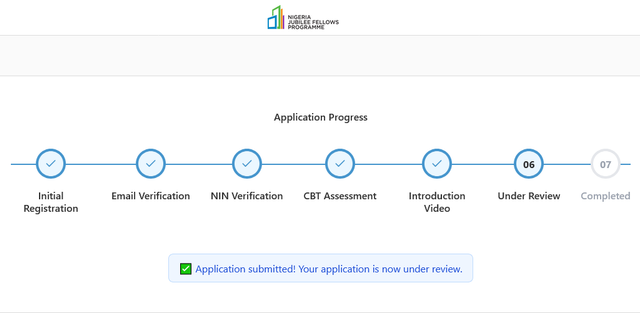
Step 4: Complete Assessments
Qualified applicants may proceed through stages such as:
- Computer Based Test (CBT)
- Introduction Video Submission
- Psychometric Assessments
Step 5: Wait for Matching and Placement
Successful applicants enter the talent pool and may be matched with suitable host organizations.
What Happens After You Apply?
The NJFP selection process typically involves several stages.
Application Review
Submitted applications are reviewed to confirm eligibility.
CBT Assessment
Eligible applicants may be invited to complete an online aptitude test.
Video Submission
Applicants may be required to record a short introduction video explaining why they are suitable candidates.
Talent Pool Placement
Successful candidates join the applicant pool.
Host Organization Matching
Applicants are matched with organizations based on skills, interests, and available opportunities.
Fellowship Placement
Once matched and accepted, applicants officially become NJFP Fellows.
Benefits of the NJFP Programme
The programme offers several advantages to participants.
Monthly Stipend
Fellows receive ₦150,000 monthly during the fellowship period.
Work Experience
Participants gain practical experience in real workplace environments.
Professional Development
Training opportunities help fellows improve employability and workplace skills.
Mentorship
Participants receive guidance from experienced professionals.
Networking Opportunities
The programme helps graduates connect with employers and industry professionals.
National Coverage
Opportunities exist across all 36 states and the Federal Capital Territory.
Common Reasons Applications May Be Rejected
Some applicants fail to progress because they do not meet basic requirements.
Common issues include:
- Exceeding the age limit
- Graduating before the eligible graduation year
- Not completing NYSC
- Submitting incomplete documents
- Providing inaccurate information
- Failing assessments
Always review your application carefully before submission.
Simple Eligibility Checklist
Answer these questions:
- Are you a Nigerian citizen?
- Are you 30 years old or younger?
- Did you graduate in 2022 or later?
- Do you have at least a 2.2 or Upper Credit?
- Have you completed NYSC or obtained an exemption certificate?
- Are you currently unemployed?
- Do you have your required documents ready?
If your answer is yes to all questions, you are likely eligible to apply for NJFP.
FAQs
What is the age limit for NJFP?
Applicants must be 30 years old or younger at the time of application.
Can HND holders apply for NJFP?
Yes. HND holders can apply if they graduated with at least Upper Credit.
Can I apply without NYSC?
No. Applicants must have completed NYSC or possess an official exemption certificate.
What degree class is required for NJFP?
Bachelor's degree holders need a minimum of Second Class Lower (2.2).
Can employed graduates apply?
NJFP is intended for graduates who are not currently employed.
What is the NJFP monthly stipend?
Selected fellows receive a monthly stipend of ₦150,000 during the 12-month fellowship.
Is NJFP available for all courses?
Yes. Graduates from different academic disciplines can apply, provided they meet the eligibility requirements.
Conclusion
The Nigeria Jubilee Fellows Programme remains one of the most valuable opportunities available to young Nigerian graduates. With a monthly stipend, practical work experience, mentorship, and career development support, it provides a strong pathway into the labour market.
Before applying, carefully review the requirements and ensure you meet all eligibility criteria. Having the right qualifications, documents, and preparation can significantly improve your chances of progressing through the selection process.
If you meet the requirements, the next step is to prepare thoroughly for the CBT assessment and introduction video stages.
About the Author
Mohammad-Jamiu B. Balogun, GMNSE
AI Security Researcher · Founder, MonoEd Africa
Mohammad-Jamiu is a First-Class Telecommunications Engineer and Best Graduating Student (BUK), and an AI security researcher. He founded MonoEd Africa to give Nigerian students AI-powered academic tools — from SIWES logbooks to final year projects. His work has reached over 10,000 students across Nigeria.