Can You Put Unpublished Research on Your CV? Preprints, Submitted Papers, and Publications Explained
Can you put unpublished research on your CV? Learn how to list preprints, submitted papers, manuscripts under review, and research projects correctly with examples and best practices.
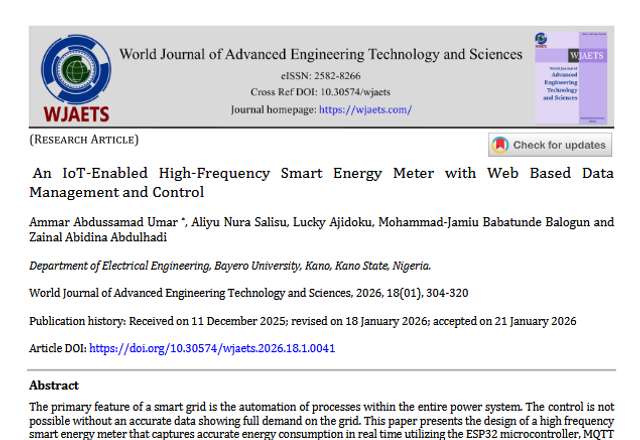
Many students, recent graduates, master's applicants, PhD candidates, and early career researchers face the same question:
Can I put research on my CV if it has not been published yet?
The short answer is yes.
In fact, unpublished research can strengthen your CV when presented correctly. The key is to be transparent about the status of the work. A preprint, submitted manuscript, paper under review, and published journal article are not the same thing. Employers, scholarship committees, and university admissions teams expect you to distinguish between them.
If you have completed a final year project, written a manuscript, uploaded a preprint, or submitted a paper to a journal, there are legitimate ways to include that work on your CV without misleading anyone.
Quick Summary
Yes, you can include unpublished research on your CV.
Common categories include:
- Preprints
- Manuscripts under review
- Submitted papers
- Accepted papers awaiting publication
- Working papers
- Research projects
- Undergraduate and master's theses
The most important rule is to clearly label each work according to its actual status. Never list an unpublished manuscript as a published article.
📙 Research Project Tools 🔥
FYP Report Generator — Generate full project chapters and citations.
Project Topic Generator — Get supervisor-ready project topics instantly.
Proposal Generator — Generate Chapters 1–3 with literature review, methodology, and academic citations in minutes.
Reference Verifier — Quickly verify citations by checking authors, year, and DOI before submission.
Research Paper Finder — Find relevant academic papers for your final year project.
What Counts as Unpublished Research?
Unpublished research refers to academic work that has not yet appeared as a peer reviewed journal publication.
Examples include:
- A completed final year project
- A master's thesis
- A manuscript submitted to a journal
- A paper under peer review
- A preprint uploaded online
- A working paper still being revised
- Research reports prepared for institutions or organizations
Many scholarship applicants and fresh graduates assume these works have no value until publication. That is not true.
Research experience itself is valuable, especially when applying for:
- Master's programs
- PhD programs
- Research assistant positions
- Graduate trainee programs
- Scholarships
- Academic internships
💡 You can also read on: 15 Free Websites to Download Journals and Research Papers for Students
Can You Put a Preprint on Your CV?
Yes.
A preprint is a research manuscript shared publicly before formal peer review. Many disciplines now encourage preprints because they allow researchers to share findings quickly and receive feedback earlier.
Since preprints are publicly accessible and often receive a DOI (Digital Object Identifier), they can usually be cited and included on academic CVs.
Example
Publications and Preprints
Balogun, M. J. (2026). Artificial Intelligence Adoption Among Nigerian Undergraduates. Preprint. DOI: xxxx
Alternatively:
Balogun, M. J. (2026). Artificial Intelligence Adoption Among Nigerian Undergraduates [Preprint]. DOI: xxxx
The label "Preprint" makes the status clear.
💡 You can read on:
Can You Put Submitted Papers on Your CV?
Yes.
If you have submitted a manuscript to a journal but have not yet received a decision, you can create a separate section.
Example
Manuscripts Under Review
Balogun, M. J., Ibrahim, A., & Yusuf, T. (2026). Digital Learning Adoption in Nigerian Universities. Submitted for peer review.
Some researchers use:
- Under Review
- Submitted Manuscripts
- Manuscripts Under Consideration
However, avoid naming the journal unless the journal specifically allows it and you are certain it is appropriate.
Can You Put Pending Publications on Your CV?
Yes, but they should not appear under published articles.
A common mistake is mixing pending papers with actual publications. This can create confusion and may damage your credibility.
A better structure is:
Publications
Published articles only.
Accepted Articles
Articles accepted but not yet published.
Preprints
Publicly available preprints.
Manuscripts Under Review
Submitted papers awaiting editorial decisions.
Research in Progress
Current projects and working papers.
This structure immediately tells reviewers where each piece of work stands.
Can You List a Final Year Project on Your CV?
Absolutely.
For many undergraduates and recent graduates, the final year project is often the most substantial research experience they have.
You can include it under:
- Research Experience
- Academic Projects
- Undergraduate Research
- Thesis Projects
Example
Research Experience
Final Year Project
B.Eng. Telecommunications Engineering
Title: Machine Learning Based Network Traffic Classification Using Deep Neural Networks
- Conducted data collection and preprocessing.
- Developed predictive models using Python.
- Achieved classification accuracy above 90%.
- Prepared a 120-page research report.
This demonstrates research skills even if no publication exists.
Can You Cite a Preprint?
Yes.
Many preprints receive a DOI, making them citable scholarly outputs.
Researchers frequently cite preprints in fields such as:
- Computer Science
- Engineering
- Mathematics
- Physics
- Economics
- Data Science
Before citing a preprint, always check the citation style required by your institution, journal, or conference.
In many cases, preprints should be identified clearly as preprints in the reference list.
What Is the Difference Between a Preprint and a Published Paper?
| Feature | Preprint | Published Paper |
|---|---|---|
| Publicly available | Yes | Yes |
| Peer reviewed | Usually No | Yes |
| Can receive feedback | Yes | Yes |
| Can have DOI | Yes | Yes |
| Accepted by journal | Not necessarily | Yes |
| Academic credibility | Moderate | Higher |
A preprint shows research productivity, but it should never be presented as a peer reviewed publication.
Best CV Structure for Early Career Researchers
If you have research outputs at different stages, consider this structure:
Publications
Peer reviewed journal articles.
Accepted Articles
Accepted but not yet published.
Preprints
Research shared publicly before peer review.
Manuscripts Under Review
Papers submitted to journals.
Research Experience
Projects, theses, dissertations, and research assistant work.
Conference Presentations
Conference talks, posters, and symposium presentations.
This format is widely accepted in academia.
Platforms Where You Can Share Preprints
Several platforms allow researchers to upload preprints and obtain visibility before journal publication.
Research Square
One of the most popular multidisciplinary preprint platforms.
arXiv
Widely used in:
- Computer Science
- Mathematics
- Physics
- Engineering
bioRxiv
Popular for biological sciences.
medRxiv
Focused on health and medical research.
SSRN
Common in:
- Economics
- Business
- Social Sciences
- Law
OSF Preprints
Supports multiple disciplines.
Zenodo
Allows researchers to share papers, datasets, code, and other research outputs.
Before uploading, check the policies of any journal where you may later submit the manuscript.
Common Mistakes to Avoid
Listing Unpublished Work as Published
This is one of the fastest ways to damage academic credibility.
Always state the correct status.
Including Too Many Incomplete Projects
A long list of unfinished work may look like CV padding.
Focus on your strongest projects.
Calling a Preprint Peer Reviewed
A preprint is not a peer reviewed publication unless it later passes peer review and gets published.
Omitting Research Status
Reviewers should immediately understand whether a manuscript is:
- Published
- Accepted
- Under review
- Submitted
- Preprint
- In preparation
Can Unpublished Research Help With Scholarships?
Yes.
Scholarship committees often evaluate research potential, not just publication counts.
A strong preprint, thesis, working paper, or manuscript under review can demonstrate:
- Research ability
- Academic writing skills
- Subject expertise
- Initiative
- Intellectual curiosity
For students and fresh graduates who do not yet have journal publications, a well presented research portfolio can still strengthen scholarship applications significantly.
Should You Include Research That Is Still "In Preparation"?
Sometimes.
If substantial work has already been completed, such as data collection, analysis, and drafting, it may be reasonable to include it under:
Research in Progress
However, avoid listing vague future ideas that do not yet exist as actual manuscripts.
A good rule is that you should be able to show evidence of meaningful progress if asked.
Conclusion
You do not need to wait for a journal acceptance before showcasing your research experience.
Preprints, submitted papers, final year projects, theses, and manuscripts under review can all have a place on your CV when presented honestly and professionally.
The goal is not to inflate your achievements. The goal is to accurately demonstrate your research journey and academic potential.
For many students, fresh graduates, and scholarship applicants, properly presenting unpublished research can make the difference between looking inexperienced and showing clear evidence of research capability.
FAQs
Can I put an unpublished paper on my CV?
Yes. You can include unpublished papers under sections such as Preprints, Manuscripts Under Review, or Research in Progress.
Can I put a submitted paper on my CV?
Yes. Clearly label it as submitted or under review rather than listing it as published.
Can I cite a preprint?
Yes. Most preprints can be cited, especially if they have a DOI.
Does a preprint count as a publication?
A preprint is a scholarly output but it is generally not considered a peer reviewed publication.
Can I include my final year project on my CV?
Yes. Many students list final year projects under Research Experience or Academic Projects.
Can preprints help with scholarship applications?
Yes. They can demonstrate research productivity, writing ability, and academic potential, especially for applicants who do not yet have peer reviewed publications.
Should I include papers that are still being written?
Only if substantial progress has been made. Avoid listing speculative projects or undeveloped ideas.
About the Author
Mohammad-Jamiu B. Balogun, GMNSE
AI Security Researcher · Founder, MonoEd Africa
Mohammad-Jamiu is a First-Class Telecommunications Engineer and Best Graduating Student (BUK), and an AI security researcher. He founded MonoEd Africa to give Nigerian students AI-powered academic tools — from SIWES logbooks to final year projects. His work has reached over 10,000 students across Nigeria.