How to Fill Your SIWES Logbook as an SLT Student (With Week 1 & 2 Examples)
Learn how to fill your SIWES logbook as a Science Lab Technology (SLT) student with practical examples. Includes Week 1 & Week 2 entries, lab techniques, and writing tips.

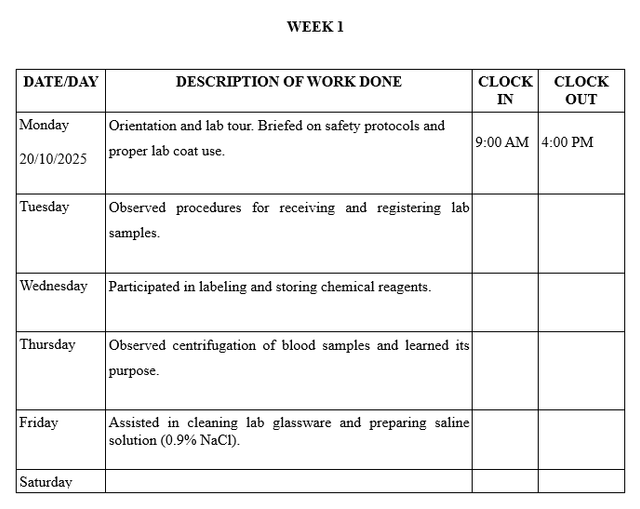
If you are a Science Laboratory Technology (SLT) student on SIWES, your logbook should clearly show what you observed, learned, and practiced in the lab each day.
Many students lose marks because their entries are too vague, like “did lab work,” without explaining the actual test, equipment, or procedure involved.
This guide shows you exactly what to write, how to structure your entries, and includes practical Week 1 and Week 2 examples based on real lab environments.
TL;DR (quick answer)
- Write specific lab activities (tests, procedures, or observations)
- Include equipment, reagents, and techniques used
- Use phrases like “I observed…”, “I assisted in…”, “I performed…”
- Keep entries consistent and get weekly supervisor signatures
- Draft daily notes, then write neatly in your logbook weekly
If turning your weekly lab activities into full entries is difficult, a SIWES logbook generator can help structure them properly.
What is the SIWES logbook?
A SIWES logbook is an official record of your daily industrial training activities, including tasks performed, tools or equipment used, and supervisor verification.
For SLT students, it should focus on:
- Laboratory tests performed or observed
- Equipment and instruments used
- Reagents and samples handled
- Techniques learned
Your school and supervisor use it to assess your practical exposure in the lab.
Tools that can help you write faster
If you already know what you worked on but struggle to write it properly:
- SIWES Logbook Generator — Turns your weekly summary into full Monday–Friday entries
- SIWES Report Generator — Helps you prepare your SIWES report
- SIWES Placement Finder — Helps you find IT placements
Use these as support, but always make sure your entries reflect your real work.
What to include in your SLT logbook
Each entry should clearly show what happened that day.
Include:
- Date and day
- Test, experiment, or procedure carried out
- Equipment used
- Reagents or samples involved
- What you learned or observed
One common issue with SLT logbooks is writing entries that are too general. Supervisors expect to see specific lab work, not just “assisted in lab.”
Use clear learning-focused phrases:
- I observed…
- I learned how to…
- I assisted in…
- I participated in…
- I performed…
Week 1 & Week 2 SIWES logbook examples (SLT)
These examples reflect a typical medical or research laboratory placement.
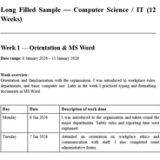
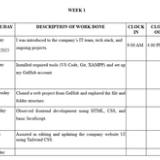
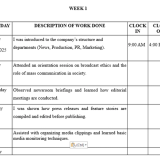
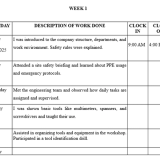
Week 1 – Orientation and Lab Safety
| Day | Activities |
|---|---|
| Monday | I was introduced to the laboratory environment and safety procedures. Learned proper use of lab coat and gloves. |
| Tuesday | Observed procedures for receiving and registering lab samples. |
| Wednesday | Participated in labeling and storing chemical reagents. |
| Thursday | Observed centrifugation of blood samples and learned its purpose. |
| Friday | Assisted in cleaning lab glassware and preparing saline solution (0.9% NaCl). |
Week 2 – Basic Experiments and Techniques
| Day | Activities |
|---|---|
| Monday | Observed urinalysis using dipsticks and recorded the results. |
| Tuesday | Helped prepare culture media (e.g., Nutrient Agar) for bacterial growth. |
| Wednesday | Operated autoclave to sterilize Petri dishes and pipettes. |
| Thursday | Watched and took notes on the Gram staining process. |
| Friday | Performed blood group test using anti-A, anti-B, and anti-D sera. |
SIWES logbook examples for other courses
If you’re exploring how other fields structure their entries, these guides may help:
- Computer Engineering: Step-by-step daily entries covering hardware, networking, and embedded systems → How to Fill SIWES Log Book for Computer Engineering
- Building Technology: Includes sketches, site work logs, and construction processes → How to Fill SIWES Log Book for Building Technology
- Bakery Students: Practical production-based entries and workflow examples → How to Fill SIWES Logbook for Bakery Students
- Estate Management: Property inspection, valuation, and documentation examples → How to Fill SIWES Logbook for Estate Management Students
- Marketing: Campaign tracking, customer engagement, and sales reporting entries → How to Fill SIWES Logbook for Marketing Students
These can give you ideas on how to improve your own level of detail.
Common Tools and Techniques to Mention (SLT)
| Tool/Technique | Use |
|---|---|
| Microscope | Observing prepared slides and microorganisms |
| Autoclave | Sterilizing lab equipment |
| Gram Staining | Identifying bacterial types by cell wall characteristics |
| Centrifuge | Separating sample components (e.g., plasma from blood) |
| Blood Grouping Kit | Determining ABO and Rh blood types |
Only include tools and techniques you actually used or observed.
Tips for writing a good SLT logbook
- Be specific about tests and procedures
- Mention equipment and reagents used
- Use clear and simple English
- Keep entries neat and structured
- Always get weekly supervisor signatures
In many labs, supervisors are more interested in accuracy and clarity than long explanations.
Mistakes to avoid
- Writing “lab work” without details
- Skipping equipment or reagent names
- Copying another student’s entries
- Writing everything at once from memory
- Missing supervisor signatures
Save time without cutting corners
Writing detailed lab entries every week can be stressful, especially during busy periods.
A better approach:
- Keep rough notes of your daily lab activities
- Use a SIWES Logbook Generator to structure them
- Edit to match your real experience
- Transfer neatly into your official logbook
This helps you stay consistent without losing accuracy.
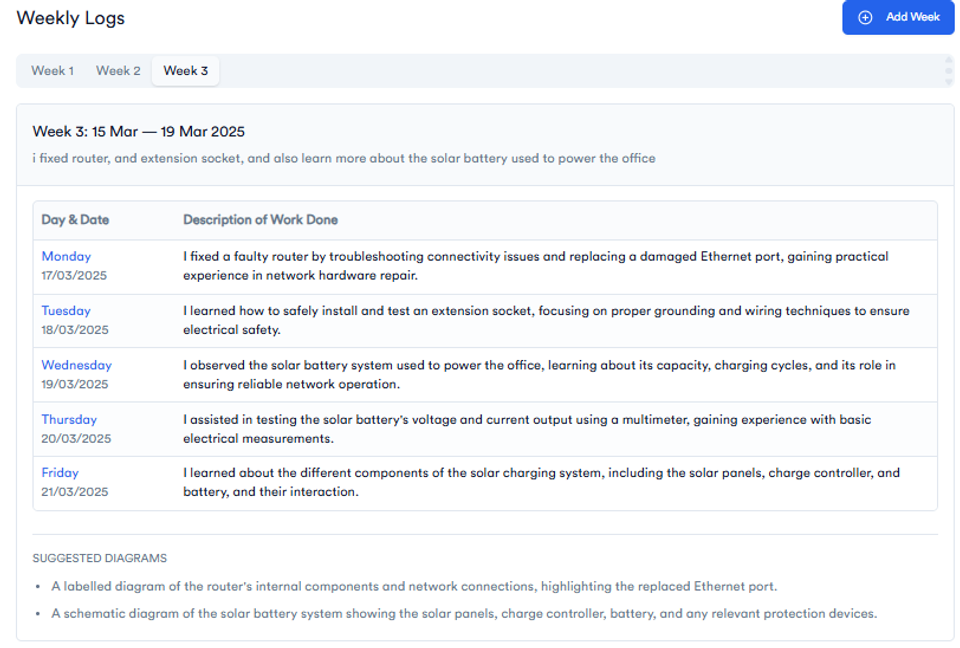
Just type a quick summary of what you did this week — and the SIWES Logbook Generator will turn it into complete, well-written entries for Monday to Friday.
FAQs
Can I write only what I observed in my SLT logbook?
Yes. Observation is valid, especially in early weeks, as long as you describe it clearly.
Do I need to include chemical names in my entries?
Yes, where possible. It shows better understanding and attention to detail.
What if I repeat the same test multiple days?
You can still write it, but highlight what you learned or improved each day.
Conclusion
As an SLT student, your SIWES logbook should reflect your hands-on laboratory experience.
Focus on:
- the tests you performed or observed
- the equipment you used
- what you learned each day
Keep your entries clear, specific, and consistent, and make sure they are properly signed.
About the Author
Mohammad-Jamiu B. Balogun, GMNSE
AI Security Researcher · Founder, MonoEd Africa
Mohammad-Jamiu is a First-Class Telecommunications Engineer and Best Graduating Student (BUK), and an AI security researcher. He founded MonoEd Africa to give Nigerian students AI-powered academic tools — from SIWES logbooks to final year projects. His work has reached over 10,000 students across Nigeria.