How to Fill Your SIWES Logbook as an Engineering Student (With Daily Examples)
Learn how to fill your SIWES logbook as an engineering student with daily examples for Electrical, Civil, and Mechanical Engineering. Includes tools, tips, and writing guide.

If you are an engineering student on SIWES, your logbook should clearly show the practical skills you learned, the equipment you used, and the tasks you carried out during your training.
Many students lose marks because their entries are too general, like “worked on site” or “did electrical work,” without explaining what actually happened.
This guide shows you exactly how to write your SIWES logbook properly, with practical examples for Electrical, Civil, and Mechanical Engineering students.
TL;DR (quick answer)
- Write specific engineering tasks, not vague descriptions
- Include tools, equipment, and processes used
- Use phrases like “I observed…”, “I assisted…”, “I carried out…”
- Keep entries consistent and get weekly supervisor signatures
- Draft daily notes, then write neatly in your logbook weekly
If turning your weekly tasks into full entries is difficult, a SIWES logbook generator can help structure them properly.
Why your SIWES logbook matters
Your SIWES logbook is not just a record. It is evidence of your hands-on training.
Supervisors and examiners use it to assess:
- what you actually did
- the skills you developed
- your level of understanding
In many cases, a well-written logbook can significantly improve your final SIWES grade.
One common issue is that students do real work but fail to describe it properly. That is what this guide helps you fix.
What to include in your engineering logbook
Each entry should clearly show:
- The task performed or observed
- The tools or equipment used
- The process or method involved
- What you learned
Avoid writing things like:
- “Worked on machine”
- “Did electrical work”
Instead, be specific.
Use professional phrases like:
- I was introduced to…
- I observed the process of…
- I assisted in…
- I carried out…
- I was taught how to…
Sample Logbook Entries for Engineering Students
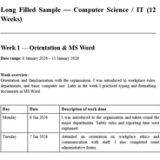
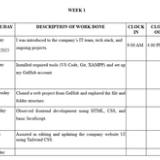
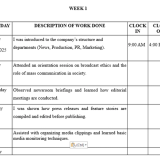
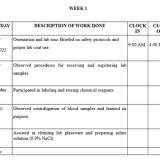
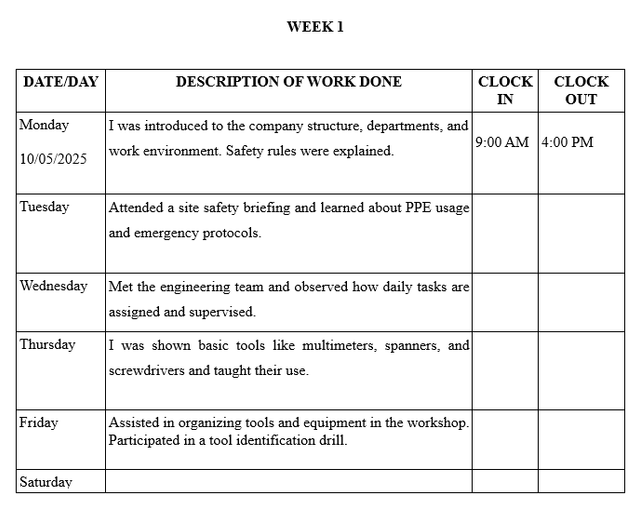
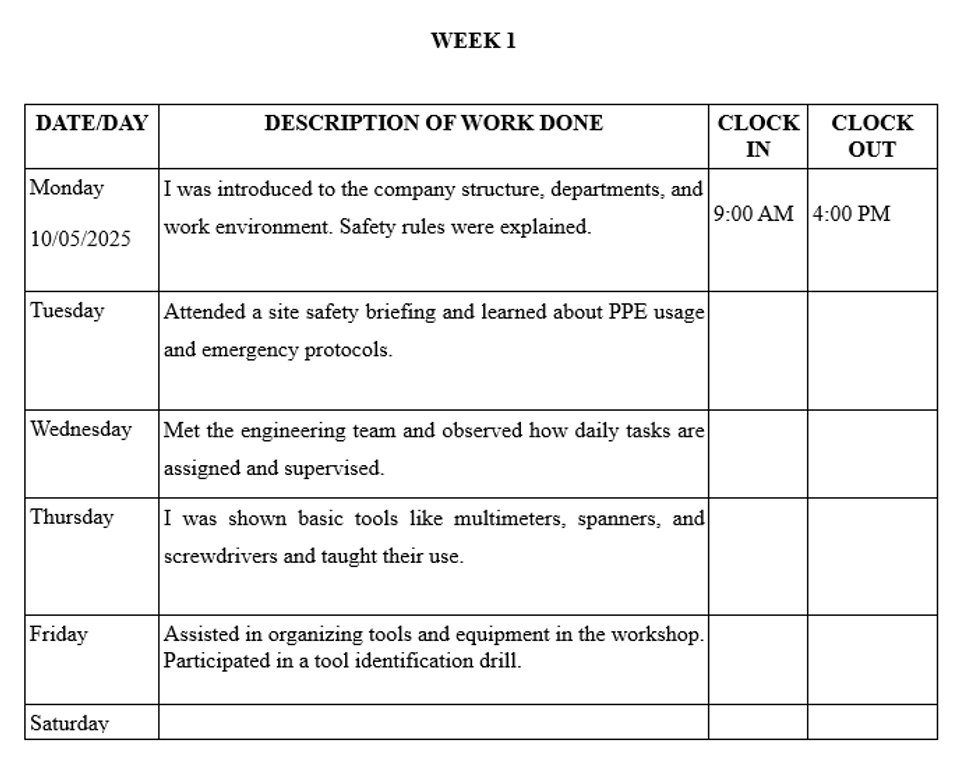
Week 1 – Orientation and Introduction
| Day | Activities |
|---|---|
| Monday | I was introduced to the company structure, departments, and work environment. Safety rules were explained. |
| Tuesday | Attended a site safety briefing and learned about PPE usage and emergency protocols. |
| Wednesday | Met the engineering team and observed how daily tasks are assigned and supervised. |
| Thursday | I was shown basic tools like multimeters, spanners, and screwdrivers and taught their use. |
| Friday | Assisted in organizing tools and equipment in the workshop. Participated in a tool identification drill. |
Week 2 – Basic Experiments and Techniques
| Day | Activities |
|---|---|
| Monday | Observed a technician testing voltage with a multimeter and learned how to check circuit continuity. |
| Tuesday | Helped in stripping, terminating, and connecting electrical cables under supervision. |
| Wednesday | Participated in the servicing of an air compressor (mechanical unit). |
| Thursday | Observed the installation of circuit breakers in a distribution panel. |
| Friday | Documented load readings from transformers and helped test phase rotation using a phase tester. |
Sample Logbook Entries for Electrical Engineering Students
| Day | Activities |
|---|---|
| Monday | Observed the maintenance of power distribution panels and learnt the importance of circuit breakers. |
| Tuesday | Assisted in testing continuity of cables using a digital multimeter. |
| Wednesday | I was taught how to strip, crimp, and connect electrical wires. |
| Thursday | Participated in fault detection exercise on underground cables. |
| Friday | Documented transformer load readings and voltage fluctuations. |
Sample Logbook Entries for Civil Engineering Students
| Day | Activities |
|---|---|
| Monday | Observed soil testing procedures and assisted in collecting samples for compaction tests. |
| Tuesday | I was introduced to site layout planning using leveling instruments. |
| Wednesday | Assisted in monitoring concrete mixing ratios during slab casting. |
| Thursday | Observed curing process of concrete and recorded temperature and humidity conditions. |
| Friday | Documented transformer load readings and voltage fluctuations. |
Sample Logbook Entries for Mechanical Engineering Students
| Day | Activities |
|---|---|
| Monday | I was introduced to the lathe machine and its working principles. |
| Tuesday | Observed and assisted in gear cutting on a milling machine. |
| Wednesday | Participated in the servicing of an internal combustion engine. |
| Thursday | Helped inspect and replace worn-out bearings in rotating equipment. |
| Friday | I documented safety procedures for operating heavy-duty machines. |
SIWES logbook examples for other courses
If you’re exploring how other fields structure their entries, these guides may help:
- Computer Science: Step-by-step daily entries covering software, programming, and web development → How to Fill SIWES Log Book for Computer Science
- Science Lab Technology (SLT): Example daily entries on lab tests and procedures → How to Fill SIWES Log Book for Science Lab Technology (SLT)
- Computer Engineering: Step-by-step daily entries covering hardware, networking, and embedded systems → How to Fill SIWES Log Book for Computer Engineering
- Building Technology: Includes sketches, site work logs, and construction processes → How to Fill SIWES Log Book for Building Technology
- Bakery Students: Practical production-based entries and workflow examples → How to Fill SIWES Logbook for Bakery Student
- Marketing: Campaign tracking, customer engagement, and sales reporting entries → How to Fill SIWES Logbook for Marketing Students
These can give you ideas on how to improve your own level of detail.
Tools to Mention in Your Logbook (Based on Field)
| Field | Common Tools/Equipment |
|---|---|
| Electrical Engineering | Multimeter, Cable Tester, Insulation Resistance Tester |
| Civil Engineering | Theodolite, Concrete Mixer, Compactor, Dumpy Level |
| Mechanical Engineering | Lathe Machine, Calipers, Torque Wrench, Milling Machine |
| General | PPE (gloves, helmet, safety boots), Screwdrivers, Pliers |
Only include tools you actually used in your entries.
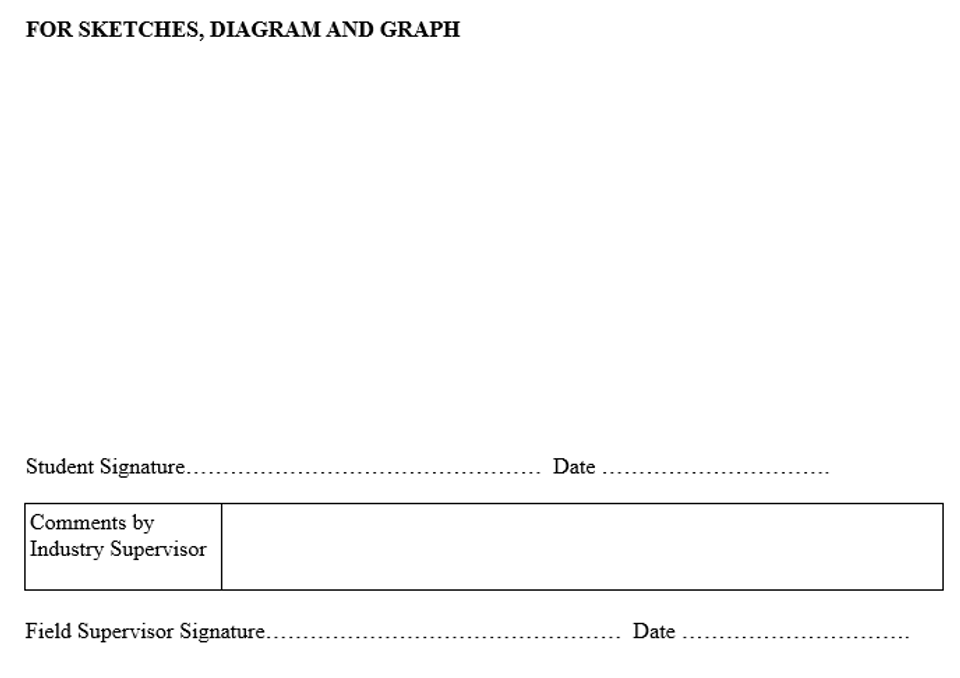
📌 TIP: Include rough sketches of tools, wiring diagrams, or structural layouts in the drawing section, it will help you achieve better grades.
Tips to score high in your SIWES logbook
- Be specific about tasks and processes
- Mention tools and equipment used
- Use clear and simple English
- Keep entries neat and organized
- Always get weekly supervisor signatures
In many cases, supervisors care more about clarity and accuracy than complexity.
Mistakes to avoid
- Writing vague entries
- Copying another student’s logbook
- Skipping tools or processes
- Writing everything at once
- Missing supervisor signatures
FAQs
Can I repeat the same task in my logbook?
Yes, but show what changed or improved each day.
Do I need to include diagrams?
Yes, if required. Diagrams like wiring layouts or machine sketches can improve your score.
What if I didn’t do much in a day?
Write what you observed or learned. Observation is still valid.
Conclusion
Your SIWES logbook as an engineering student should clearly reflect your practical experience.
Focus on:
- what you worked on
- the tools you used
- the processes you learned
Be consistent, be specific, and make sure everything is properly signed.
About the Author
Mohammad-Jamiu B. Balogun, GMNSE
AI Security Researcher · Founder, MonoEd Africa
Mohammad-Jamiu is a First-Class Telecommunications Engineer and Best Graduating Student (BUK), and an AI security researcher. He founded MonoEd Africa to give Nigerian students AI-powered academic tools — from SIWES logbooks to final year projects. His work has reached over 10,000 students across Nigeria.