How to Write an Academic CV for Master’s or PhD Scholarships (Free Sample 2025)
Learn how to write a professional academic CV for Master’s or PhD scholarships in 2025. Includes structure, format, examples, full sample CVs, and resources to help you stand out.
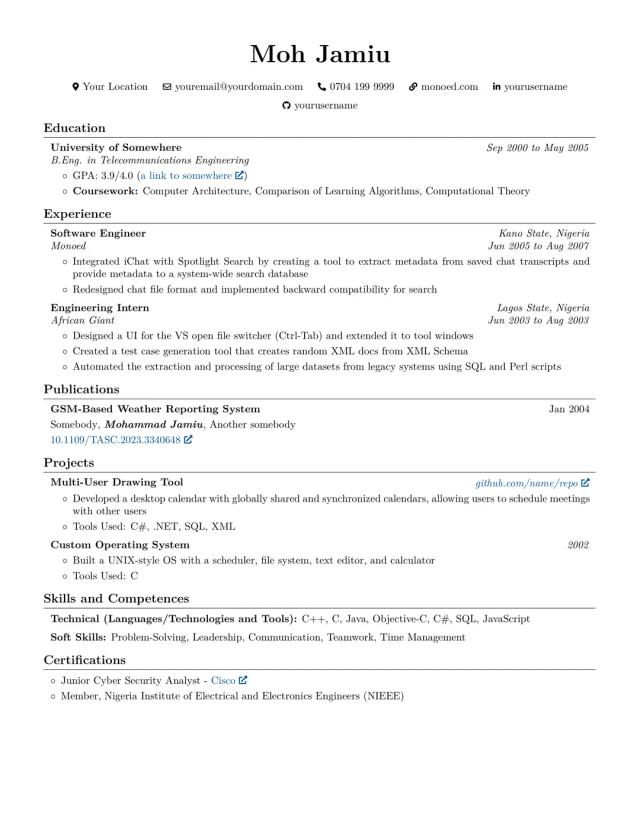
Applying for a Master’s or PhD scholarship is exciting, but also competitive. One of the most important parts of your application is your academic CV. It’s the document that summarizes your education, research experience, awards, and skills, helping scholarship panels decide if you’re the right fit for the program.
Unlike a regular job résumé, an academic CV focuses on your academic achievements, research interests, publications, and teaching experience. In this guide, you’ll learn how to structure it, what to include, common mistakes to avoid, and how to make yours stand out.
At the end, you’ll also find two realistic sample CVs that you can use as templates when building your own.
What Is an Academic CV?
An academic CV (Curriculum Vitae) is a detailed record of your academic history, research projects, awards, and publications. It’s used when applying for scholarships, postgraduate programs, or academic positions.
It differs from a standard résumé in two main ways:
- It’s longer and more detailed (usually 2–4 pages).
- It focuses on academic accomplishments rather than work experience.
If you’re unsure about the difference, read MonoEd’s breakdown:
👉 CV vs Resume: What’s the Difference and Which One Should You Use in Nigeria?
Why Your CV Matters for Scholarships
Scholarship committees receive thousands of applications every year. Your academic CV is often the first document they review, so it must clearly show your academic strength, research potential, and leadership experience.
A well-organized CV helps reviewers quickly find:
- Your degree classification and GPA
- Research experience and publications
- Awards or scholarships you’ve received
- Technical or analytical skills
- Volunteer, teaching, or leadership activities
If done right, your CV gives you a strong first impression before they even read your statement of purpose or recommendation letters.
Step-by-Step: How to Write an Academic CV for Scholarship Applications
1. Start With a Clean, Simple Layout
Use a clear and professional format. Avoid unnecessary colors or graphics. Use standard fonts like Calibri, Arial, or Times New Roman, and keep margins wide enough for readability.
If you want to build one quickly, use an online tool like MonoEd CV Maker, which helps you create an ATS-friendly academic CV right on your phone.
👉 How to Create a CV on Your Phone in Nigeria – Start for Free (2025 Guide)
Formatting tips:
- Use bold or uppercase for section titles
- Align all dates on the right
- Keep spacing uniform between sections
2. Include Key Sections (in This Order)
1. Contact Information
Include your name, email, phone number, LinkedIn profile, and city/country.
Avoid full home addresses or birth dates.
2. Personal Profile / Summary
A short paragraph (3–4 lines) summarizing who you are, your academic background, and research interests.
Example:
First Class Telecommunication Engineering graduate with strong research interest in AI and Data Science. Seeking a Master’s scholarship to explore the application of machine learning in low-cost telecom networks.
3. Education
List your degrees in reverse order. Include:
- Degree and classification (e.g., B.Eng, First Class)
- University name and location
- Graduation year
- GPA or CGPA
- Thesis or final-year project topic
If your GPA uses a 5.0 scale (common in Nigeria), you can include both scales for clarity.
You can also use GPA Tools to convert your Nigerian GPA to the 4.0 U.S. scale instantly.
Example: 4.64/5.0 (equivalent to 3.7/4.0)
4. Awards and Honours
Mention any academic scholarships, merit awards, or departmental recognitions.
Example:
- Best Graduating Student – Electrical Engineering Department
- University Scholarship for Academic Excellence
5. Research Interests
List 3–5 areas that align with your target program.
Example:
- Artificial Intelligence and Machine Learning
- Wireless Communication Systems
- Signal and Data Processing
6. Research / Project Experience
Highlight your research projects or assistantships. Include measurable outcomes.
Example:
Developed GSM-based weather monitoring system using Arduino UNO and SIM900, implemented automated data collection for telecom base stations.
7. Work or Internship Experience
Include relevant internships that show technical or leadership skills. Use action verbs: designed, implemented, analyzed, led.
8. Teaching or Mentoring Experience
Include tutoring, lab assistance, or teaching roles. These show communication and leadership potential.
9. Leadership & Volunteering
List student leadership roles, clubs, or community service. These show initiative and teamwork.
10. Certifications & Memberships
Include certifications relevant to your field.
Example:
- Cisco Networking and Cybersecurity
- Graduate Member, Nigerian Society of Engineers
11. Skills
Divide into two sections:
- Technical: Python, MATLAB, SQL, ArcGIS, SPSS
- Soft Skills: Communication, teamwork, problem-solving
12. Languages
List all languages you speak and proficiency level.
13. References
Provide 2–3 academic referees, usually your supervisor or lecturer.
3. Tailor Your CV to Each Scholarship
Avoid sending one generic CV. Adjust your experience to match the program’s focus.
If you’re applying for a research-based program, emphasize projects and publications.
If it’s a leadership-based scholarship, highlight volunteering or mentoring experience.
Example:
For a Commonwealth Scholarship in Data Science, highlight research, programming, and applied data analysis experience.
4. Keep It Concise but Complete
An academic CV should typically be 2–4 pages.
Avoid long paragraphs and keep bullet points short and impactful.
5. Proofread and Format for Readability
Before submitting:
- Check grammar and punctuation
- Keep date formats consistent
- Export to PDF
- Review for tone and flow (avoid robotic language or long dashes)
Common Mistakes to Avoid
❌ Using fancy templates that confuse ATS scanners
❌ Including irrelevant personal info (age, marital status)
❌ Inconsistent spacing or mixed fonts
❌ Copy-pasting application descriptions
❌ Omitting GPA or thesis topic
❌ Not listing academic referees
Formatting Tips for a Professional Academic CV
- Font size: 12 pt for text, 14 pt bold for section titles
- Save as PDF
- Include your name in page footers (e.g., Balogun | Academic CV)
- Use simple layouts for easy readability
👉 Use MonoEd CV Maker to create and export your CV professionally.
Sample Academic CV for Scholarship (Example 1)
Aminu Idris Bello
📍 23 Tukur-Tukur Road, Kaduna, Nigeria
✉️ aminubello@email.com
📞 0801 234 5678
🔗 linkedin.com/in/aminu-bello
EDUCATION
Ahmadu Bello University, Zaria
B.Eng (First Class) in Telecommunication Engineering
• CGPA: 4.65/5.00 (equivalent to 3.7/4.0) — Convert your GPA here
• Thesis: GSM-Based Weather Monitoring System Using Arduino UNO and SIM900
Zaria, Nigeria | 2024
AWARDS AND HONORS
• Best Graduating Telecommunication Engineering Student — Department of Electrical Engineering
• Award of Excellence — Nigerian Universities Engineering Students’ Association (NUESA)
• Faculty Scholarship for Academic Excellence (Levels 300 & 400)
RESEARCH INTERESTS
Artificial Intelligence and Machine Learning, Signal and Data Processing, Applied Data Science,
Natural Language Processing, Statistical Modeling, Databases, and Responsible AI
RESEARCH EXPERIENCE
Undergraduate Researcher
Department of Electrical Engineering, Ahmadu Bello University, Zaria
Designed and implemented a GSM-based weather reporting system for base stations, integrating sensors and GSM modules for remote monitoring.
• Built and tested sensor-to-GSM data pipeline using Arduino and SIM900.
• Collected and analyzed weather impact data on base transceiver stations.
• Applied data cleaning and visualization to communicate findings.
• Developed a low-cost prototype for resource-limited areas.
Zaria, Nigeria | 2023 – 2024
INDUSTRIAL EXPERIENCE
Telecommunication Intern
TechSystems Engineering Ltd.
• Used ArcGIS API with JavaScript for interactive mapping.
• Conducted data analysis and network diagnostics for engineering projects.
Kaduna, Nigeria | Dec 2022 – May 2023
IT Support Intern
TechSystems Engineering Ltd.
• Diagnosed network and computer issues; documented system maintenance.
• Analyzed survey data using Excel and improved reporting processes.
Kaduna, Nigeria | Oct 2021 – Dec 2021
LEADERSHIP AND VOLUNTEERING
Secretary General — Muslim Corpers’ Association (NYSC), Kaduna
• Led facility-improvement projects and coordinated community service programs.
• Designed and managed a custom MCAN website to improve communication.
Kaduna, Nigeria | Jan 2025 – Present
Developer — Community Development Service (CDS) Project: “Nutripal”
• Built an AI-based health assistant prototype to help people track medication and nutrition.
• Applied user-centered design to promote accessible digital health solutions.
Kaduna, Nigeria | Apr 2025 – Present
Team Lead — NUESA Elite Engineering Fellowship
• Organized training on website development, Python, and problem-solving for peers.
Zaria, Nigeria | 2023 – 2024
Curriculum Reform Advocate — Nigerian Universities Commission (NUC)
• Collaborated with academic officials to propose earlier exposure to core engineering courses.
Nigeria | 2022 – 2023
TEACHING EXPERIENCE
Physics Teacher (SS1–SS3)
Al-Hikmah Academy (NYSC Placement)
• Delivered engaging Physics lessons and practical experiments.
• Mentored students on academic success and STEM careers.
Kaduna, Nigeria | Jan 2025 – Dec 2025
Academic Tutor & Volunteer Instructor
Department of Electrical Engineering, ABU Zaria
• Tutored 150+ students, improving pass rates by over 60%.
• Led workshops on Python, MATLAB, AutoCAD, and embedded systems.
Zaria, Nigeria | 2019 – 2024
CERTIFICATIONS AND MEMBERSHIPS
• Junior Cybersecurity Analyst — Cisco, 2024
• Network Support and Security — Cisco, 2024
• Graduate Member, Nigerian Society of Engineers (NSE), 2025
• Member, Institute of Electrical and Electronics Engineers (IEEE), 2025
• Certificate of Participation — Leadership and Career Development, 2024
SKILLS AND COMPETENCES
Programming: Python, C/C++, SQL, MATLAB, HTML/CSS, JavaScript
Data Analysis: NumPy, pandas, Excel, regression, correlation, and data visualization
Networking & Systems: ArcGIS, SPSS, basic DevOps, Git, and troubleshooting
Soft Skills: Leadership, teamwork, problem-solving, communication, time management
Languages: English (Fluent), Yoruba (Native), Hausa (Intermediate), Arabic (Basic)
CONFERENCES AND PROFESSIONAL DEVELOPMENT
• ABU Energy Conference: Emerging Opportunities in Nigeria’s Energy Landscape
• IEEE Workshop: Bridging the Gap Between Students and Engineers
• Career Symposium: Life After Graduation and Professional Pathways
References
Available on request
Sample Academic CV for Scholarship (Example 2 – Generic Template)
ADEOLA CHUKWUEMEKA
Email: adeolachuks@gmail.com | Phone: +234 701 200 5567
LinkedIn: linkedin.com/in/adeolachuks
Location: Lagos, Nigeria
PROFILE
Second Class Upper Mechanical Engineering graduate passionate about renewable energy and sustainable design. Seeking a PhD scholarship to develop efficient solar-powered systems for rural communities.
EDUCATION
B.Eng in Mechanical Engineering
University of Lagos | 2023
CGPA: 4.21 / 5.00
Project: Design and Simulation of a Hybrid Solar-Turbine Energy System
AWARDS & HONOURS
- Faculty Dean’s List (2020–2023)
- Best Final Year Project, Department of Mechanical Engineering
RESEARCH INTERESTS
Renewable Energy
Thermal Systems Design
Energy Storage and Conversion
RESEARCH EXPERIENCE
Undergraduate Research Assistant – Renewable Energy Lab (2022–2023)
- Conducted efficiency testing on hybrid turbine systems.
- Co-authored paper under review for Nigerian Journal of Energy Research.
INTERNSHIP EXPERIENCE
Engineering Intern – TotalEnergies Nigeria (2021)
- Assisted in pipeline maintenance projects.
- Improved process documentation for energy audits.
TEACHING & VOLUNTEERING
STEM Volunteer – Slum2School Initiative (2022)
- Taught basic science to underprivileged students weekly.
CERTIFICATIONS
- SolidWorks Design Certification
- Renewable Energy Systems (Coursera)
SKILLS
AutoCAD, SolidWorks, MATLAB, Python, data analysis, leadership
LANGUAGES
English (Fluent), Yoruba (Native), French (Basic)
REFERENCES
Prof. A.O. Adeniran – Department of Mechanical Engineering, UNILAG
Dr. T. Obinna – Research Supervisor
Great! With Option 1, we’ll merge MonoEd.africa with the curated university resources into a single “Resources & Tools for Academic CVs” section. This way, readers see both authoritative guides and practical, actionable tools in one place.
Here’s a polished version you can paste directly into your blog post after your sample CVs:
Resources & Tools for Academic CVs and Scholarship Applications
Creating a strong academic CV is crucial for scholarships, graduate programs, or academic jobs. To help, we’ve curated a list of CV guides, templates, and productivity tools from top universities and student platforms, including MonoEd.africa. These resources cover formatting, content, research experience, teaching, awards, and more.
1. University Guides & Templates
- Michigan State University – Academic Resume Guide
Link
Guidance for writing academic resumes for scholarships and admissions. - Harvard University – GSAS CVs and Cover Letters
Link
Tips on structuring CVs and cover letters for graduate applications. - Cornell University – Resumes and CVs for Graduate Students
Link
Explains when to use a CV vs. resume and how to highlight research experience. - University of Illinois – Curriculum Vitae Tips and Samples
Link
Comprehensive guidance on formatting, describing experiences, and optional CV sections. - University of Toronto – Creating Your Academic CV
Link
Step-by-step guide for master’s and PhD students focusing on research, publications, and achievements. - Oxford University – Academic Applications & CV Examples
Link
Sample CVs for science and humanities PhDs with postgraduate application guidance. - Penn State University – Graduate Application CV Guide
Link
Provides short sample resumes and CVs tailored to graduate applications. - Griffith University – Standard Academic CV Template
Link
HDR program template with instructions on highlighting research, skills, and achievements.
2. MonoEd.africa – Practical Tools for Students
MonoEd.africa complements these university guides with hands-on tools to simplify CV creation and academic management:
Create a Standout CV/Resume in Minutes
- ATS-friendly, LaTeX-based templates for scholarships and jobs.
- Simple form + AI suggestions: Fill out your details, refine with AI tips, and download instantly.
- Skip Overleaf hassles: Everything is drag-and-drop and ready for submission.
Start Free – Craft Your CV in Minutes!
GPA Made Simple 🚀
- Instant GPA calculations: Supports multiple university grading systems, including Nigerian universities.
- CGPA projection: Know exactly what grades you need to hit your target.
- GPA conversion: Convert your GPA to international scales for scholarships or foreign university applications.
More Productivity Tools for Students
- Auto-fill SIWES logbooks
- Draft project reports efficiently
- Get instant NYSC guidance
- Manage academic performance and stay on top of deadlines
MonoEd.africa offers everything a student needs in one place, helping you save hours, reduce stress, and create scholarship-ready CVs that get noticed.
Final Checklist Before You Submit
- Use a clean, professional layout
- Include GPA, thesis, and research details
- Tailor to the specific scholarship
- Keep length between 2–4 pages
- Proofread carefully
Conclusion
Your academic CV is more than just a list of achievements. It tells your academic story and shows your potential for advanced study and research. Start early, keep it clear, and update it regularly as you grow.
Need help building one fast? Use MonoEd CV Maker — it lets you create a scholarship-ready academic CV right on your phone.
👉 Try MonoEd CV Maker for Free
FAQs
1. What is the difference between an academic CV and a regular CV?
An academic CV focuses on education, research, publications, and academic achievements — while a regular CV or résumé highlights work experience and professional skills. Academic CVs are longer (2–4 pages) and more detailed.
2. How long should my academic CV be for a Master’s or PhD scholarship?
For scholarship applications, keep your CV between 2 to 4 pages. Include only relevant academic details — such as your degree, GPA, research experience, awards, and technical skills.
3. Should I include my GPA on my academic CV?
Yes. Always include your GPA or degree classification, especially if it’s strong (e.g., First Class, 4.5/5.0). If you’re applying abroad, you can also convert it to the 4.0 scale for clarity.
4. Do I need to include referees in my scholarship CV?
Yes. Most scholarship programs require referees. Include at least two academic referees — typically your supervisor or lecturer — with their full name, position, and email address.
5. Can I use the same CV for every scholarship?
No. You should tailor your CV for each scholarship. Highlight experiences and skills that match the specific program. For example, if it’s a Data Science scholarship, focus on your coding and research projects.
6. Should I include work experience in an academic CV?
Yes, but selectively. Include only relevant experience — internships, lab assistantships, teaching, or technical jobs related to your field. Avoid unrelated jobs unless they show transferable skills like leadership or teamwork.
7. What format should I use when submitting my CV?
Always submit your CV in PDF format to maintain layout consistency. Use simple, readable fonts and avoid graphics or complex designs.
8. How can I make my CV stand out to scholarship panels?
Make it clear, concise, and aligned with the scholarship’s goals. Highlight measurable achievements, leadership activities, and research interests. Proofread carefully and use bullet points for easy reading.
9. Can I build my CV using my phone?
Yes! You can easily create a professional, scholarship-ready CV using your phone with MonoEd CV Maker. It helps you build, edit, and download your academic CV in minutes.
10. What’s the best CV format for students in Nigeria applying abroad?
Use the academic CV format:
- Education and GPA
- Research and projects
- Awards and leadership
- Technical skills and certifications
- Referees
This format is accepted globally and works for most international scholarship programs (Chevening, DAAD, Commonwealth, Erasmus, etc.).
11. Do I need a cover letter with my academic CV?
Yes, many scholarships require a personal statement or cover letter alongside your CV. The CV summarizes your qualifications, while the letter explains your motivation and future goals.
12. Should I use AI tools to help me write my CV?
AI tools can help polish grammar, format, and structure — but always review the output carefully. Avoid robotic language and overly long sentences. Write naturally and ensure everything you include is accurate.
About the Author
Mohammad-Jamiu B. Balogun, GMNSE
AI Security Researcher · Founder, MonoEd Africa
Mohammad-Jamiu is a First-Class Telecommunications Engineer and Best Graduating Student (BUK), and an AI security researcher. He founded MonoEd Africa to give Nigerian students AI-powered academic tools — from SIWES logbooks to final year projects. His work has reached over 10,000 students across Nigeria.