Why My IELTS Mock Scores Were Lower Than My Real Exam Score (From Band 6.5 Practice Tests to Band 7.0 IELTS)
I kept scoring around Band 6.0 and 6.5 in IELTS mock tests but achieved Band 7.0 in the actual IELTS Academic exam. Here is why mock scores can be different, what I learned, and how you should interpret your practice results.

When I was preparing for my IELTS Academic exam, one of the most frustrating parts of the journey was my mock test scores.
No matter how much effort I put in, I often found myself getting around Band 6.0 and 6.5 in practice tests.
My target was Band 7.0 or 7.5.
After seeing the same score repeatedly, I started asking myself questions that many IELTS candidates probably ask.
"Am I actually improving?"
"Will I fail to reach my target score?"
"Are these mock tests an accurate prediction of my real IELTS result?"
Then something surprising happened.
Less than 24 hours after my computer-based IELTS exam, I received my results.
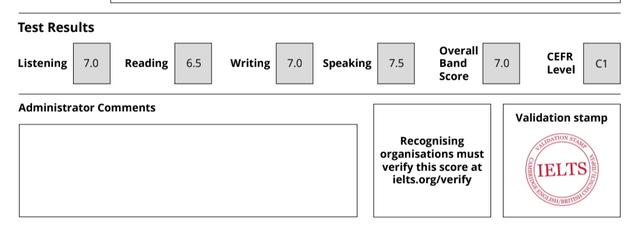
My final scores were:
- Listening: 7.0
- Reading: 6.5
- Writing: 7.0
- Speaking: 7.5
Overall Band Score: 7.0
This article is not meant to tell you that everyone will automatically perform better in the real exam than in mock tests.
Some people score higher, some score lower, and others receive almost the same score.
However, my experience taught me that mock tests are training tools, not perfect predictions.
Quick Summary: Why My Real IELTS Score Was Higher Than My Mock Scores
If you only have one minute, here are the biggest lessons I learned:
- A mock test measures your current performance, but it does not determine your final result.
- Familiarity with the IELTS format can significantly improve your confidence.
- Some practice materials may feel more challenging than the actual exam.
- Your ability to manage stress and time on test day matters.
- Reviewing your mistakes after every mock is more valuable than simply collecting more scores.
The goal of practice is not to achieve a perfect score every time.
The goal is to make enough mistakes during preparation so that you make fewer mistakes during the actual exam.
💡 You may like to read on: How I Scored Band 7.0 in IELTS Academic in Nigeria After 3 Weeks of Preparation
Why I Think My Mock Scores Were Lower
1. I Became More Comfortable With the IELTS Format
During my early practice sessions, I was not just answering questions.
I was learning the exam itself.
I was learning how to manage the timer, navigate the computer interface, understand question types, and avoid common traps.
By the time I entered the actual exam, many things that seemed stressful during my first few mocks had become automatic.
That saved mental energy.
Instead of thinking about the process, I could focus on the answers.
2. Mock Tests Forced Me to Fix My Weak Areas
Getting Band 6.0 and 6.5 repeatedly was frustrating, but it also gave me useful feedback.
For example, I discovered that Reading was one of my weaker sections.
Even in my final exam, Reading remained my lowest score at 6.5.
The difference was that I understood my weaknesses before entering the exam.
I worked on skills such as:
- Skimming for the main idea.
- Scanning for specific information.
- Recognizing synonyms and paraphrased phrases.
Without those lower mock scores, I may not have focused enough on improving.
3. Some Practice Tests Can Feel Harder Than the Real Exam
This is something many IELTS candidates talk about.
Certain practice platforms may feel more difficult or may score more strictly, especially for productive sections like Writing and Speaking.
In my case, I used IELTS Ready Premium during my preparation and frequently scored around Band 6.5.
The actual IELTS exam felt more manageable because I had spent weeks practicing under challenging conditions.
However, this does not mean every mock test is harder than the real exam.
The quality of the practice material matters.
That is why I recommend using official resources whenever possible.
4. I Stopped Treating My Mock Scores Like a Final Judgment
This was probably the biggest mindset shift.
Every time I saw 6.0 or 6.5, I felt disappointed because I was comparing it directly with my target of Band 7.0 or 7.5.
Looking back, I realize I was focusing too much on the number.
A mock test should answer a different question:
"What mistakes am I making right now that I can fix before exam day?"
Once I started reviewing my mistakes instead of worrying about the score itself, my preparation became more productive.
5. The Real Exam Environment Can Change Your Performance
Many people assume they will always perform worse because of exam pressure.
That can happen.
However, the opposite can also happen.
When you enter the official test environment, you may become more focused because you know every question matters.
For me, weeks of worrying disappeared once the exam started.
I had prepared for the format, understood the computer system, and simply focused on answering each question.
Does This Mean You Should Ignore Low Mock Scores?
No.
A low mock score is useful information.
If you are consistently getting Band 5 and your target is Band 8 next week, you probably need more preparation.
Mock tests reveal your current level.
What you should not do is assume that getting 6.5 in every practice test guarantees you will get exactly 6.5 in the real exam.
IELTS scores can fluctuate.
Use your mocks to identify patterns.
Are you losing marks because of spelling in Listening?
Are you spending too much time on one Reading passage?
Are your Writing essays poorly organized?
Find the reason behind the score.
What I Would Do Differently If I Prepared Again
If I had to prepare for IELTS again, I would spend less time worrying about my mock bands and more time analyzing each mistake.
I would keep a notebook of:
- New vocabulary and phrases.
- Common grammar mistakes.
- Reading question types I struggled with.
- Listening traps I frequently missed.
Improvement in IELTS usually comes from correcting repeated mistakes, not from taking endless mock exams.
Conclusion
When I was repeatedly getting Band 6.5 in my practice tests, I genuinely wondered whether I was ready for the exam.
But my final result showed me something important.
Your mock score is a snapshot, not a prophecy.
Use your practice tests to learn the exam, understand your weaknesses, and build confidence.
A Band 6.5 in practice does not mean a Band 7 is impossible.
With consistent practice, good analysis, and the right strategy, you may perform better when the actual exam day arrives.
FAQs
Are IELTS mock tests harder than the real exam?
Sometimes. Some candidates find certain mock tests more challenging, while others feel the actual exam is harder. It depends on the quality of the practice material and your familiarity with the test format.
Can I get Band 7 in IELTS if I keep scoring 6.5 in mock tests?
Yes, it is possible. I personally moved from frequent Band 6.5 mock scores to an overall Band 7.0 in the actual exam. However, your final result depends on your preparation, strengths, and weaknesses.
Are IELTS mock test scores accurate?
They can give a good estimate of your current level, especially when using high-quality official materials, but they are not a guaranteed prediction of your final IELTS score.
How should I review my IELTS mock tests?
Do not only check the number of correct answers. Analyze why you made each mistake and look for repeated patterns that you can improve before exam day.
Is it bad to get 6.5 in IELTS mock tests?
Not necessarily. A 6.5 score shows that you already have a strong foundation. With targeted practice and better exam strategy, some candidates may improve before their final test.
About the Author
Mohammad-Jamiu B. Balogun, GMNSE
AI Security Researcher · Founder, MonoEd Africa
Mohammad-Jamiu is a First-Class Telecommunications Engineer and Best Graduating Student (BUK), and an AI security researcher. He founded MonoEd Africa to give Nigerian students AI-powered academic tools — from SIWES logbooks to final year projects. His work has reached over 10,000 students across Nigeria.