How to Score Band 7+ in IELTS Writing: Simple Task 1 and Task 2 Strategies That Work
Learn how to score Band 7 or more in IELTS Writing with simple Task 1 and Task 2 strategies. Discover easy structures for charts, processes, maps, essays, vocabulary upgrades, and writing techniques that actually work.

Quick Summary
Getting Band 7 or more in IELTS Writing is not about using the most difficult words or memorizing complicated templates. The key is understanding the task, following a clear structure, developing your ideas properly, and using accurate grammar.
For IELTS Task 1, think of your answer in four parts: introduction, overview, body paragraph one, and body paragraph two. The overview explains the biggest trends or features without exact numbers, while the body paragraphs provide the specific details, figures, and comparisons.
For IELTS Task 2, use a simple essay structure: introduction, body paragraph one, body paragraph two, and conclusion. Focus on making a clear point, explaining it, giving an example, and discussing the result.
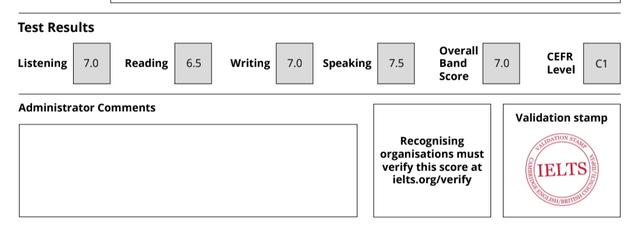
This is the same practical approach that helped me achieve Band 7 in IELTS Writing.
My Biggest Realization About IELTS Writing
When I started preparing for IELTS Writing, I thought achieving a high score meant sounding like a university professor.
I spent too much time trying to think of complicated vocabulary and perfect sentences.
Later, I realized that IELTS examiners do not reward unnecessary complexity. They reward clear communication, logical organization, a good range of vocabulary, and accurate grammar.
A simple sentence written correctly will always be better than a complicated sentence filled with mistakes.
The goal is not to impress the examiner.
The goal is to communicate your ideas effectively.
💡 You may like to read on: How I Scored Band 7.0 in IELTS Academic in Nigeria After 3 Weeks of Preparation
IELTS Writing Task 1 Structure That Makes Writing Easier
Many candidates lose marks in Task 1 because they start writing immediately without understanding the information in front of them.
Before writing, ask yourself:
"What is the story this graph, chart, table, map, or process is telling me?"
My Task 1 structure was always the same.
Introduction
Paraphrase the question naturally.
Do not force synonyms just because you think every word must change. If a word sounds unnatural when changed, keep it.
Your introduction should simply tell the examiner what the graph or diagram shows.
Overview
Always begin your overview with "Overall," because it immediately signals to the examiner that you are summarizing the main features.
The overview is the most important paragraph in Task 1.
Think of it as looking at the data from a bird's eye view.
Do not include exact numbers, percentages, or too many small details here.
Instead, explain the biggest patterns.
Ask yourself:
- What increased?
- What decreased?
- What remained stable?
- What was highest?
- What was lowest?
- What changed the most?
Your body paragraphs will later prove these observations using exact data.
Body Paragraph One and Body Paragraph Two
The body paragraphs are where you expand your overview.
This is where you add:
- Exact numbers
- Percentages
- Years
- Comparisons
- Specific stages or locations
A simple way to think about it is:
Overview tells the reader what happened.
Body paragraphs explain exactly how it happened.
There is no conclusion in IELTS Academic Writing Task 1.
💡 You may like to read on: Why My IELTS Mock Scores Were Lower Than My Real Exam Score (From Band 6.5 Practice Tests to Band 7.0 IELTS)
How to Handle Different IELTS Task 1 Question Types
Line Graphs
For line graphs, focus on movement over time.
Ask yourself:
- Which line increased?
- Which line decreased?
- Which remained stable?
- Which had the biggest change?
- Which finished with the highest or lowest value?
These observations become your overview.
Your body paragraphs then describe when the changes happened and include the numbers.
Bar Charts
For bar charts, look for comparisons.
Identify:
- The highest category.
- The lowest category.
- Categories with similar figures.
- Significant differences between groups.
Your overview should mention the major comparisons, while your body paragraphs should include the exact figures.
Pie Charts
Pie charts are about proportions.
Look for:
- The largest segment.
- The smallest segment.
- Categories with similar percentages.
- Major changes between different years if multiple pie charts are shown.
Your overview summarizes the distribution, while the body paragraphs provide the percentages and comparisons.
Tables
Tables often contain many numbers, which can make candidates panic.
Do not describe every number.
Instead, identify:
- The highest values.
- The lowest values.
- The biggest increases or decreases.
- Similarities between categories.
The overview summarizes these patterns, while the body paragraphs explain the important figures.
Process Diagrams
Process diagrams require a different way of thinking because there are usually no percentages or trends.
The first things you should identify are:
- Where the process starts.
- Where the process ends.
- The number of major stages.
- The most noticeable transformation.
For example, a process may begin with raw materials and end with a finished product.
A strong overview could be:
"Overall, the process consists of eight stages, beginning with the collection of raw materials and ending with the production of the final product."
Your body paragraphs then explain the stages in order and describe what happens at each step.
Maps
For map questions, focus on changes between different time periods.
Ask yourself:
- What was added?
- What was removed?
- What remained unchanged?
- Was the area expanded, modernized, or transformed?
Your overview should summarize the major developments.
The body paragraphs should explain where those changes happened and compare the old and new layouts.
My Task 2 Structure for IELTS Writing
Task 2 can feel difficult because you have to create your own ideas, but having a simple framework removes much of the stress.
My structure was:
Introduction
Paraphrase the question naturally.
If the question asks for your opinion, clearly state your position.
Do not spend five minutes trying to create the perfect first sentence.
Body Paragraph One
Present your first main idea.
Then expand it by asking:
- Why is this true?
- Can I explain it?
- Can I give an example?
- What is the result?
For example:
Claim:
Technology improves education.
Explanation:
Students can access educational materials from anywhere.
Example:
For instance, a student living in a remote area can take online courses from international universities.
Result:
As a result, education becomes more accessible.
Body Paragraph Two
Repeat the same method with your second main idea.
The goal is not to write many random sentences.
Every sentence should support your main argument.
Conclusion
Restate your opinion or summarize your main points.
Keep your conclusion simple.
You do not need to introduce new ideas.
Use Better Vocabulary, Not More Complicated Vocabulary
One mistake many candidates make is trying to sound intelligent by using words they do not understand.
Band 7 vocabulary is not about using difficult words.
It is about choosing appropriate words naturally.
Some easy upgrades include:
Instead of "good":
- Beneficial
- Effective
- Positive
Instead of "bad":
- Detrimental
- Harmful
- Adverse
Instead of "big":
- Significant
- Substantial
- Considerable
Instead of "important":
- Essential
- Crucial
- Significant
Do not replace every simple word.
Use stronger vocabulary only when it naturally fits.
My Biggest IELTS Writing Hack: Write First, Edit Later
This was one of the biggest improvements in my preparation.
Many candidates stop after every sentence because they are searching for a better word or trying to make the grammar perfect.
This destroys your flow.
Instead, separate writing from editing.
During your first draft:
- Focus on getting your ideas down.
- Keep your thoughts flowing.
- Do not worry about making every sentence perfect.
After finishing, use your remaining time to check:
- Grammar mistakes.
- Spelling errors.
- Repeated vocabulary.
- Sentence structure.
- Articles such as "a" and "the."
- Verb tenses.
A complete essay with minor mistakes is usually better than an unfinished perfect essay.
Common IELTS Writing Mistakes That Prevent Band 7
Some of the most common mistakes are:
- Using memorized essays that do not answer the exact question.
- Spending too much time on Task 1 and rushing Task 2.
- Describing every number in Task 1.
- Using complicated words incorrectly.
- Writing without a clear structure.
- Failing to leave time for editing.
Avoiding these mistakes can improve your writing significantly.
Conclusion
The biggest lesson I learned from preparing for IELTS Writing is that simplicity wins.
You do not need a complicated strategy.
For Task 1, understand the story behind the chart or diagram, write a clear overview, and use your body paragraphs to provide evidence.
For Task 2, make a point, explain it, support it with examples, and discuss the result.
Combine this with accurate grammar, natural vocabulary, and enough time for editing, and reaching Band 7 becomes much more achievable.
The strategy that helped me succeed was not trying to sound like a dictionary. It was learning how to communicate my ideas clearly.
FAQs
Is Band 7 in IELTS Writing difficult to get?
Band 7 is challenging because the examiner assesses your task achievement, coherence, vocabulary, and grammar. However, a strong structure and consistent practice can make it achievable.
Do I need advanced vocabulary for Band 7 IELTS Writing?
No. You do not need extremely difficult vocabulary. It is better to use simple words correctly than to use complex words incorrectly.
Should I write a conclusion in IELTS Task 1?
No. IELTS Academic Writing Task 1 requires an introduction, an overview, and body paragraphs. A conclusion is unnecessary.
How do I write a good overview in IELTS Task 1?
Look for the biggest trends or features. For graphs, identify increases, decreases, highest and lowest points. For processes, identify the starting point, ending point, number of stages, and major transformations.
How do I generate ideas in IELTS Writing Task 2?
Use the claim, explanation, example, and result method. Make your point, explain why it is true, provide an example, and discuss its consequence.
Is it okay to edit my IELTS essay after writing?
Yes. In fact, leaving a few minutes to check grammar, spelling, and repeated words can help improve your final score.
About the Author
Mohammad-Jamiu B. Balogun, GMNSE
AI Security Researcher · Founder, MonoEd Africa
Mohammad-Jamiu is a First-Class Telecommunications Engineer and Best Graduating Student (BUK), and an AI security researcher. He founded MonoEd Africa to give Nigerian students AI-powered academic tools — from SIWES logbooks to final year projects. His work has reached over 10,000 students across Nigeria.