My IELTS Computer Based Test Experience in Nigeria: What Really Happens on Exam Day
I took the IELTS computer based test in Nigeria and scored an overall Band 7.0. Here is my complete IELTS test day experience, from arriving at the center and security checks to the exam interface, speaking test, and getting my result.

Before taking my IELTS computer based test in Nigeria, I spent a lot of time searching online for what the actual exam day would feel like.
I knew the exam format.
I knew there would be Listening, Reading, Writing, and Speaking.
But I still had many questions.
Would the center be strict?
Would the computer interface be difficult to use?
Would I be nervous once the timer started counting down?
After taking the exam myself and achieving an overall Band 7.0, I can say something surprising.
The actual IELTS test day was less stressful than the weeks I spent worrying about it.
In this article, I will walk you through exactly what happened from the moment I arrived at the test center until I finally received my result.
Quick Summary: What Happens During an IELTS Computer Based Test?
If you only want the short version, this is what a typical IELTS computer based test day looks like:
- You arrive at the test center with your passport or approved identification document.
- Your belongings are checked and stored outside the examination room.
- The test center verifies your identity using your document, photograph, and biometric checks where applicable.
- You enter the computer room and receive your login details.
- You complete Listening, Reading, and Writing on the computer without breaks.
- You complete the Speaking test either on the same day or on a scheduled date close to your exam.
- You receive your results online, often within a few days for computer delivered IELTS.
Now, let me share how my own experience happened.
Arriving at the IELTS Test Center
One thing that surprised me was that the test center did not look like a massive examination building from the outside.
At least in my case in Kano, it looked like a normal building.
If you were expecting a large signboard and a crowded environment, you might be surprised.
When I entered, I met other candidates waiting for the examination process to begin.
The atmosphere was quiet and professional.
Security Checks and Leaving My Personal Belongings
The security process was stricter than I expected.
Before entering the exam area, my bag was scanned.
I signed my details and was given a tag number for my belongings.
My phone and personal items were kept outside the examination room.
Before entering the actual testing area, there were additional security checks to ensure no prohibited items entered the exam room.
While this may sound intimidating, the staff guided everyone through the process.
Identity Verification and Biometric Checks
Another thing many first time candidates do not know is that your identity is verified before the exam begins.
In my case, I provided my international passport, my fingerprint was scanned, and my photograph was taken.
The photograph becomes part of your official IELTS records.
Once everything was confirmed, I was allowed to proceed to the examination room.
Entering the Computer Test Room
After entering the room, every candidate had a specific computer station.
My login details were already available at my desk.
Before the actual test started, there was a short guide explaining how to use the computer interface.
This included things like adjusting the screen display and checking the headphone volume.
This part helped reduce my anxiety because I could confirm everything was working before the exam began.
My Listening Experience
Listening was the first section I completed.
The audio was played through headphones, and I entered my answers directly into the computer.
One thing I liked about the computer format was that everything was directly in front of me.
There was no need to transfer answers from a question paper to an answer sheet.
My advice is to test your headphones and set a comfortable volume before starting.
💡 You may like to read on: How I Scored Band 7.0 in IELTS Academic in Nigeria After 3 Weeks of Preparation
My Reading Experience
Reading was the section I found the most challenging.
The difficulty was not that I could not understand English.
The real challenge was managing time and quickly locating information.
The computer layout allowed me to read the passage and answer questions on the same screen, but I still needed good skimming and scanning skills.
This was also my lowest score in the final result, where I received Band 6.5.
My Writing Experience
By the time I reached Writing, I already understood why practicing on a computer was important.
Typing was much faster for me than handwriting.
The computer made it easier to edit sentences, move around my essay, and keep track of my word count.
My biggest advice is not to make your first experience typing IELTS essays happen on the actual exam day.
Practice writing essays using a computer before your test.
My Speaking Test Experience
The Speaking section felt more like a conversation than an interview.
The examiner started with simple questions about familiar topics to make me comfortable.
Then I moved into the longer speaking section where I was given a topic and asked to speak for about one to two minutes.
One important thing I realized is that the examiner is not checking whether your stories are perfect or whether every detail happened exactly as you described.
They are assessing how well you can communicate in English.
This understanding helped me speak naturally and eventually achieve a Band 7.5 in Speaking.
💡 You may like to read on: Why My IELTS Mock Scores Were Lower Than My Real Exam Score (From Band 6.5 Practice Tests to Band 7.0 IELTS)
How I Felt After Finishing the Exam
Once I completed the exam, I honestly felt relieved.
After weeks of preparation and worrying about different possibilities, the exam was finally over.
The interesting thing was that it felt very similar to the mock tests I had already done.
That is exactly why practicing under realistic conditions is so valuable.
Getting My IELTS Result
One of the biggest advantages of taking the computer based IELTS was how quickly I received my result.
I received my result in less than 24 hours.
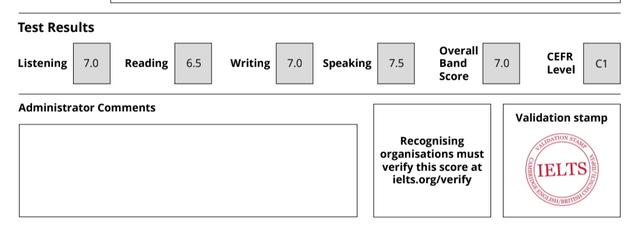
My final scores were:
- Listening: 7.0
- Reading: 6.5
- Writing: 7.0
- Speaking: 7.5
Overall Band Score: 7.0, which corresponds to a C1 level of English proficiency.
Final Thoughts
If you are nervous about your IELTS exam day, that feeling is completely normal.
I was also nervous before my test.
However, once the exam started, it became clear that IELTS is simply a structured test of your English ability.
The best thing you can do is become familiar with the format before your exam.
Practice using a computer, understand the timing of each section, and know what to expect on the day.
By doing this, the actual exam will feel like another practice session rather than a completely new experience.
FAQs
Is computer based IELTS easier than paper based IELTS?
The difficulty level is the same because both formats assess the same English skills. The better option depends on your personal preference. I preferred the computer based format because typing and editing were easier for me.
What should I bring to an IELTS computer based test in Nigeria?
You should bring the same identification document you used during registration, usually your international passport. Always check the instructions from your test center before the exam day.
Can I take my phone into the IELTS exam room?
No. Personal belongings such as phones are typically stored outside the examination room according to the test center's security procedures.
How long does the IELTS computer based test take?
The Listening, Reading, and Writing sections take approximately 2 hours and 45 minutes without a break. The Speaking test usually takes around 11 to 14 minutes and may be scheduled on the same day or a different date close to your test.
How quickly can I receive my IELTS computer test result?
Computer delivered IELTS results are usually available much faster than paper based tests. In my case, I received my result in less than 24 hours.
Is the IELTS computer screen difficult to use?
No. The system provides instructions before the test starts, and the interface is designed to be straightforward. Practicing with computer based IELTS tests before your exam will make you more comfortable.
About the Author
Mohammad-Jamiu B. Balogun, GMNSE
AI Security Researcher · Founder, MonoEd Africa
Mohammad-Jamiu is a First-Class Telecommunications Engineer and Best Graduating Student (BUK), and an AI security researcher. He founded MonoEd Africa to give Nigerian students AI-powered academic tools — from SIWES logbooks to final year projects. His work has reached over 10,000 students across Nigeria.