Why ChatGPT Invents Citations (And How to Avoid Fake References)
Learn why ChatGPT invents citations, why AI sometimes creates fake references, and how to avoid using nonexistent sources in your research paper. Discover practical ways to verify citations and write with confidence.

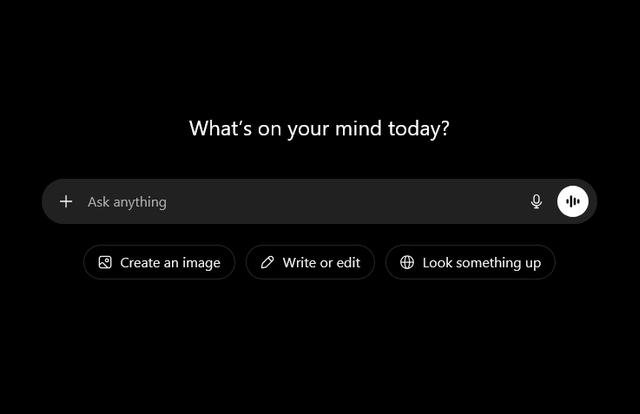
Quick Summary
ChatGPT sometimes invents citations because it is a language model, not a live academic search engine. Instead of retrieving papers from databases like Google Scholar or Crossref, it predicts what a citation should look like based on patterns it learned during training.
The result is a reference that looks convincing but may not exist at all. To avoid fake citations, always verify every reference using trusted academic databases or use research writing tools that work from real papers you have selected rather than generating references from scratch.
Why Do People Think ChatGPT Knows Every Research Paper?
One of the biggest misconceptions about AI is that it works like a search engine.
When you ask:
Give me five journal articles about AI in healthcare.
Many people assume ChatGPT searches millions of academic papers and returns the best results.
That is not what happens.
Instead, ChatGPT generates text by predicting the most likely sequence of words based on patterns it learned during training. If your prompt asks for academic references, the model tries to produce something that looks like a real citation.
Most of the time, the format is correct.
The problem is that the publication itself may not exist.
That is why researchers often describe these as fake citations, hallucinated references, or invented sources.
Why ChatGPT Invents Citations
There are several reasons this happens.
1. ChatGPT predicts text instead of retrieving papers
Unlike Google Scholar or a university library database, ChatGPT is not designed to search academic journals every time you ask a question.
Instead, it predicts what the next words should be.
Since research papers usually contain references, the model naturally produces citations that resemble genuine academic references.
The citation may include believable author names, journal titles, publication years, and article names even when the complete combination has never existed.
2. Academic citations follow recognizable patterns
Research papers are highly structured.
Most citations follow predictable formats such as APA, IEEE, Harvard, MLA, or Chicago.
ChatGPT has seen millions of examples of these formats during training.
As a result, it has learned how citations should look.
Knowing the format, however, is very different from knowing whether the paper actually exists.
3. Similar research gets blended together
Suppose there are several real papers on machine learning, healthcare, and disease prediction.
ChatGPT might combine:
- the authors from one paper
- the title from another
- the journal from a third
- the publication year from somewhere else
The final result looks perfectly reasonable.
Unfortunately, nobody has ever published that paper.
4. Confidence does not equal accuracy
One reason fake citations fool people is that ChatGPT presents them confidently.
It rarely says,
"I am not sure this paper exists."
Instead, it produces a polished reference that appears ready to copy into your bibliography.
That confidence can make fabricated references difficult to spot unless you verify them yourself.
What Are Fake Citations?
A fake citation is any reference that cannot be verified.
Examples include:
- papers that do not exist
- incorrect author names
- wrong publication years
- incorrect journal names
- fabricated DOIs
- broken URLs
Sometimes only one part of the citation is wrong.
Other times the entire reference is fictional.
Why This Is a Serious Problem
Using fake references can create major academic problems.
You may:
- lose marks on assignments
- weaken the credibility of your work
- fail peer review
- frustrate supervisors who cannot locate your sources
- accidentally cite research that was never published
For journal submissions, fabricated references can damage your reputation as a researcher.
Is ChatGPT Always Wrong About Citations?
No.
ChatGPT can produce genuine references.
The problem is that you cannot assume every citation is accurate.
Even if four references are correct, the fifth may be entirely fabricated.
That is why researchers should treat every AI generated citation as unverified until they confirm it independently.
How to Check Whether a Citation Is Real
Before adding any AI generated reference to your paper, verify it using trusted sources.
Look for:
- exact paper title
- author names
- journal name
- publication year
- DOI
- publisher page
Reliable places to verify citations include:
- Google Scholar
- Crossref
- PubMed for medical research
- IEEE Xplore
- ACM Digital Library
- your university library
If you cannot find the paper in multiple trusted databases, do not cite it.
💡 You may also like to Verify Your Citations in Seconds using RefVerify tool by MonoEd
How to Get Real References Instead of Fake Ones
Instead of asking AI to invent references, reverse your workflow.
A better process looks like this.
Step 1
Search for actual papers.
Step 2
Read the abstracts.
Step 3
Select the studies that support your work.
Step 4
Build your outline.
Step 5
Write your manuscript using those selected references.
This approach ensures every citation in your paper can be verified.
💡 You may also like to find relevant research papers faster using PaperFinder by MonoEd. It Searches academic databases with AI to discover relevant studies, journal articles, and citation-ready papers for your project, thesis, or research.
Can Better Prompts Prevent Fake Citations?
Better prompts can reduce the problem, but they cannot eliminate it.
For example, asking:
Only provide real papers with working DOIs.
is better than simply saying:
Give me references about cybersecurity.
However, ChatGPT still cannot guarantee that every citation is genuine.
Verification remains your responsibility.
How PaperDraft Approaches Citations Differently
One of the biggest challenges with general AI chatbots is that references are often generated as part of the conversation.
PaperDraft follows a different workflow.
Instead of asking AI to create references from scratch, you first search for and select the papers you actually want to use.
You then add your own methods, results, and research notes before generating manuscript sections.
Because your draft is built around references you selected, your citations remain connected to real sources rather than invented ones.
This approach also makes it easier to change citation styles, organize your manuscript, and export your work without manually rebuilding your bibliography.
Should You Stop Using ChatGPT for Research?
Not at all.
ChatGPT is extremely useful for:
- brainstorming ideas
- explaining complex concepts
- improving writing clarity
- generating outlines
- refining arguments
The important thing is understanding its limits.
Use ChatGPT to think.
Use verified academic sources to support your claims.
Never assume a generated reference is automatically correct.
Conclusion
ChatGPT invents citations because it predicts text rather than searching live academic databases.
Most fake references are not intentional attempts to mislead. They are a consequence of how large language models generate language.
The safest workflow is to find genuine research papers first, verify every reference, and only then use AI to help organize and write your manuscript.
If you want a workflow that keeps your selected references, manuscript structure, research data, and generated sections together, PaperDraft is designed to help you move from research materials to a properly cited manuscript without relying on invented references.
💡 Continue reading:
- How to Write a Research Paper Fast (Without Sacrificing Quality)
- How to Write a Research Paper in One Day
- How to Turn Your Final Year Project Into a Research Paper
- How to Publish Your Research for Free
FAQs
Why does ChatGPT make up citations?
ChatGPT predicts text based on patterns in its training data rather than retrieving papers from live academic databases. As a result, it may generate references that look real but do not actually exist.
Are ChatGPT citations always fake?
No. ChatGPT can generate genuine references, but it can also produce incorrect or fabricated ones. Every citation should be verified before being used in academic work.
How can I tell if a citation is fake?
Search for the paper title, authors, journal, and DOI in trusted databases such as Google Scholar, Crossref, PubMed, IEEE Xplore, or your university library. If you cannot verify the publication, do not cite it.
Can ChatGPT generate APA or IEEE citations correctly?
ChatGPT is generally good at formatting citations in styles such as APA, IEEE, Harvard, MLA, and Chicago. However, correct formatting does not guarantee that the underlying source actually exists.
What is the safest way to use AI for research papers?
Use AI to brainstorm ideas, improve writing, and organize your work. Find and verify your references independently before adding them to your manuscript.
Does PaperDraft invent citations?
PaperDraft is designed around references that you select during your research workflow. Instead of creating random citations, it helps you build your manuscript using papers you have chosen, making it easier to keep your references connected to real sources.
About the Author
Mohammad-Jamiu B. Balogun, GMNSE
AI Security Researcher · Founder, MonoEd Africa
Mohammad-Jamiu is a First-Class Telecommunications Engineer and Best Graduating Student (BUK), and an AI security researcher. He founded MonoEd Africa to give Nigerian students AI-powered academic tools — from SIWES logbooks to final year projects. His work has reached over 10,000 students across Nigeria.