How to Turn Your Final Year Project Into a Research Paper (Step by Step Guide for Students)
Learn how to turn your final year project into a research paper for publication. Step by step guide for undergraduate and postgraduate students, including formatting, journals, and publishing tips.

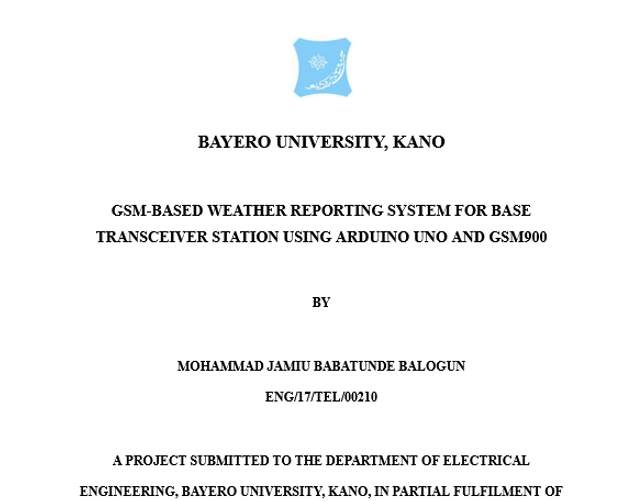
Many students complete a final year project, submit it to their department, defend it successfully, and then leave it sitting on a shelf or buried in a folder on their laptop.
What many students do not realize is that a good final year project can become a research paper.
In fact, a large percentage of journal articles started as undergraduate projects, master's dissertations, or PhD theses. The difference is that research papers are shorter, more focused, and written specifically for publication.
If your project contains useful findings, original analysis, survey results, experiments, software development, case studies, or statistical insights, you may already have the foundation of a publishable paper.
This guide explains exactly how to convert a final year project into a research paper that can be submitted to journals, conferences, or preprint platforms.
Quick Summary
To turn your final year project into a research paper:
- Identify one main finding from your project.
- Remove unnecessary chapters and background information.
- Rewrite the paper using a journal article structure.
- Shorten the literature review.
- Focus the methodology on the specific research question.
- Present only the most important results.
- Discuss the significance of your findings.
- Format the paper according to a target journal.
- Proofread and edit carefully.
- Submit to a journal, conference, or preprint platform.
The goal is not to copy your project word for word. The goal is to transform it into a concise publication that communicates one clear contribution.
📙 Final Year / Research Project Tools 🔥
FYP Report Generator — Generate full project chapters and citations.
Project Topic Generator — Get supervisor-ready project topics instantly.
Proposal Generator — Generate Chapters 1–3 with literature review, methodology, and academic citations in minutes.
Reference Verifier — Quickly verify citations by checking authors, year, and DOI before submission.
Research Paper Finder — Find relevant academic papers for your final year project.
Can a Final Year Project Become a Research Paper?
Yes.
A final year project can become a research paper if it contains:
- Original data
- Research findings
- A clear research question
- Statistical analysis
- Experimental results
- Survey results
- System development outcomes
- Case study findings
Many undergraduate projects never become papers simply because students do not know how to convert them into a publishable format.
A project demonstrates that you completed academic research.
A research paper demonstrates that your findings are worth sharing with a wider audience.
💡 You can read on:
- How to Format and Submit a Research Paper to a Journal: Complete Guide for First Time Authors
- Can You Put Unpublished Research on Your CV? Preprints, Submitted Papers, and Publications Explained
Why Convert Your Project Into a Research Paper?
Publishing your project can provide several benefits.
Stronger Scholarship Applications
Research experience is highly valued in master's and PhD admissions.
A published paper can strengthen your academic profile and help distinguish you from other applicants.
Better Academic CV
Instead of listing only a project title, you can list:
- Published articles
- Conference papers
- Preprints
- Manuscripts under review
This makes your CV more competitive.
Increased Visibility
Research papers are discoverable through search engines, academic databases, and researcher profiles.
People can find and cite your work.
Career Advantages
Research publications can help when applying for:
- Graduate school
- Research assistant positions
- Academic internships
- Scholarships
- Fellowships
💡 You can read on: How to Publish Your Research for Free as a Student (Complete Guide)
Step 1: Identify the Main Contribution
Most final year projects are too broad for publication.
A project may contain:
- Five chapters
- Multiple objectives
- Extensive background information
- Long literature reviews
Research papers usually focus on one central contribution.
Ask yourself:
What is the most important finding from my project?
For example:
Project title:
"Factors Affecting Academic Performance of Undergraduate Students"
Possible paper focus:
"Impact of Social Media Usage on Academic Performance Among Nigerian Undergraduates"
Instead of discussing everything, concentrate on one major finding.
Step 2: Choose a Target Journal Early
Before rewriting your project, identify a journal that matches your field.
Different journals have different requirements.
Some journals prefer:
- Quantitative studies
- Qualitative studies
- Case studies
- Review papers
- Experimental research
Checking journal requirements early helps you write in the correct format.
Look for:
- Scope of the journal
- Word limits
- Referencing style
- Formatting guidelines
Choosing a journal first can save significant editing time later.
Step 3: Rewrite the Abstract
Your project abstract and journal abstract are usually not the same.
Journal abstracts are typically between 150 and 300 words.
A good abstract should include:
- Research problem
- Objective
- Methodology
- Key findings
- Main conclusion
A reader should understand your study without reading the full paper.
Step 4: Compress the Introduction
Many student projects contain introductions that span several pages.
Journal editors do not want extensive background discussions.
Your introduction should answer:
- What is the problem?
- Why is it important?
- What research gap exists?
- What does your study contribute?
Keep it focused.
The introduction should lead directly to your research question.
💡 You can also read on:
- How to Format and Submit a Research Paper to a Journal: Complete Guide for First Time Authors
- 15 Free Websites to Download Journals and Research Papers for Students
Step 5: Shorten the Literature Review
This is one of the biggest changes students must make.
A project literature review may be 20 to 40 pages long.
A research paper often allocates only a few pages to previous studies.
Instead of summarizing dozens of sources individually:
- Group similar studies together
- Highlight major trends
- Discuss conflicting findings
- Identify research gaps
The goal is to show how your study fits into existing knowledge.
Step 6: Rewrite the Methodology
The methodology section should explain exactly how the study was conducted.
Include:
- Research design
- Population
- Sample size
- Data collection methods
- Instruments used
- Data analysis techniques
Avoid unnecessary details that are only relevant to departmental project reports.
Focus on information needed for replication.
Step 7: Present Results Clearly
The results section should focus only on findings that answer your research question.
Avoid including every table from your project.
Instead:
- Select the most important results
- Use clear tables and figures
- Remove repetitive information
- Present findings logically
Readers should quickly understand what your data revealed.
Step 8: Write a Strong Discussion
Many students confuse results and discussion.
Results tell readers what happened.
Discussion explains why it matters.
In your discussion:
- Interpret findings
- Compare results with previous studies
- Explain agreements or differences
- Discuss implications
This section demonstrates critical thinking and academic maturity.
Step 9: Strengthen the Conclusion
Your conclusion should not repeat the entire paper.
Instead:
- Summarize major findings
- Highlight practical implications
- Suggest future research directions
Keep it concise and impactful.
Step 10: Update References
Before submission:
- Remove outdated sources where possible
- Add recent studies
- Check formatting carefully
- Ensure all citations appear in the reference list
Many journals reject papers because of referencing errors.
Common Mistakes Students Make
Copying the Entire Project
A research paper is not a shortened project report.
It requires restructuring and rewriting.
Choosing Predatory Journals
Be cautious of journals that:
- Promise publication within days
- Accept papers without review
- Demand suspicious fees
Always verify a journal before submission.
Ignoring Journal Guidelines
Every journal has specific instructions.
Failure to follow them can result in immediate rejection.
Submitting Without Proofreading
Grammar mistakes, formatting errors, and citation issues create a poor impression.
Review your manuscript carefully before submission.
Where Can You Publish Your Research Paper?
Students can consider:
Academic Journals
The traditional route for peer reviewed publication.
Conference Proceedings
Suitable for presenting research and gaining feedback.
Institutional Repositories
Many universities host student research online.
Preprint Platforms
Examples include:
- Research Square
- arXiv
- bioRxiv
- SSRN
- OSF Preprints
Preprints allow students to share research publicly before formal journal publication.
💡 You can read on: What Is ORCID iD and Why Do Students and Researchers Need It? Complete Beginner Guide
What If Your Project Is Not Perfect?
Most published papers were not perfect when first written.
Editors and reviewers commonly request revisions.
The important thing is having:
- A meaningful research question
- Sound methodology
- Credible results
- Clear writing
Even a modest undergraduate project can become a publishable paper when properly rewritten.
Conclusion
Your final year project should not be the end of your research journey.
A project that took months to complete can continue creating value long after graduation.
By refining your topic, shortening unnecessary sections, strengthening your analysis, and following journal requirements, you can transform your project into a research paper that supports scholarship applications, graduate admissions, research opportunities, and professional growth.
Instead of letting your project gather dust after defense, consider taking the extra step and turning it into a publication. The work is already done. The next stage is simply presenting it in a format the academic community can use, read, and cite.
💡 Continue reading:
- How to Write a Research Paper Fast (Without Sacrificing Quality)
- How to Write a Research Paper in One Day
- How to Publish Your Research for Free
- Why ChatGPT Invents Citations (And How to Avoid Fake References)
FAQs
Can an undergraduate student publish a research paper?
Yes. Many journals, conferences, and preprint platforms accept submissions from undergraduate students.
Can I publish my final year project exactly as it is?
Usually no. Most projects require significant editing and restructuring before becoming publishable papers.
How long should a research paper be?
It depends on the journal, but many research papers range from 3,000 to 8,000 words.
Do I need my supervisor's permission?
In many cases, yes, especially if the supervisor contributed significantly to the research or should be listed as a co author.
Can I publish my project for free?
Yes. Many journals do not charge publication fees, and preprint platforms allow free sharing of research.
How long does publication take?
Journal publication can take several months. Preprint platforms can make your work publicly available within days.
Is a preprint considered a publication?
A preprint is publicly available research but has not yet undergone formal peer review. It should be labeled as a preprint when listed on your CV.
What if my project was not experimental?
Non experimental projects, including surveys, case studies, reviews, and qualitative research, can also be converted into research papers.
About the Author
Mohammad-Jamiu B. Balogun, GMNSE
AI Security Researcher · Founder, MonoEd Africa
Mohammad-Jamiu is a First-Class Telecommunications Engineer and Best Graduating Student (BUK), and an AI security researcher. He founded MonoEd Africa to give Nigerian students AI-powered academic tools — from SIWES logbooks to final year projects. His work has reached over 10,000 students across Nigeria.