How to Write an Abstract for a Research Paper (With Examples)
Learn how to write an abstract for a research paper with step by step instructions, examples, structure, APA tips, common mistakes, and practical writing advice for students and researchers.

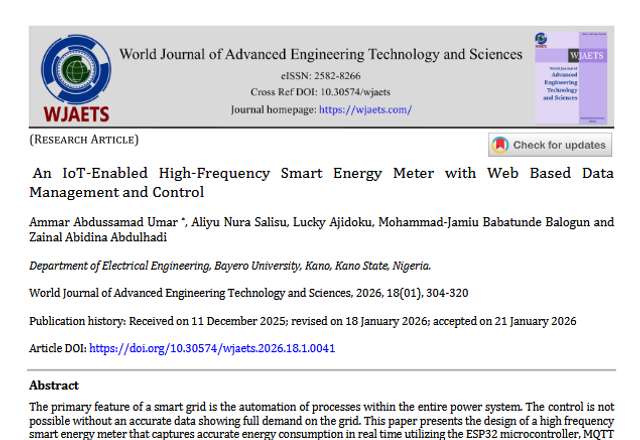
Quick Summary
An abstract is a concise summary of your research paper that explains the problem, methods, results, and conclusion in about 150 to 250 words. The best abstracts are written after completing the paper, avoid citations and unnecessary details, and give readers enough information to understand your study without reading the full manuscript.
The abstract is often the first thing people read.
In many cases, it is also the only part they read before deciding whether to continue with the rest of your paper.
Journal editors use it to decide whether your manuscript fits their publication. Reviewers use it to understand your study quickly. Researchers use it to decide whether your paper is relevant to their own work.
Despite its importance, many students leave the abstract until the last minute or treat it as a simple introduction.
It is neither.
A good abstract summarizes your entire study in a single paragraph while remaining clear, concise, and accurate.
Whether you are writing a research paper, thesis, dissertation, conference paper, or journal article, this guide will show you exactly how to write an abstract that works.
What Is an Abstract?
An abstract is a brief summary of your research paper.
It explains:
- What your research is about
- Why the study was conducted
- How the research was carried out
- What you discovered
- What your findings mean
Think of it as a miniature version of your entire paper.
A reader should understand the main points of your study without reading the full document.
Why Is the Abstract Important?
A well written abstract helps readers quickly decide whether your research is relevant to them.
It also helps:
- Journal editors screen submissions
- Conference reviewers evaluate proposals
- Researchers discover your paper in search engines
- Databases index your research
- Increase the visibility of your work
A weak abstract can cause readers to skip an otherwise excellent paper.
When Should You Write the Abstract?
Always write your abstract last.
Although it appears at the beginning of your paper, it should be the final section you write.
By this stage you already know:
- Your research objectives
- Your methods
- Your findings
- Your conclusions
This makes it much easier to summarize your work accurately.
How Long Should an Abstract Be?
The required length depends on your institution or journal.
Typical guidelines are:
- Research papers: 150 to 250 words
- Conference abstracts: 150 to 300 words
- Theses and dissertations: 250 to 500 words in some institutions
Always check your department or journal guidelines before submitting.
Structure of a Research Paper Abstract
Most abstracts follow four simple parts.
1. Background
Introduce the topic and explain the problem.
Example:
Artificial intelligence has become increasingly common in academic writing, but concerns remain about citation accuracy.
Keep this section brief.
Usually one or two sentences are enough.
2. Methods
Explain how the research was conducted.
Include only the essential details.
Example:
This study analyzed 150 undergraduate research papers using a mixed methods approach.
Readers do not need every procedural detail.
3. Results
Summarize your most important findings.
This is often the most valuable part of the abstract.
Example:
Students who used structured AI research tools produced significantly fewer citation errors than those relying solely on general AI chatbots.
Whenever appropriate, include key numbers rather than vague statements.
4. Conclusion
End with the main implication of your findings.
Example:
These findings suggest that structured AI research workflows can improve both research efficiency and citation accuracy.
Avoid introducing new information here.
A Simple Formula for Writing an Abstract
You can think about your abstract like this:
Problem
↓
Method
↓
Results
↓
Conclusion
If all four parts are present, your abstract will usually cover everything readers need.
Abstract Example
Here is a simple example.
Title
The Impact of Artificial Intelligence on Research Writing Among University Students
Abstract
Artificial intelligence has become widely used in academic writing, yet concerns remain about its effect on research quality and citation accuracy. This study investigated how undergraduate students use AI tools during the research writing process. A survey of 250 students from three Nigerian universities was conducted, supported by interviews with selected participants. The findings showed that AI significantly improved drafting speed and idea generation but also increased the likelihood of citation errors when students failed to verify references. The study concludes that AI can enhance research productivity when combined with proper citation verification and critical evaluation of generated content.
How to Write an Abstract for Different Types of Papers
Research Paper
Focus on:
- Research problem
- Methods
- Results
- Conclusion
Literature Review
Since there is no original experiment, summarize:
- Topic
- Scope of the review
- Major themes
- Research gaps
- Overall conclusions
Example:
This review examines recent studies on artificial intelligence in higher education, highlighting major developments, current challenges, and areas requiring further investigation.
Research Proposal
A proposal abstract focuses on what you plan to study rather than completed results.
Include:
- Research problem
- Objectives
- Proposed methodology
- Expected contribution
Avoid presenting results that do not yet exist.
Conference Abstract
Conference abstracts are often shorter.
Focus on:
- Purpose
- Methods
- Main findings
- Significance
Many conference organizers also specify formatting requirements, so always check the submission guidelines.
Writing an Abstract in APA 7
If you are using APA 7 format:
- Place the abstract on its own page.
- Center the heading "Abstract" at the top.
- Do not indent the first line.
- Use one paragraph unless instructed otherwise.
- Include keywords below the abstract if required.
Remember that APA formatting affects the layout of the abstract, not its content.
Common Mistakes to Avoid
Many abstracts lose marks because they include unnecessary information.
Avoid these mistakes:
- Writing the abstract before finishing the paper
- Including citations
- Referring to tables or figures
- Explaining every detail of your methodology
- Introducing new information
- Making unsupported claims
- Using vague language instead of reporting actual findings
- Exceeding the word limit
Your abstract should summarize, not expand, your paper.
Tips for Writing a Better Abstract
A strong abstract is:
- Clear
- Concise
- Accurate
- Specific
- Self contained
- Easy to understand
After writing your abstract, ask yourself:
Can someone understand my research without reading the rest of the paper?
If the answer is yes, your abstract is doing its job.
How AI Can Help You Write an Abstract
Writing an abstract is often easier after your paper is complete, but summarizing an entire study into 200 words can still be challenging.
General AI assistants can help you:
- Simplify long paragraphs
- Improve clarity
- Reduce word count
- Rewrite awkward sentences
However, researchers should always verify that the abstract accurately reflects their actual methods, findings, and conclusions.
A structured research writing platform like PaperDraft can make this process more efficient. Because your manuscript is built around your selected references, outline, methods, and drafted sections, it can generate an abstract that summarizes your own work instead of producing generic content from a short prompt.
This allows you to spend less time rewriting summaries and more time reviewing the final manuscript before submission.
Final Checklist Before Submission
Before submitting your paper, make sure your abstract:
✓ Was written after completing the paper
✓ Includes the research problem
✓ Briefly explains the methodology
✓ States the key findings
✓ Ends with the main conclusion
✓ Contains no citations
✓ Fits the required word limit
✓ Matches the content of the paper exactly
Conclusion
Although it is one of the shortest sections of a research paper, the abstract has one of the biggest impacts.
A clear, well structured abstract helps readers understand your research quickly, improves the visibility of your paper in academic databases, and creates a strong first impression for editors and reviewers.
Write it after completing your manuscript, focus on the problem, methods, results, and conclusion, and keep every sentence purposeful.
If you want to speed up the process, use research tools that generate abstracts from your completed manuscript rather than relying on a single prompt. That approach keeps your summary aligned with your actual research while reducing the time spent editing.
💡 Continue reading:
- How to Write a Literature Review: A Step by Step Guide for Research Papers, Proposals, and Dissertations
- How to Write a Research Paper Fast (Without Sacrificing Quality)
- How to Write a Research Paper in One Day
- How to Publish Your Research for Free
- Why ChatGPT Invents Citations (And How to Avoid Fake References)
FAQs
What is an abstract in a research paper?
An abstract is a brief summary of your research paper that explains the purpose of the study, the methods used, the main findings, and the conclusions.
How long should a research paper abstract be?
Most abstracts are between 150 and 250 words, although some journals and universities have different requirements.
Should I write the abstract first?
No. The abstract should be written after completing the rest of the paper so it accurately reflects your final research.
Can an abstract contain citations?
No. Abstracts should be self contained and generally should not include references, citations, tables, or figures.
What tense should I use in an abstract?
Many abstracts use the past tense when describing methods and results, while the present tense is often used when discussing the topic or broader conclusions. Follow your department or journal guidelines if they specify a preferred style.
How many keywords should I include after the abstract?
Most journals and universities ask for three to five keywords placed below the abstract. Choose terms that accurately describe your topic and are likely to help other researchers find your work.
Can AI write my abstract?
AI can help summarize your completed manuscript and improve clarity, but you should always review the final abstract to ensure it accurately represents your research, methods, and findings.
About the Author
Mohammad-Jamiu B. Balogun, GMNSE
AI Security Researcher · Founder, MonoEd Africa
Mohammad-Jamiu is a First-Class Telecommunications Engineer and Best Graduating Student (BUK), and an AI security researcher. He founded MonoEd Africa to give Nigerian students AI-powered academic tools — from SIWES logbooks to final year projects. His work has reached over 10,000 students across Nigeria.