How to Fill SIWES Logbook for Bakery Students (With Practical Daily Examples)
Learn how to fill your SIWES logbook for bakery with step-by-step daily examples covering ingredient scaling, dough mixing, fermentation, baking, packaging, and sanitation. Includes weekly summary guide and supervisor signature tips.

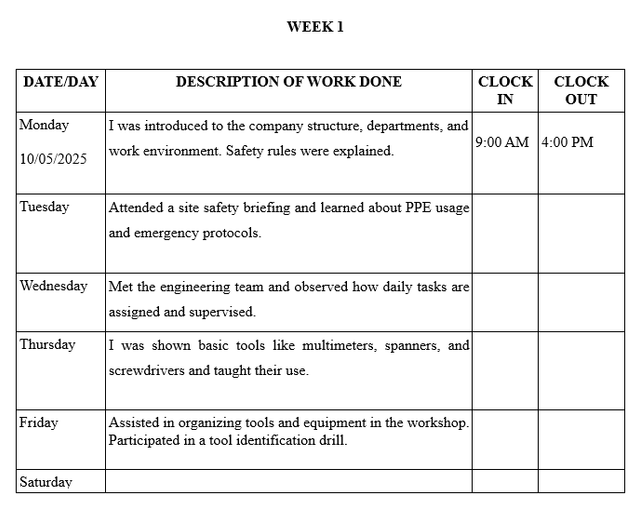
Filling your SIWES logbook as a bakery student or intern is an important requirement under the Students Industrial Work Experience Scheme (SIWES).
Your logbook should clearly show the practical baking skills you learned during your industrial training. This includes preparation, production, baking operations, equipment handling, hygiene practices, and inventory management.
A well-filled bakery logbook demonstrates:
- Technical baking knowledge
- Understanding of production processes
- Ability to operate equipment
- Knowledge of hygiene and safety standards
- Growth in practical skills over time
What to Record in a Bakery SIWES Logbook
Your entries should reflect real, step-by-step bakery activities using proper technical terms.
1. Preparation Stage
Document tasks such as:
- Scaling and weighing ingredients like flour, yeast, sugar, salt, and fat
- Cleaning and sanitizing utensils
- Preparing baking pans and trays
- Checking stock levels of raw materials
Example:
“Weighed 50kg of flour, measured yeast and sugar accurately, and prepared baking pans for production.”
2. Production Stage
Record technical processes including:
- Mixing ingredients using a dough mixer
- Manual or mechanical kneading
- Monitoring gluten development
- Fermentation and proofing
- Dividing and moulding dough
Use correct baking terms like:
- Fermentation
- Gluten development
- Leavening agents
- Dough hydration
- Proofing time
Instead of writing “made bread,” write:
“Mixed ingredients in industrial mixer for 10 minutes, monitored fermentation for 1 hour, and observed gluten development.”
3. Baking and Finishing
Include:
- Operating commercial ovens
- Monitoring baking temperatures
- Cooling procedures
- Slicing and packaging
- Labeling finished products
Example:
“Proofed dough for 1 hour 30 minutes and baked at 200°C for 25 minutes. Allowed bread to cool before slicing and packaging.”
4. Maintenance and Sanitation
Also document:
- Cleaning bakery floor
- Sanitizing equipment
- Washing trays and mixers
- Conducting inventory checks
- Disposing waste properly
Hygiene and safety are important parts of your training and should always be recorded.
Step-by-Step Guide to Filling the Logbook
1. Record Daily
Do not wait until the end of the week. Write entries daily to avoid forgetting details.
2. Be Specific
Avoid vague entries like:
“Worked in the bakery.”
Instead write:
“Scaled ingredients for 100 loaves of bread, mixed dough, and monitored fermentation process.”
3. Use Technical Language
Use professional baking terms to show technical understanding.
4. Include Sketches
If your logbook has space for drawings, sketch:
- Dough mixer
- Commercial oven
- Production flow process
- Bakery layout
Label each diagram properly.
5. Ensure Weekly Signature
Your industry supervisor must sign and stamp your logbook weekly for validation.
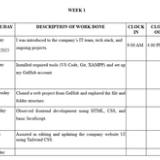
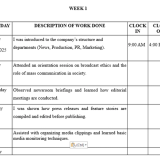
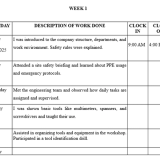
Sample Logbook Entries for Bakery Students
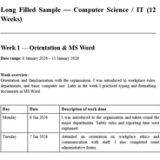
Week 1 – Orientation and Basic Operations
| Day | Activity |
|---|---|
| Monday | Reported to the bakery and received orientation on safety rules, hygiene standards, and production procedures. |
| Tuesday | Observed bread production process from ingredient scaling to packaging. Assisted in cleaning utensils and preparing baking pans. |
| Wednesday | Learned proper measurement techniques and practiced weighing flour, sugar, yeast, and salt accurately. |
| Thursday | Assisted in cleaning dough mixer and organizing baking trays. Studied basic functions of commercial oven. |
| Friday | Participated in general sanitation of work area and learned proper storage methods for raw materials. |
This week focuses on understanding environment, hygiene, equipment, and basic preparation.
Week 2 – Bread Production Process
| Day | Activity |
|---|---|
| Monday | Scaled ingredients for white bread production and assisted in mixing using industrial dough mixer. |
| Tuesday | Monitored dough fermentation and observed gluten development during proofing stage. |
| Wednesday | Divided dough into 500g portions and moulded into baking pans. |
| Thursday | Proofed dough for 1 hour 30 minutes and baked at 200°C while monitoring oven temperature. |
| Friday | Sliced and packaged finished bread and arranged products for distribution. |
This week shows hands-on participation in complete bread production.
Week 3 – Advanced Products and Pastry Production
| Day | Activity |
|---|---|
| Monday | Prepared dough for sweet buns and monitored ingredient ratios for improved texture. |
| Tuesday | Produced meat pies by preparing pastry dough and portioning fillings before baking. |
| Wednesday | Assisted in sponge cake production and monitored baking time for quality control. |
| Thursday | Decorated cakes using buttercream frosting and practiced basic piping techniques. |
| Friday | Conducted quality checks on finished products and documented observations on texture and appearance. |
This week demonstrates skill advancement and exposure to more complex bakery products.
Weekly Summary Example
At the end of the week, write a short summary such as:
“This week, I learned the complete bread production process from ingredient scaling to packaging. I improved my knowledge of fermentation timing and oven temperature control.”
Common Mistakes to Avoid
- Writing vague statements
- Skipping days
- Filling the logbook at the end of the program
- Ignoring hygiene activities
- Forgetting supervisor signature
- Leaving blank spaces
If no work was done, write “Public Holiday” or “Nil.”
Tired of Writing Logbook Entries Every Day?
You’re not alone — most students leave it till the last week and forget the details. That’s why thousands now use this:
✅ Just enter a short weekly summary
✅ Get full Monday–Friday entries instantly
✅ Copy → paste → done
✅ Grammar-checked
As a bakery student, this tool adapts to your field and saves hours.
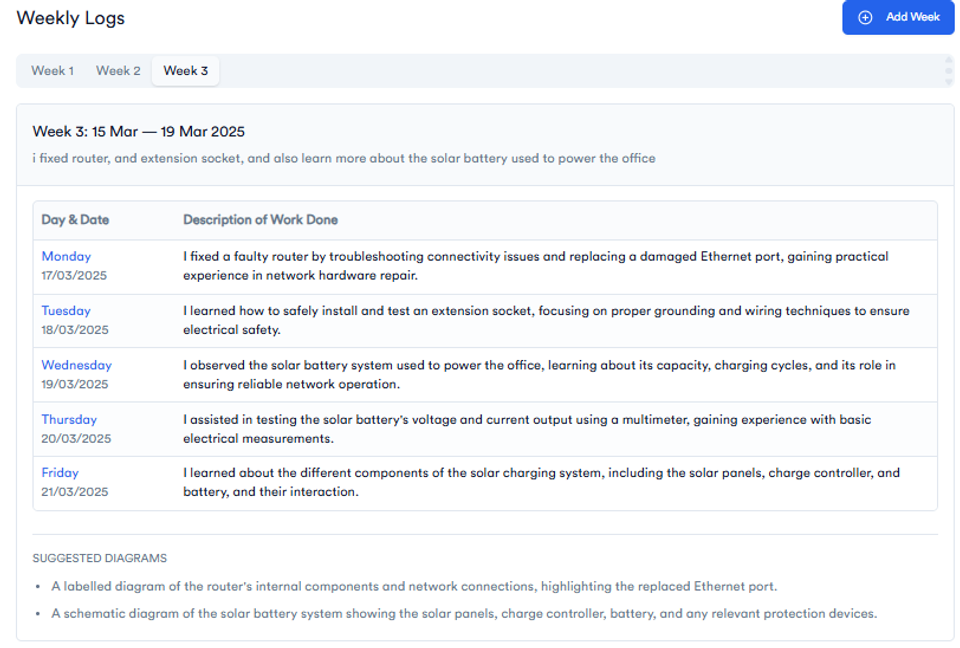
👉 Try It Free – Generate My Logbook Now
FAQs
How should I start my bakery SIWES logbook?
Begin with your personal details, bakery name, supervisor’s name, and duration of training. Then record daily production activities clearly and chronologically.
Is it necessary to use technical baking terms?
Yes. Using terms like fermentation, kneading, proofing, and gluten development shows professional understanding.
Should I record cleaning activities?
Yes. Sanitation and hygiene are essential parts of bakery operations and must be documented.
Can I include equipment drawings?
Yes. Drawing and labeling equipment such as mixers and ovens can improve your logbook presentation.
Is weekly supervisor signature compulsory?
Yes. Your supervisor must review, sign, and stamp your logbook weekly.
About the Author
Mohammad-Jamiu B. Balogun, GMNSE
AI Security Researcher · Founder, MonoEd Africa
Mohammad-Jamiu is a First-Class Telecommunications Engineer and Best Graduating Student (BUK), and an AI security researcher. He founded MonoEd Africa to give Nigerian students AI-powered academic tools — from SIWES logbooks to final year projects. His work has reached over 10,000 students across Nigeria.