How to Fill SIWES Logbook for Public Administration Students (With Daily Examples)
Learn how to fill your SIWES logbook for Public Administration with daily examples of office management, memo drafting, minutes taking, public relations, and HR tasks. Step-by-step guide with weekly summary and supervisor signature tips.

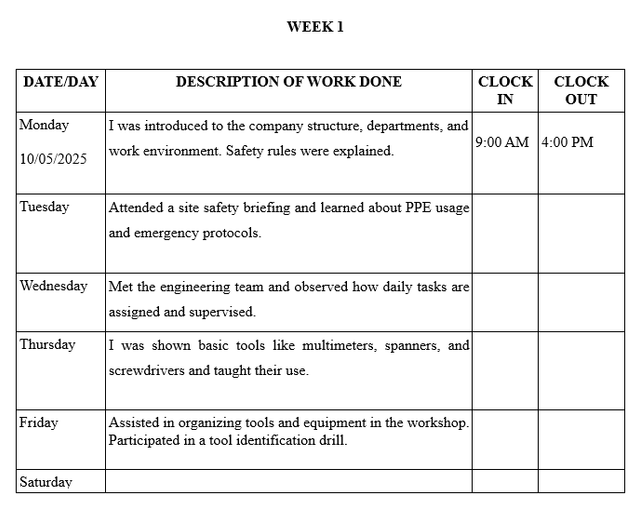
Filling your SIWES logbook as a Public Administration student is an important requirement under the Students Industrial Work Experience Scheme (SIWES).
Your logbook serves as official proof of the administrative skills and practical experience you gained during your industrial attachment.
A properly filled logbook shows that you understand:
- Office administration procedures
- Records and document management
- Public relations and communication
- Basic human resource functions
This guide explains how to fill your SIWES logbook correctly, with daily entry examples, weekly summary guidance, and tips to avoid common mistakes.
What Is Expected in a Public Administration SIWES Logbook
Your logbook should clearly document practical exposure to administrative operations such as:
Office Management
- Sorting and dispatching mail
- Filing and retrieving documents
- Managing records and registry systems
Administrative Tasks
- Drafting memos and official correspondence
- Taking minutes during meetings
- Photocopying, scanning, and document processing
- Preparing reports
Public Relations
- Receiving visitors
- Responding to inquiries
- Coordinating meetings and appointments
Human Resources and Personnel
- Assisting with staff attendance records
- Supporting recruitment documentation
- Updating personnel files
Step-by-Step Guide to Filling Your Logbook
1. Record Daily Activities
Write your entries daily to ensure accuracy. Use a rough notebook during office hours, then transfer the information neatly into your official ITF logbook.
Each entry should include:
- Date
- Specific tasks performed
- Skills or knowledge gained
Write in the past tense and keep your entries concise.
Instead of writing:
“I wrote a memo.”
Write:
“Drafted a memo regarding departmental meeting schedule.”
2. Use Professional and Clear Language
Your logbook should reflect professionalism. Use formal administrative terms such as:
- Drafted
- Processed
- Coordinated
- Compiled
- Recorded
- Updated
- Filed
Avoid vague statements like “Worked in the office” or “Did office work.”
3. Complete Weekly Summary
At the end of each week, summarize the most important skills learned.
Focus on:
- Administrative experience gained
- Communication improvement
- Proficiency in Microsoft Office tools
- Exposure to government or institutional procedures
Example weekly summary:
“This week, I gained experience in records management and memo drafting. I improved my minute-taking skills during departmental meetings and enhanced my proficiency in Microsoft Word and Excel.”
4. Obtain Supervisor Signature
Ensure your industry supervisor checks, signs, and stamps your logbook weekly. Unsigned logbooks may not be accepted during submission.
Sample Daily Logbook Entries for Public Administration
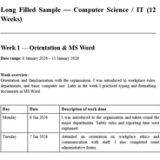
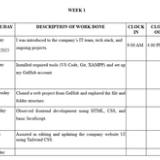
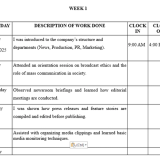
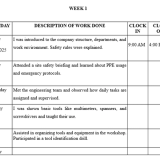
Week 1 – Orientation and Office Procedures
| Day | Activity |
|---|---|
| Monday | Reported to the department. Introduced to staff and office procedures. Arranged files in the registry and attended to visitors. |
| Tuesday | Processed incoming and outgoing correspondence. Updated staff attendance register. |
| Wednesday | Took minutes during the weekly staff meeting and drafted a memo for the Head of Department. |
| Thursday | Sorted and filed official documents according to registry system. Assisted in preparing departmental report. |
| Friday | Received visitors and directed inquiries to appropriate offices. Coordinated internal meeting schedule. |
Week 2 – Administrative and Personnel Support
| Day | Activity |
|---|---|
| Monday | Assisted in updating personnel records and organizing confidential staff files. |
| Tuesday | Drafted internal correspondence regarding policy updates. |
| Wednesday | Processed leave applications and updated staff attendance database. |
| Thursday | Photocopied and scanned official documents for archiving. |
| Friday | Compiled weekly activity report and submitted for supervisor review and signature. |
What to Write on “No Work” Days
If no official activity occurs, write:
- “Nil”
- “Public Holiday”
- “No official assignment; reviewed departmental procedures”
Never leave a blank space.
Common Mistakes to Avoid
- Leaving blank days in the logbook
- Filling the entire logbook in the final week
- Writing vague statements
- Forgetting weekly supervisor signatures
- Using informal language
Tips to Score High in SIWES
- Write entries daily
- Be concise and specific
- Focus on skills learned
- Maintain neat handwriting
- Use proper grammar
- Obtain weekly signatures consistently
Tired of Writing Logbook Entries Every Day?
You’re not alone — most students leave it till the last week and forget the details. That’s why thousands now use this:
✅ Just enter a short weekly summary
✅ Get full Monday–Friday entries instantly
✅ Copy → paste → done
✅ Grammar-checked
As a public admin student, this tool adapts to your field and saves hours.
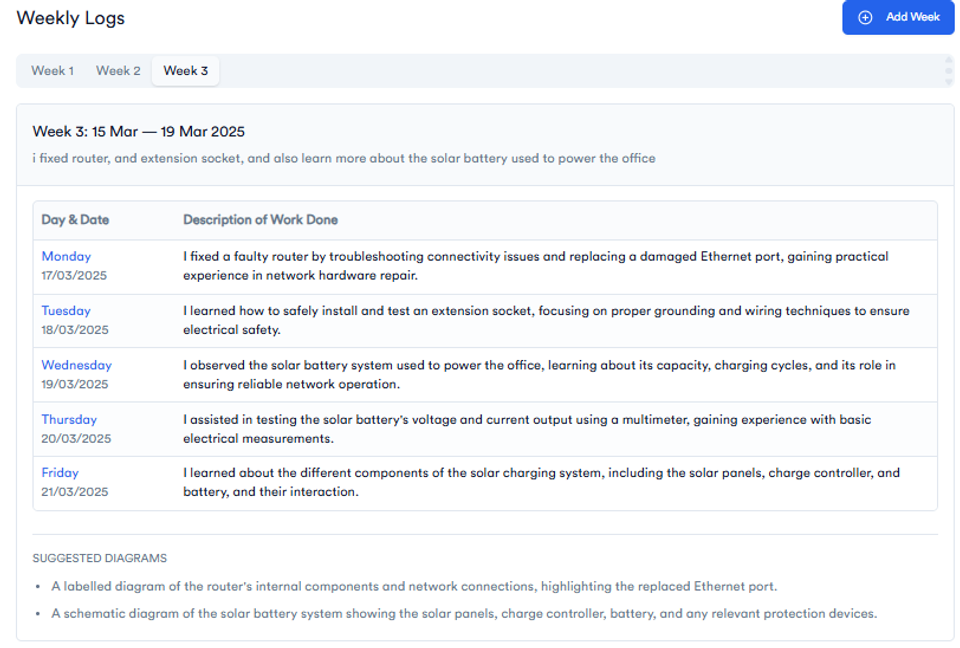
👉 Try It Free – Generate My Logbook Now
FAQs
1. How should I start my Public Administration SIWES logbook?
Begin with your personal details, department, organization name, supervisor’s name, and duration of attachment. Then record daily activities in professional language.
2. Can I fill my logbook weekly instead of daily?
Daily entries are recommended. Delayed entries may lead to forgotten details and errors.
3. What kind of activities should I record?
Office management, memo drafting, minute taking, public relations duties, records management, and personnel assistance.
4. Is weekly supervisor signature compulsory?
Yes. Weekly signatures and stamps validate your activities and are required for acceptance.
5. What if my work is repetitive?
Summarize similar tasks clearly while highlighting any new skills or improvements gained.
About the Author
Mohammad-Jamiu B. Balogun, GMNSE
AI Security Researcher · Founder, MonoEd Africa
Mohammad-Jamiu is a First-Class Telecommunications Engineer and Best Graduating Student (BUK), and an AI security researcher. He founded MonoEd Africa to give Nigerian students AI-powered academic tools — from SIWES logbooks to final year projects. His work has reached over 10,000 students across Nigeria.