SIWES Logbook for Electrical Engineering: How to Fill Your Logbook Correctly
Learn how to fill your SIWES logbook for Electrical Engineering with daily examples, tools, diagrams, and supervisor signatures. Step-by-step guide for students.

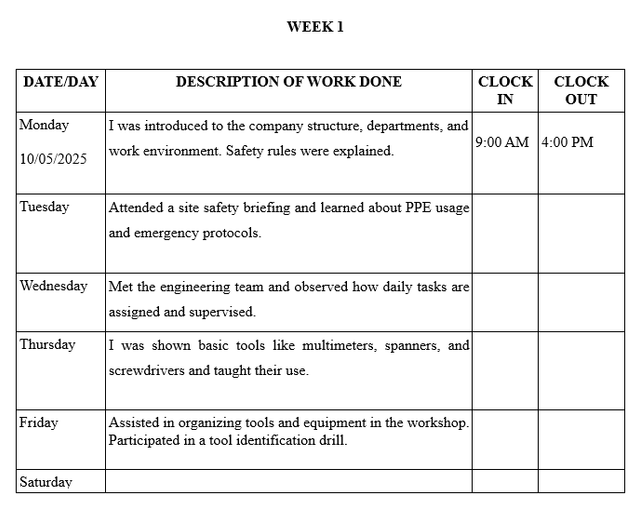
Filling your SIWES (Students Industrial Work Experience Scheme) logbook is an essential part of your industrial training as an Electrical Engineering student. Your logbook serves as proof of hands-on skills and is evaluated by both your university and industry supervisors.
A well-documented logbook demonstrates your technical competency in installation, maintenance, and troubleshooting tasks. In this guide, you’ll learn how to fill your Electrical Engineering SIWES logbook professionally, with examples, sketches, and tips to make your entries accurate and impressive.
Key Sections of an Electrical Engineering SIWES Logbook
Your logbook should follow this structure:
a) Student & Company Details
- Name, matriculation number, and department
- Company/organization name, address, and supervisor’s name
- Duration of attachment
b) Daily Activity Records
Each entry should include:
- Specific tasks performed or observed: Avoid vague entries like “worked on electricals.” Instead:
“Replaced faulty MCB in the distribution board.” - Use past tense and professional phrases: Words like “assisted,” “tested,” “observed,” “repaired” make entries formal.
- Tools used: Include instruments such as multimeters, insulation testers, voltmeters, and cable testers.
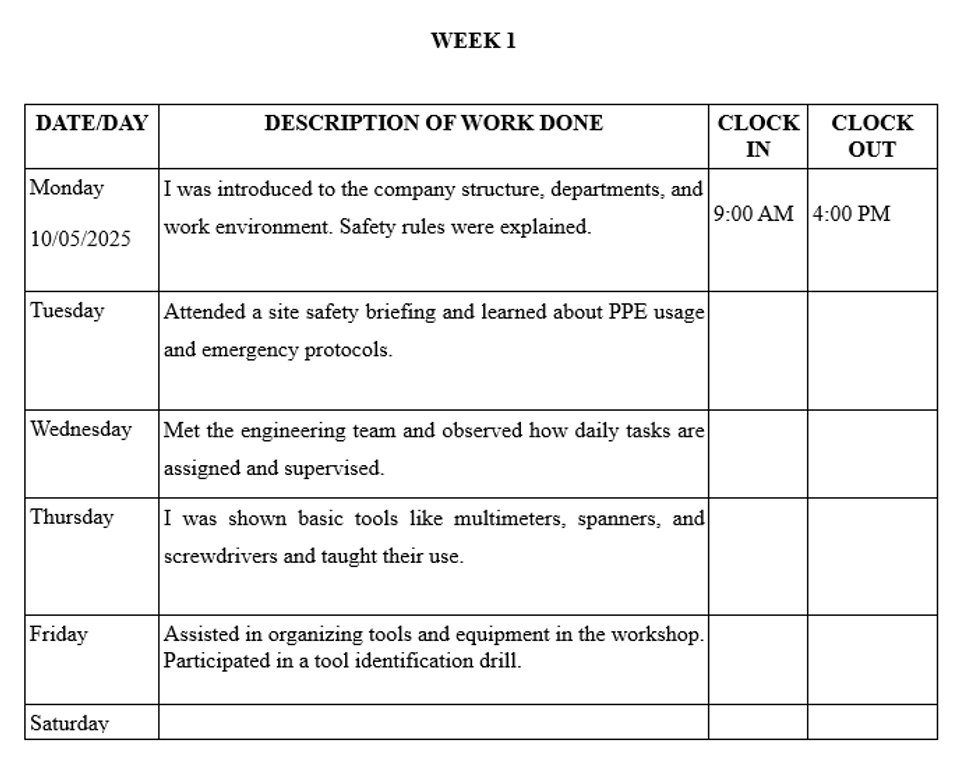
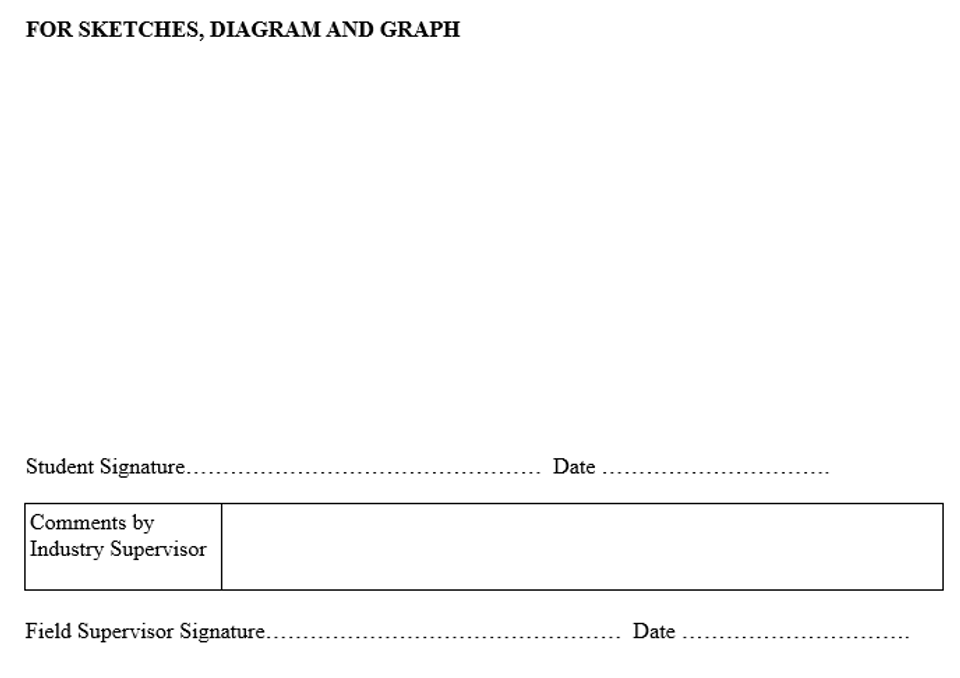
- Sketches/Diagrams: Draw wiring layouts, circuit diagrams, or tool arrangements for clarity.
c) Weekly Summary & Supervisor Signatures
- Summarize the main skills learned that week
- Include diagrams or sketches of work performed
- Ensure weekly supervisor comments and signature
Sample Daily Logbook Entries (Electrical Engineering)
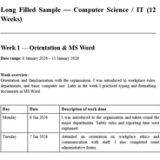
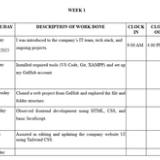
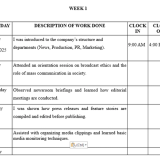
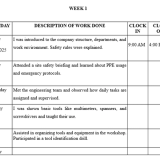
Week 1 – Orientation
| Day | Activity |
|---|---|
| Monday | Orientation session with site supervisor. Learned company policies, safety regulations, and PPE use. |
| Tuesday | Observed electrical installations in office rooms. Learned about circuit breakers and wiring tools. |
| Wednesday | Assisted in installing fluorescent light fittings. Practiced wire stripping and fixing with terminal blocks. |
| Thursday | Participated in wiring fault inspections. Identified short circuits in a distribution panel. |
| Friday | Learned multimeter usage. Measured voltage, resistance, and current across devices. |
Week 2 – Wiring & Installation
| Day | Activity |
|---|---|
| Monday | Assisted in laying conduit pipes for a new office building. Learned pipe measuring and cutting. |
| Tuesday | Helped draw and interpret electrical wiring layouts. |
| Wednesday | Pulled cables through laid conduits and labeled cable ends. |
| Thursday | Installed electrical boxes and wall sockets. |
| Friday | Connected cables to main distribution board under supervision. |
Week 3 – Maintenance & Troubleshooting
| Day | Activity |
|---|---|
| Monday | Tested circuit continuity using a multimeter. |
| Tuesday | Replaced faulty switches and sockets in the workshop. |
| Wednesday | Installed ceiling fans and light fittings in a classroom. |
| Thursday | Embedded flexible conduit pipes into concrete block walls. |
| Friday | Participated in trunking and surface wiring techniques for renovation. |
Week 4 – Safety & System Testing
| Day | Activity |
|---|---|
| Monday | Tested residual current devices (RCDs) for safety compliance. |
| Tuesday | Measured voltage drops across circuits using a voltmeter. |
| Wednesday | Troubleshot and repaired an electric water heater. |
| Thursday | Organized and labeled distribution panels and breakers. |
| Friday | Attended toolbox meeting on electrical hazard prevention and PPE use. |
Week 5 – Industrial Electrical Installation
| Day | Activity |
|---|---|
| Monday | Shadowed technician installing 3-phase motor control panel. |
| Tuesday | Assisted in connecting contactors and overload relays. |
| Wednesday | Observed control diagram and wiring schematic applications. |
| Thursday | Assisted in cable management and trunking. |
| Friday | Participated in testing and commissioning of control panel. |
Tools & Equipment to Include
- Electrical Tools: Multimeter, insulation tester, cable tester, voltmeter, phase tester
- Installation Tools: Conduits, wires, terminal blocks, sockets, distribution panels
- Safety Equipment: Gloves, helmet, safety boots, PPE
Tips for Filling Your Electrical SIWES Logbook
- Write daily: Prevent memory gaps and ensure detailed entries.
- Use past tense and professional phrases: “Observed,” “Assisted,” “Tested,” “Repaired.”
- Include diagrams and sketches: Wiring layouts, circuit diagrams, or tool arrangements.
- Be accurate and honest: Never forge activities or supervisor signatures.
- Maintain neatness and grammar: A clean, readable logbook makes a positive impression.
- Draft notes first: Use a diary or notebook at the site, then transfer to the official logbook.
Common Mistakes to Avoid
- Writing vague statements like “Worked on electricals”
- Skipping daily entries
- Forgetting supervisor signatures
- Not including tools, diagrams, or technical terminology
Tired of Writing Logbook Entries Every Day?
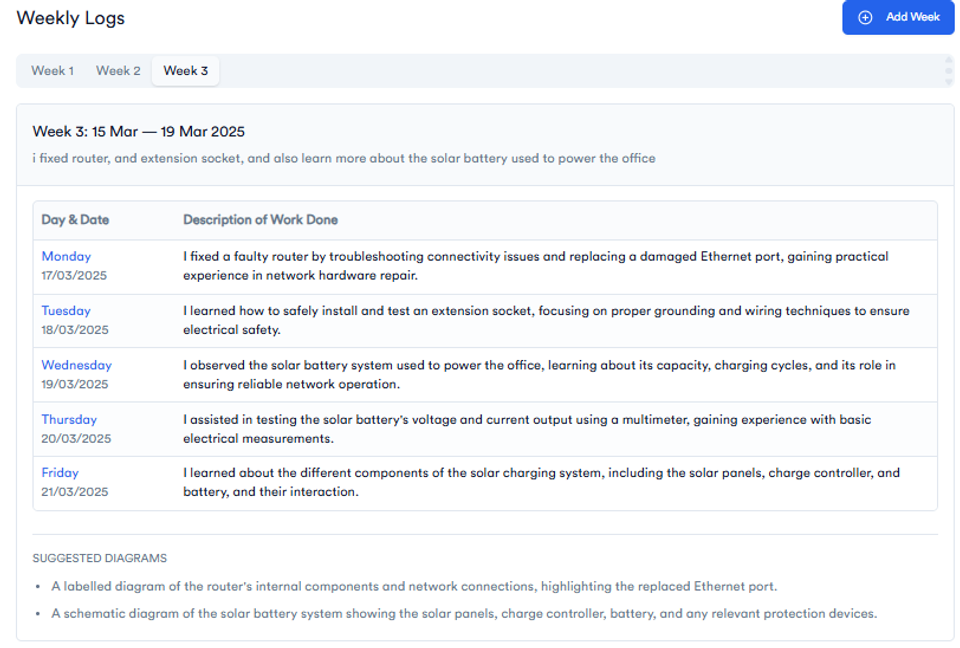
You’re not alone — most students leave it till the last week and forget the details. That’s why thousands now use this:
✅ Just enter a short weekly summary
✅ Get full Monday–Friday entries instantly
✅ Copy → paste → done
✅ Grammar-checked and engineering-focused
Whether you're at a power company, mechanical workshop, or construction firm, this tool adapts to your field and saves hours.
👉 Try It Free – Generate My Logbook Now
FAQ
Q1: How do I start my Electrical Engineering SIWES logbook?
Begin with your student and company details, then document daily activities using past tense, tools, and technical terms. Include sketches when possible.
Q2: Can I write weekly instead of daily?
Daily entries are recommended for accuracy. Weekly entries risk missing important details.
Q3: What if no work happens on a day?
Write “No project activity” or document observation, maintenance, or learning tasks performed.
Q4: Are sketches mandatory?
Yes. Diagrams of circuits, wiring layouts, and tools improve clarity and evaluation scores.
Q5: Which tools should I mention in my Electrical logbook?
Multimeter, cable tester, insulation resistance tester, voltmeter, PPE, and any installation tools used.
About the Author
Mohammad-Jamiu B. Balogun, GMNSE
AI Security Researcher · Founder, MonoEd Africa
Mohammad-Jamiu is a First-Class Telecommunications Engineer and Best Graduating Student (BUK), and an AI security researcher. He founded MonoEd Africa to give Nigerian students AI-powered academic tools — from SIWES logbooks to final year projects. His work has reached over 10,000 students across Nigeria.