How to Fill SIWES Logbook for Library and Information Science (LIS) Students
Learn how to fill your SIWES logbook for Library and Information Science students. Includes daily entries for cataloging, circulation, shelving, reference services, KOHA software use, and Dewey Decimal Classification, plus tips for supervisor approval.

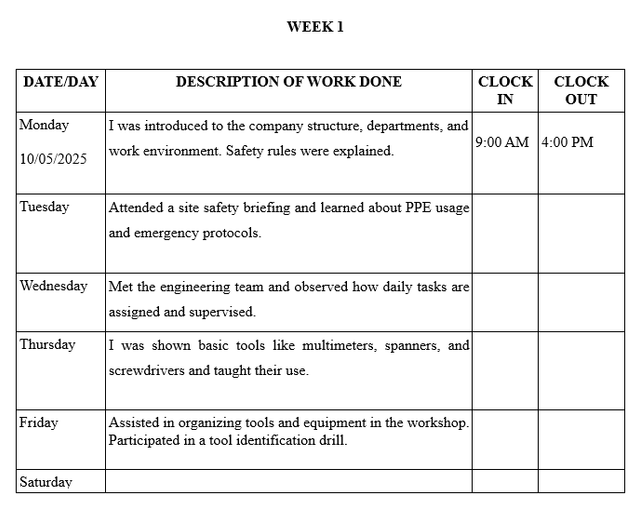
Filling a SIWES logbook as a Library and Information Science (LIS) student is essential to document practical experience gained during industrial attachment under the Students Industrial Work Experience Scheme (SIWES).
A well-maintained logbook shows:
- Hands-on experience with library management systems
- Knowledge of cataloging, classification, and circulation
- Familiarity with reference services and library operations
- Professional growth and understanding of LIS workflows
This guide explains how to fill your LIS SIWES logbook with structured daily examples, sketches, and tips to make entries accurate, professional, and supervisor-approved.
Key Components of an LIS SIWES Logbook
1. Student and Company Information
Record this at the start of your attachment:
- Name and matriculation number
- Department (Library and Information Science)
- Name and address of the organization or library
- Industrial supervisor’s name
- Duration of attachment
2. Daily Activity Entries
Each entry should include:
- Date: Clearly indicate the day or week
- Activity Description: Specify what was done and the tools/software used
- Skills/Knowledge Learned: Record new techniques or skills
- Observations: Note any important insights or issues encountered
Example Tasks to Include
Cataloging
- “Cataloged 25 new arrivals using KOHA Integrated Library System”
- “Updated bibliographic records for recently acquired journals”
Classification
- “Assigned Dewey Decimal call numbers to new textbooks”
- “Reviewed and corrected call numbers for misclassified books”
Circulation Services
- “Processed check-ins and check-outs for library users”
- “Updated borrower records and generated overdue notices”
Shelf Management
- “Shelved returned books and conducted shelf reading for the 000-100 section”
- “Organized periodicals and archived outdated materials”
Reference Services
- “Assisted students in searching OPAC and navigating online databases”
- “Provided guidance on literature search strategies for research projects”
Sample Daily Logbook Entries for LIS Students
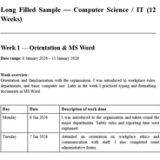
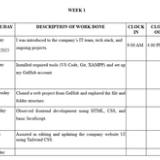
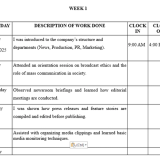
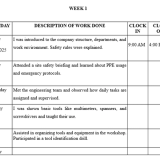
Week 1 – Orientation and Library Introduction
| Day | Activity |
|---|---|
| Monday | Reported to the library. Introduced to library layout, staff, and policies. Learned library rules and user service procedures. |
| Tuesday | Observed cataloging process and acquisition procedures. Learned about KOHA modules and bibliographic entry. |
| Wednesday | Assisted in cataloging new books and assigning Dewey Decimal Classification numbers. |
| Thursday | Shelved returned books and checked shelf order for the 000-200 sections. |
| Friday | Guided users in accessing OPAC and digital resources. Documented observations for library orientation. |
Week 2 – Circulation and Reference Services
| Day | Activity |
|---|---|
| Monday | Processed borrower check-ins/check-outs and updated user accounts in KOHA. |
| Tuesday | Prepared overdue notices and assisted in loan renewals. |
| Wednesday | Conducted shelf reading for periodicals and ensured correct arrangement by call numbers. |
| Thursday | Assisted students with literature searches using OPAC and electronic databases. |
| Friday | Documented weekly achievements and skills learned; submitted logbook for supervisor review and signature. |
Sketches and Flowcharts
While not always mandatory, sketches help illustrate processes and improve logbook evaluation:
- Library layout and section arrangement
- Flowchart of book acquisition and cataloging workflow
- Circulation and borrower process
- Digital database search steps
Label diagrams clearly to show understanding of library operations.
Tips for Success
- Be Specific: Replace vague entries like “Worked in the library” with detailed descriptions of tasks.
- Daily Updates: Record activities each day to avoid memory gaps.
- Professional Language: Use proper grammar and clear technical terms.
- Use Rough Notes: Draft entries in a notebook before transferring to the official logbook.
- Supervisor Signatures: Ensure weekly verification by your industrial supervisor.
Common Mistakes to Avoid
- Skipping daily entries and filling all at once
- Writing vague or repetitive statements
- Omitting software or tools used (KOHA, OPAC, databases)
- Forgetting supervisor signatures
- Leaving sketches or diagram pages blank
Weekly Summary Guidelines
Summarize each week’s activities in a few sentences:
- Highlight major tasks performed
- Note skills learned and new techniques
- Mention any challenges and how they were handled
Example:
“This week, I gained hands-on experience in cataloging and classification using KOHA and Dewey Decimal Classification. I assisted in circulation services and guided users in OPAC searches. I learned proper shelving and shelf-reading procedures, improving accuracy and efficiency in library operations.”
Ensure the weekly summary is signed and stamped by the supervisor.
Tired of Writing Logbook Entries Every Day?
You’re not alone — most students leave it till the last week and forget the details. That’s why thousands now use this:
✅ Just enter a short weekly summary
✅ Get full Monday–Friday entries instantly
✅ Copy → paste → done
✅ Grammar-checked
As an LIS student, this tool adapts to your field and saves hours.
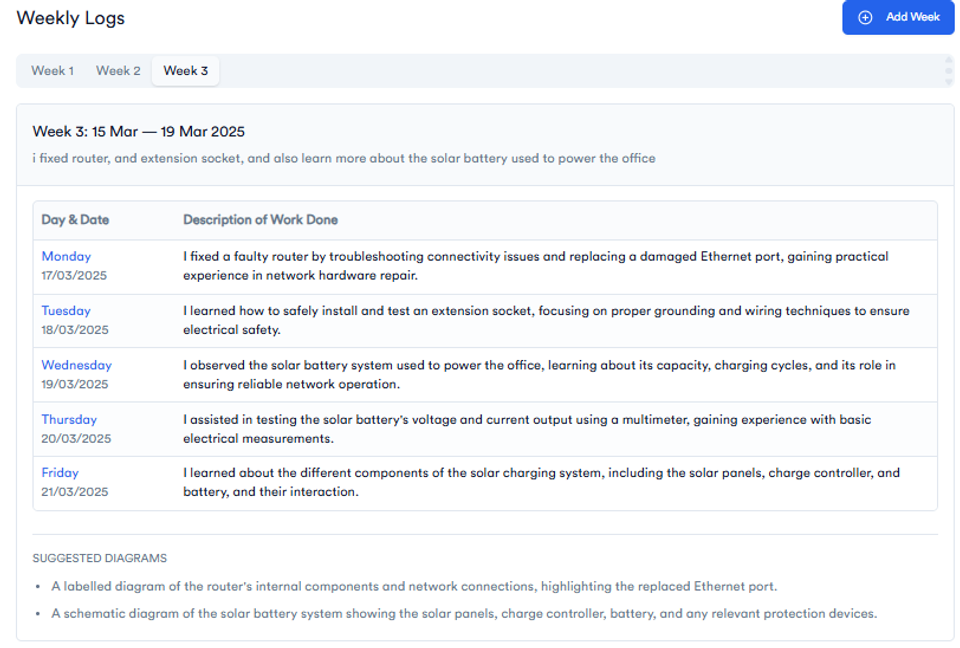
👉 Try It Free – Generate My Logbook Now
FAQs
1. How do I start my LIS SIWES logbook?
Begin with personal and company details, then record daily activities in professional language, including software or systems used.
2. Can I fill it weekly instead of daily?
Daily entries are recommended. Weekly updates risk forgetting tasks and key details.
3. Are sketches necessary?
Yes, especially diagrams of library layout, cataloging processes, and circulation workflows.
4. What activities should LIS students record?
Cataloging, classification, shelving, circulation, reference services, and use of library management systems like KOHA.
5. What if my day involves observation only?
Document observations, learning points, and discussions with staff. Example: “Observed interlibrary loan process and learned how requests are handled.”
About the Author
Mohammad-Jamiu B. Balogun, GMNSE
AI Security Researcher · Founder, MonoEd Africa
Mohammad-Jamiu is a First-Class Telecommunications Engineer and Best Graduating Student (BUK), and an AI security researcher. He founded MonoEd Africa to give Nigerian students AI-powered academic tools — from SIWES logbooks to final year projects. His work has reached over 10,000 students across Nigeria.