SIWES Report Abstract: How to Write a Clear, High Scoring Abstract (With Samples)
Learn how to write a strong SIWES report abstract that impresses examiners. Includes structure, length, writing tips, and real abstract samples.

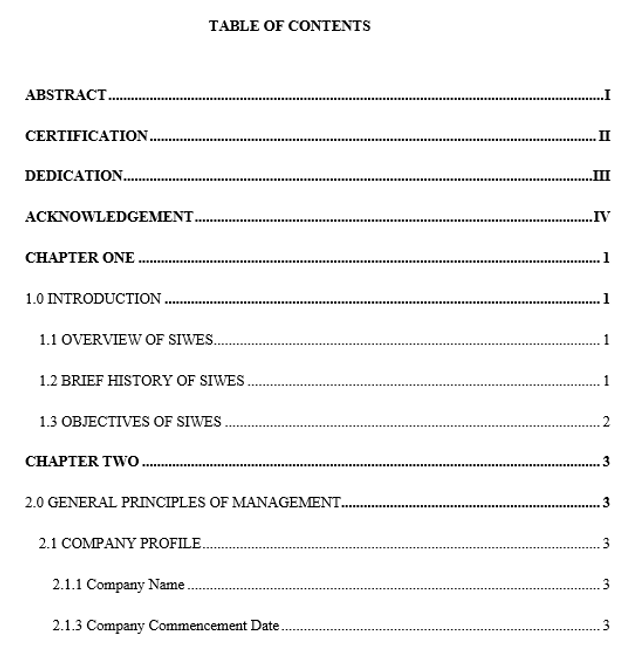
The abstract is one of the most important sections of your SIWES report. It is usually the first section examiners read, and in many cases, it determines their first impression of your entire work.
Unfortunately, many students either copy weak abstracts from the internet or write vague summaries that reduce their SIWES score.
This guide explains what a SIWES report abstract is, how to write it properly, what examiners expect, and provides clear sample abstracts you can adapt for your own report.
What Is a SIWES Report Abstract?
A SIWES report abstract is a short summary of your entire industrial training experience, written in one concise section.
It briefly explains:
- Where you carried out your SIWES
- The duration of the training
- The department or unit you worked in
- Key activities and tools used
- Major skills gained
- Challenges encountered, if any
The abstract allows examiners to quickly understand what your SIWES report contains without reading all chapters.
Why the SIWES Abstract Is Very Important
Many students underestimate this section, but supervisors pay close attention to it.
A good abstract:
- Shows clarity and professionalism
- Demonstrates that you actually understand your training
- Reflects the quality of the full report
- Can influence your overall SIWES score
A poorly written abstract can lower your marks even if the rest of the report is detailed.
When Should You Write Your SIWES Abstract?
You should always write the abstract last, after completing all chapters of the report.
This ensures that your abstract accurately summarizes:
- Chapter One introduction
- Chapter Two organization profile
- Chapter Three activities
- Chapter Four challenges
- Chapter Five conclusion
Writing it earlier often leads to missing or incorrect information.
Recommended Length of a SIWES Report Abstract
Most Nigerian universities and polytechnics accept:
- 150 to 250 words
- One paragraph or two short paragraphs
- No headings inside the abstract
- No references or citations
Always confirm your department’s guideline, but this range is widely accepted.
💡 You can also read: SIWES Report Format in Nigeria
Standard Structure of a Good SIWES Abstract
A strong SIWES abstract usually follows this logical flow:
- Brief introduction to SIWES and the training period
- Name and location of the organization
- Department or unit of training
- Key activities and tools used
- Skills gained and learning outcomes
- Challenges encountered or overall impact
If these elements are present, your abstract is complete.
How to Write a High Quality SIWES Abstract Step by Step
Step 1: Start With the Training Overview
Mention the SIWES program, duration, and institution requirement.
Example
This report summarizes the six month Student Industrial Work Experience Scheme carried out as part of the academic requirements for a degree in Computer Science.
Step 2: State the Organization and Location
Clearly mention where you did your training.
Example
The training was undertaken at XYZ Technologies Limited, Lagos State, Nigeria.
Step 3: Mention Your Department or Unit
Specify the unit you worked in and your role.
Example
During the training period, I was assigned to the Web Development Unit.
Step 4: Highlight Key Activities and Tools
Briefly list major tasks and tools without too much detail.
Example
I participated in website design, software testing, database management, and debugging using HTML, CSS, JavaScript, MySQL, and Git.
Step 5: State Skills Gained and Outcomes
Focus on both technical and professional skills.
Example
The training enhanced my technical competence, teamwork, communication, problem solving, and time management skills.
Step 6: Conclude With Impact or Challenges
End with overall benefits or notable challenges.
Example
Despite challenges such as tight deadlines and limited resources, the training provided valuable real world experience relevant to my field of study.
Common Mistakes Students Make in SIWES Abstracts
Avoid the following errors:
- Writing too long or too short
- Copying abstracts from ResearchGate or Scribd
- Using vague statements like “I learned a lot”
- Including chapter numbers or headings
- Adding references or citations
- Writing in future tense
Your abstract should be clear, specific, and professional.
💡 You can also read: How to Write SIWES Chapter One
Sample SIWES Report Abstracts You Can Adapt
Sample 1: Engineering Student
This report summarizes the six month Student Industrial Work Experience Scheme undertaken at Fortis Engineering Services Limited, an indigenous oil and gas servicing company with operations in Lagos and Warri. The training exposed me to research and development activities, technical report writing, field operations, and bid preparation processes within the Nigerian oil and gas industry. I gained practical experience in equipment handling, technical documentation, teamwork, and engineering project coordination. The SIWES program significantly improved my technical knowledge, professional skills, and understanding of real world engineering practices.
Sample 2: Computer Science Student
This report documents the three month Student Industrial Work Experience Scheme carried out at TwotenLabs Limited, Lagos, Nigeria, as part of the academic requirements for a degree in Computer Science. The training provided practical exposure to web and software development processes, including application design, coding, debugging, database management, and version control. Industry standard tools such as HTML, CSS, JavaScript, MySQL, and integrated development environments were used. The experience enhanced my technical competence, teamwork, communication, and problem solving skills.
Sample 3: ICT or IT Student
This technical report summarizes the Student Industrial Work Experience Scheme undertaken at XYZ Technologies Limited. During the training period, I worked in the ICT Unit where I assisted in system maintenance, network configuration, software installation, and user support services. The training improved my understanding of information technology operations, workplace ethics, and professional communication. The experience provided valuable practical knowledge that complements classroom learning.
Can I Copy a Sample Abstract and Submit It?
No.
You can adapt the structure, but your abstract must reflect:
- Your organization
- Your department
- Your actual tasks
- Your real skills
Supervisors can easily detect recycled abstracts.
👉 Read on: How to Write a SIWES Report in Nigeria
Final Tips for Writing an A Grade SIWES Abstract
- Write it last
- Keep it within 150 to 250 words
- Be specific about tasks and tools
- Use simple, clear English
- Avoid copying from online documents
A strong abstract sets the tone for your entire SIWES report.
💡 You can also read more: SIWES Guide for Nigerian Students
About the Author
Mohammad-Jamiu B. Balogun, GMNSE
AI Security Researcher · Founder, MonoEd Africa
Mohammad-Jamiu is a First-Class Telecommunications Engineer and Best Graduating Student (BUK), and an AI security researcher. He founded MonoEd Africa to give Nigerian students AI-powered academic tools — from SIWES logbooks to final year projects. His work has reached over 10,000 students across Nigeria.