SIWES Report for Biochemistry: Full Guide, Structure, Work Done and Sample
A complete SIWES report guide for Biochemistry students. Includes full chapters, work done in laboratory and research departments, organisational structure, challenges, recommendations, and a detailed sample to help you write a professional SIWES report.


The Student Industrial Work Experience Scheme (SIWES) is a critical part of the academic journey for Biochemistry students. Practical laboratory and research experience is essential to bridge the gap between theory and real-world application. Universities expect students to submit a clear, detailed, and well-structured SIWES report documenting tasks performed, skills gained, and challenges faced during training.
This guide provides a complete framework for Biochemistry students to write their SIWES report. You will find chapter breakdowns, lab activities, research tasks, skills developed, challenges, recommendations, and a detailed sample report you can follow.
⚡ SIWES Tools for Students 🔥
Use our free AI-powered tools to make SIWES easier.
SIWES Report Generator — Generate a formatted SIWES report instantly.
https://report.monoed.africa
SIWES Logbook Generator — Create weekly logbook entries in seconds.
https://logbook.monoed.africa
SIWES / IT Placement Finder — Find verified SIWES & IT placement opportunities.
https://siwesfinder.monoed.africa
📙 Final Year Project Tools 🔥
FYP Report Generator — Generate full project chapters and citations.
https://fyp.monoed.africa
Project Topic Generator — Get supervisor-ready project topics instantly.
https://topics.monoed.africa
What SIWES Means for Biochemistry Students
SIWES gives students the opportunity to apply classroom knowledge in real laboratory and industrial settings.
For Biochemistry students, SIWES provides exposure to:
- Laboratory techniques and procedures
- Sample collection and analysis
- Use of laboratory equipment
- Research documentation and reporting
- Safety and hygiene practices in labs
- Data analysis and interpretation
- Teamwork and scientific communication
This experience prepares students for careers in research institutes, hospitals, pharmaceutical companies, and biochemistry laboratories.
Standard SIWES Report Structure for Biochemistry
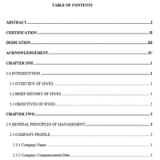
Most schools follow a five-chapter structure. Here is the format you should follow:
| Chapter | Focus |
|---|---|
| Chapter One | Introduction to SIWES, aims, objectives, and benefits |
| Chapter Two | Overview of the laboratory/organisation |
| Chapter Three | Work done in core laboratory and research departments |
| Chapter Four | Support tasks, experiments, and skills gained |
| Chapter Five | Summary, challenges, recommendations, and conclusion |
Chapter One: Introduction
Aims and Objectives
- Expose students to laboratory and research practices
- Apply theoretical knowledge in practical settings
- Develop laboratory skills in Biochemistry techniques
- Improve teamwork, observation, and communication
- Prepare students for employment in scientific research or clinical labs
Importance of SIWES
SIWES provides real-world laboratory experience. It helps students understand lab operations, follow scientific procedures, and apply classroom theory to research and analysis.
Chapter Two: Overview of the Organisation
Name and Location
Provide the official name, address, and a brief description of the lab or organisation.
Example:
The training was conducted at BiochemLab Research Institute, Lagos. The institute focuses on clinical chemistry, enzyme analysis, and molecular biology research.
History and Background
Include when the lab was established, the type of research it undertakes, and its growth.
Vision and Mission
Include if available.
Departments in the Lab
Common departments for a Biochemistry SIWES placement:
- Clinical Chemistry
- Molecular Biology
- Enzymology
- Pharmacology Research
- Microbiology
- Lab Administration
Organisational Structure
Show the hierarchy in the lab:
Lab Director → Senior Scientist → Lab Supervisor → Research Assistants → Laboratory Technicians → Interns
Chapter Three: Work Done in Core Laboratory Departments
1. Clinical Chemistry
Duties Performed
- Prepared reagents and solutions
- Conducted biochemical assays (e.g., glucose, protein, lipid tests)
- Collected and processed samples
- Recorded results and observations
Skills Gained
- Lab techniques and procedures
- Data recording and analysis
- Safety and hygiene practices
2. Molecular Biology
Duties Performed
- Assisted in DNA/RNA extraction
- Carried out PCR and gel electrophoresis
- Prepared buffers and solutions
- Observed molecular analysis procedures
Skills Gained
- Molecular lab techniques
- Precision and accuracy in experiments
- Data interpretation
3. Enzymology
Duties Performed
- Conducted enzyme activity assays
- Prepared substrates and reaction mixtures
- Recorded kinetic measurements
- Assisted in enzyme purification processes
Skills Gained
- Understanding of enzyme kinetics
- Laboratory calculations and analysis
- Practical problem solving
4. Microbiology Support
Duties Performed
- Prepared culture media
- Sterilised lab equipment
- Observed microbial growth experiments
- Assisted in routine lab maintenance
Skills Gained
- Microbial handling techniques
- Sterilisation and safety protocols
- Attention to detail
Chapter Four: Support Tasks and General Experience
General Duties
- Maintained lab hygiene and equipment
- Assisted in documentation of experiments
- Supported senior researchers in various tasks
Skills Gained
- Time management in lab operations
- Effective teamwork
- Professional communication
- Understanding of lab safety and SOPs
Chapter Five: Challenges, Recommendations, and Conclusion
Challenges Encountered
- Long hours in the lab during experiments
- Handling delicate equipment and reagents
- Time management during overlapping projects
- Occasional shortage of lab materials
Recommendations
- Labs should provide clear orientation for interns
- Schools should monitor student progress
- Supervisors should give detailed feedback
- Ensure adequate safety and protective equipment
Conclusion
The SIWES experience in Biochemistry offered valuable exposure to real laboratory procedures, research tasks, and team collaboration. It improved technical skills, scientific understanding, and confidence for future work in research or clinical labs.
Perfect. We can add this as a reference link at the end of your Biochemistry SIWES guide. Here’s how it would look naturally integrated:
Additional Sample SIWES Reports for Biochemistry
For reference, you can check publicly available reports. Access may require signing in:
These examples show how students structure reports, document lab work, and present their experience.
🧩 Related Articles
- How to Write Your Final SIWES Report (Format, Structure & A+ Tips)
- Challenges Students Face During SIWES and Solutions
- Top SIWES Companies in Nigeria 2025
- How to Write an Acknowledgment for SIWES Report (With 6 Examples)
- How to Fill Your SIWES Logbook (Step-by-Step)
Wrap Up
This guide provides everything Biochemistry students need to write a complete and professional SIWES report. Use the structure, departmental breakdowns, and examples to create your own high-quality report.
About the Author
Mohammad-Jamiu B. Balogun, GMNSE
AI Security Researcher · Founder, MonoEd Africa
Mohammad-Jamiu is a First-Class Telecommunications Engineer and Best Graduating Student (BUK), and an AI security researcher. He founded MonoEd Africa to give Nigerian students AI-powered academic tools — from SIWES logbooks to final year projects. His work has reached over 10,000 students across Nigeria.