SIWES Report for Microbiology Student in Nigeria (Full Hospital Laboratory Guide & Sample)
Complete SIWES report for microbiology students in Nigeria. Includes hospital laboratory sample, chapters, media preparation, biochemical tests, formatting guide, and FAQs.

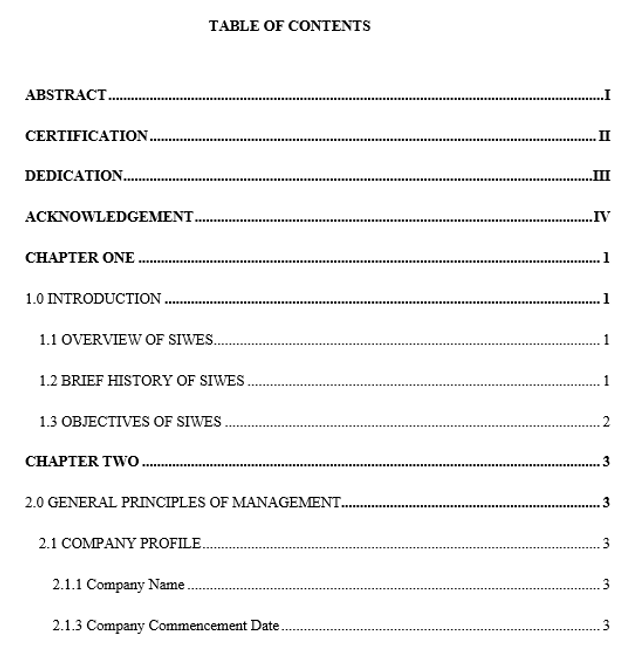
Student Industrial Work Experience Scheme is a compulsory academic requirement for microbiology students in Nigerian universities. If you are preparing your report after hospital or laboratory attachment, this guide will help you structure a complete, professional and well detailed SIWES report.
This article provides:
- Full SIWES report structure
- Hospital microbiology laboratory sample
- Media preparation and biochemical tests explanation
- Safety procedures
- Conclusion and recommendation sample
- Frequently asked questions
💡 You May Also Read on:
- SIWES Report Format in Nigeria: Complete Guide, Samples, Structure, and A Plus Writing Tips
- How to Write SIWES Chapter One: Full Guide, Structure, Format and A Grade Example
📥 Want the downloadable files? Get the full Microbiology SIWES report as a free Word and PDF filled sample you can edit, adapt, and submit.
Download Free Microbiology Report Template →
CHAPTER ONE
Introduction to SIWES
The Student Industrial Work Experience Scheme was established by the Industrial Training Fund to equip students with practical skills relevant to their course of study. The programme bridges the gap between classroom theory and real life professional practice.
For microbiology students, SIWES provides hands on experience in clinical laboratories, research institutes, pharmaceutical companies, and diagnostic centers.
Aims and Objectives of SIWES
- To expose students to practical laboratory techniques
- To familiarize students with diagnostic equipment
- To develop professional competence
- To bridge the gap between theory and practice
- To prepare students for employment
About the Training Centre (Hospital Laboratory Example)
A typical microbiology student may undergo SIWES training at:
- General Hospital Minna
- Specialist Hospital Sokoto
These hospitals have fully functional microbiology laboratories divided into units such as:
- Reception / Sample Collection
- Bacteriology Section
- Parasitology Section
- Serology Section
- Media Preparation Room
CHAPTER TWO
Safety Precautions in the Microbiology Laboratory
Safety is extremely important in microbiology because of exposure to infectious organisms.
Key safety measures include:
- Wearing laboratory coat, gloves, and face mask
- Proper hand washing before and after procedures
- Disinfecting work benches regularly
- Proper waste disposal
- Using biological safety cabinet for aerosol generating procedures
- Proper autoclaving of contaminated materials
Equipment Used in the Microbiology Laboratory
Common equipment include:
1. Microscope
Used for observing microorganisms under oil immersion lens.
2. Autoclave
Used for sterilizing media and instruments at 121°C for 15 minutes.
3. Incubator
Maintains optimal temperature of 35–37°C for microbial growth.
4. Centrifuge
Used for spinning blood and urine samples to separate components.
5. Refrigerator
Used for preserving reagents and test kits.
6. Bunsen Burner
Used for sterilization by flaming.
CHAPTER THREE
Media Preparation (Media Kitchen Section)
Media preparation is one of the most important aspects of microbiology laboratory training.
1. Nutrient Agar
General purpose medium used for culture and sensitivity testing.
Preparation example:
28g dissolved in 1000ml distilled water, sterilized at 121°C for 15 minutes.
2. MacConkey Agar
Selective and differential medium for Gram negative bacteria.
3. Blood Agar
Enrichment medium used to detect hemolytic organisms.
4. Chocolate Agar
Used for fastidious organisms.
5. CLED Agar
Used mainly for urinary tract pathogens.
CHAPTER FOUR
Biochemical and Diagnostic Tests Performed
1. Gram Staining
Used to differentiate bacteria into:
- Gram positive (purple)
- Gram negative (pink)
Procedure involves crystal violet, iodine, alcohol decolorization and safranin counterstain.
2. Antimicrobial Sensitivity Test
Determines which antibiotic inhibits bacterial growth.
Clear zones around antibiotic discs indicate sensitivity.
3. Urine Microscopy, Culture and Sensitivity
Common organisms identified include:
- Staphylococcus spp
- Klebsiella spp
- Pseudomonas aeruginosa
- Escherichia coli
Urine is centrifuged, examined microscopically, then cultured if necessary.
4. Stool Analysis
Used to detect:
- Ova
- Cysts
- Trophozoites
- Bacterial pathogens
5. Malaria Parasite Test
Used to detect Plasmodium species using rapid test kits or microscopy.
6. VDRL Test
Used to screen for syphilis.
7. Widal Test
Used for detecting antibodies against Salmonella species causing typhoid fever.
8. Blood Culture
Blood is incubated in enrichment broth and sub cultured after growth to identify pathogens.
CHAPTER FIVE
Experience Gained During SIWES
During the industrial training, the following were gained:
- Practical knowledge of laboratory procedures
- Experience in handling diagnostic equipment
- Understanding of microbial identification
- Proper aseptic techniques
- Confidence in performing biochemical tests
Summary
The SIWES programme provided practical exposure in clinical microbiology, including sample collection, media preparation, staining techniques, culture methods and diagnostic testing.
The training enhanced understanding of how microorganisms are isolated, identified and managed in hospital settings.
Conclusion
Industrial training is essential for microbiology students as it transforms theoretical knowledge into practical competence. Exposure to real clinical samples, equipment and diagnostic procedures prepares students for future careers in medical laboratories, research institutions and pharmaceutical industries.
Recommendation
- Institutions should ensure students are posted to well equipped laboratories.
- Laboratories should provide structured supervision.
- More modern diagnostic tools should be introduced in training centers.
FAQs
1. How many chapters should a microbiology SIWES report have?
Typically five chapters: Introduction, Organization Overview, Laboratory Safety & Equipment, Tests Performed, Summary & Conclusion.
2. How long should the report be?
Usually between 25–40 pages depending on your institution requirement.
3. Is hospital attachment good for microbiology SIWES?
Yes. Hospital laboratories provide practical exposure in bacteriology, parasitology and serology.
4. Can I include pictures in my SIWES report?
Yes, if your school permits it. Proper labeling is important.
5. What is the most important section?
Chapter Four which contains laboratory tests and procedures performed.
About the Author
Mohammad-Jamiu B. Balogun, GMNSE
AI Security Researcher · Founder, MonoEd Africa
Mohammad-Jamiu is a First-Class Telecommunications Engineer and Best Graduating Student (BUK), and an AI security researcher. He founded MonoEd Africa to give Nigerian students AI-powered academic tools — from SIWES logbooks to final year projects. His work has reached over 10,000 students across Nigeria.