The Ultimate Guide to SIWES in Nigeria: Everything You Need to Know
The complete guide to SIWES in Nigeria. Learn the purpose, duration, payment, eligible courses, and how to fill your SIWES logbook and report. Includes tools to save time with logbook entries and report writing.

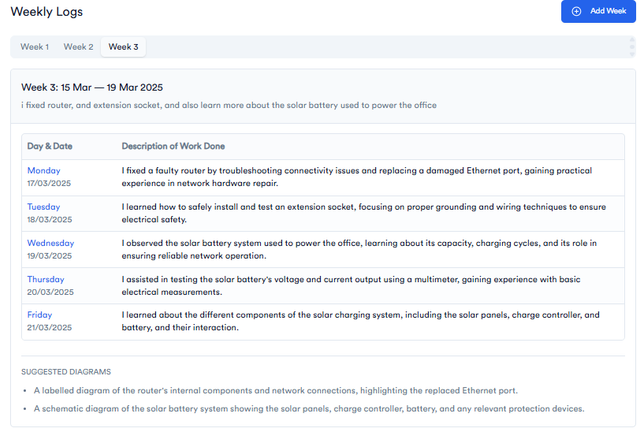
The Students Industrial Work Experience Scheme (SIWES) is a mandatory program designed to give Nigerian students in tertiary institutions practical, hands-on experience in their field of study. It acts as the bridge between classroom knowledge and the practical skills required in a professional environment.
This guide explains the purpose of SIWES, how long it lasts, whether students are paid, and how to succeed in both your logbook and final report. It also introduces a tool that can save you hours of stress when writing your SIWES logbook and report.
Purpose of SIWES
SIWES was established in 1973 by the Industrial Training Fund (ITF) after Nigerian employers raised concerns that graduates lacked practical skills. To learn more about the history behind the scheme, read our guide on The History of SIWES in Nigeria.
The scheme helps students acquire practical skills, gain industry exposure, and enhance employability. You can get a detailed breakdown in our article on the Aims and Objectives of SIWES.
The scheme helps students:
- Acquire Practical Skills: Apply classroom knowledge to real work problems.
- Gain Industry Exposure: Learn professional ethics, workplace techniques, and the use of modern equipment.
- Enhance Employability: Build networks and strengthen your CV with relevant industry experience.
Duration of SIWES
The length of SIWES depends on your institution and course of study:
- Universities: Six months (24 weeks). Some universities, such as Bayero University Kano (BUK), split it into two phases — 3 months and 6 months — making a total of nine months.
- Polytechnics and Colleges of Education: Four months (16 weeks).
Most students go for SIWES after their 300 or 400 level, depending on the course.
Do SIWES Students Get Paid?
Yes, but payment is not always straightforward.
- ITF Stipend: The ITF pays students who complete SIWES and submit the required documents (logbook, ITF forms, bank details). The stipend is about ₦15,000.
- Company Allowance: Some host companies pay their own allowance, usually monthly. These are often higher and more reliable than ITF payments.
The reality: Many students face delays in receiving their ITF stipend. Some get it months or years after SIWES, and some never do. This makes company allowances or family support the main source of income during training.
Is SIWES the Same as an Internship?
Yes, SIWES is essentially a structured internship. The difference is that it is compulsory, supervised by both your school and ITF, and carries credit units needed for graduation.
Who Must Do SIWES?
SIWES is compulsory for students in fields that require technical or practical training. To help you find a placement, check out our comprehensive list of Top SIWES Companies in Nigeria 2025. Without completing SIWES, students in these courses cannot graduate.
- Engineering and Technology (Civil, Mechanical, Electrical, Computer, etc.)
- Natural and Applied Sciences (Biology, Chemistry, Physics, Computer Science)
- Environmental Sciences (Architecture, Urban Planning, Estate Management)
- Agriculture (Animal Science, Agricultural Economics, Crop Science)
- Medical Sciences (Pharmacy, Medical Laboratory Science)
- Vocational and Technical Education
Without completing SIWES, students in these courses cannot graduate.
💡 Need help finding a verified SIWES placement in your field and preferred state? Check out SIWES Finder to browse organizations, filter by course or location, and bookmark companies you plan to apply to.
Essential SIWES Documents and How They Are Used
Before Training Starts
Letter to the Employer or Placement Letter
A formal letter from your institution that introduces you to a company and confirms your eligibility.
You use this letter to secure a placement.
The company should reply with an Acceptance Letter which you return to your school before training begins.
Within the First Two Weeks of Training
Submit your initial documents within the first two weeks of starting SIWES.
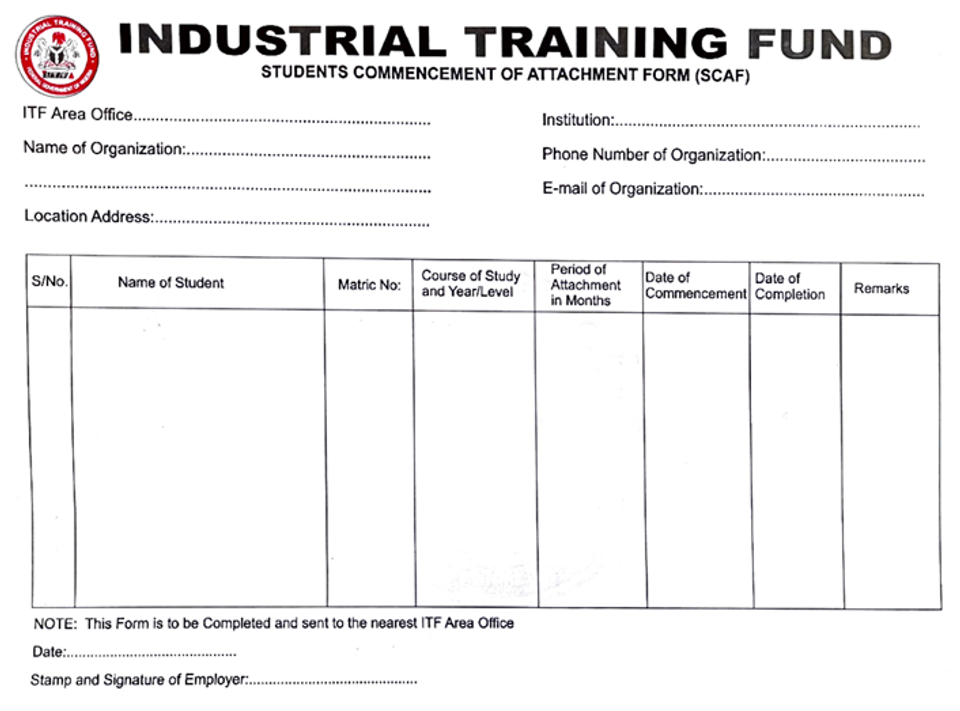
SPE 1 Form or SCAF
This confirms your commencement of attachment. Submit it to the nearest ITF office.
It contains your correct location and contact details and is required for stipend processing and monitoring.
Assumption of Duty Form or Job Reporting Form
This goes to your institution. It helps your school plan supervisor visits.
List of ITF Area Offices
Used to locate the correct ITF office for form submission.
Throughout the Training
SIWES Logbook
Your daily training diary.
Record your activities weekly and ensure your supervisor signs and stamps your entries.
Your logbook is checked during supervisor visits and is part of your grade.
At the End of Training
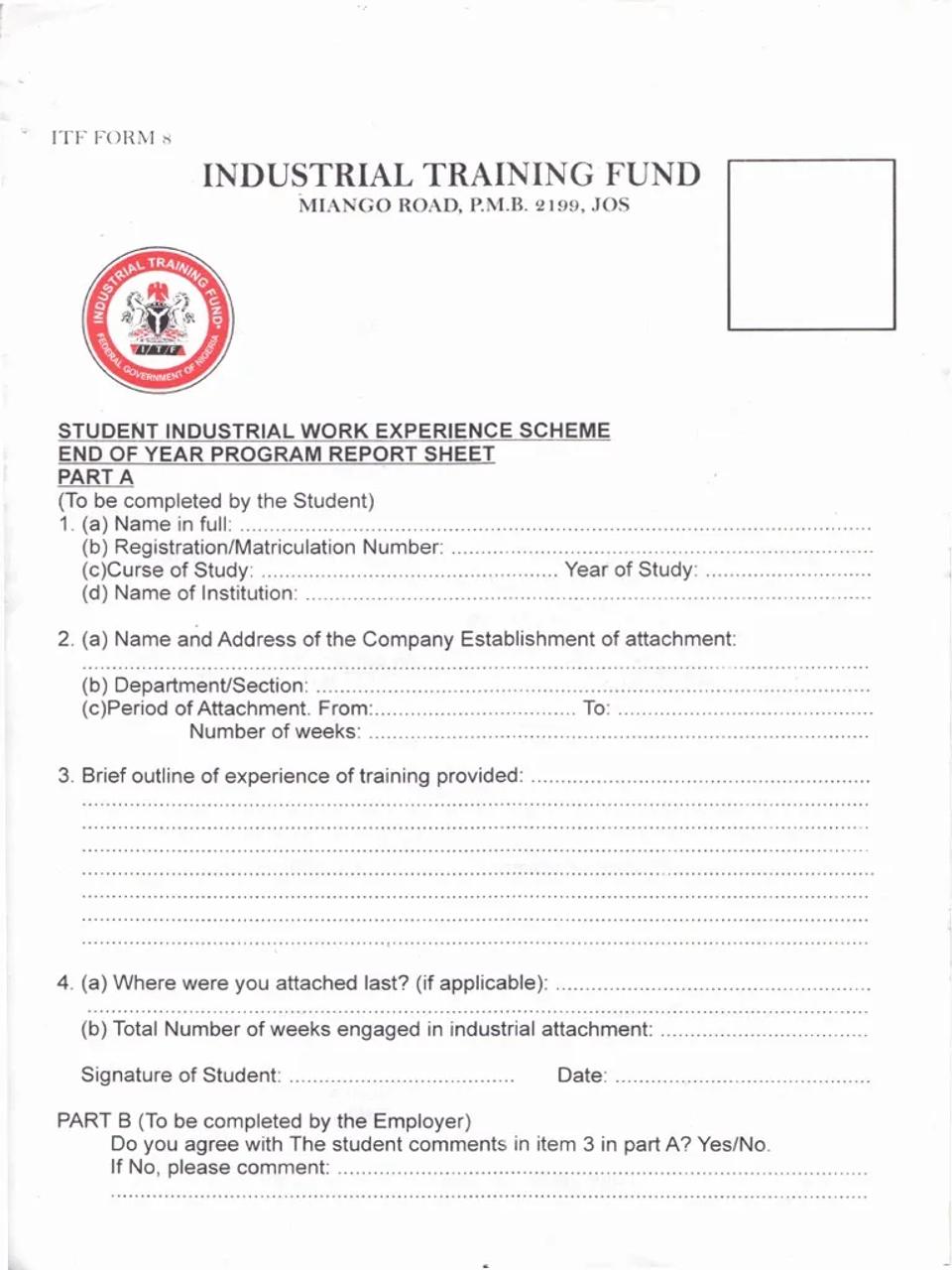
ITF Form 8
The employer evaluates your performance at the end of the training.
This form is submitted to your institution, not directly to the ITF.
Logbook and Technical Report
Submit both to your school for assessment.
Some institutions require a defense or oral presentation.
How to Fill Your SIWES Logbook Properly
Your logbook is not just paperwork — it determines your grade. Here’s how to handle it:
- Record daily activities. Note what you did each day, even if it seems small.
- Be specific. Instead of “helped in the office,” write “configured desktop systems with Windows 10 and installed antivirus software.”
- Link to your course. Show how the task connects to what you’ve studied.
- Get weekly signatures. Always get your supervisor’s endorsement; without it, your logbook is invalid.
- Maintain professionalism. Use clear grammar and avoid slang.
For a complete, step-by-step guide on how to fill your logbook with practical examples, read our article: How to Fill Your SIWES Logbook Properly for a Good Grade. We also have specialized guides for different fields:
- First Week of Training
- Computer Science Students
- Engineering Students
- Mass Communication Students
- SLT Students
Common Mistakes Students Make
- Writing all entries at once instead of daily.
- Copying a friend’s logbook (supervisors can easily detect this).
- Skipping weekly endorsements.
- Using vague notes like “learned many things.”
- Leaving out the names of tools, software, or machines used.
The Stress of Writing a Logbook
For many students, filling the logbook daily is stressful. Some procrastinate and rush to complete it at the end of SIWES, which leads to poor entries, mistakes, or even a bad grade. Writing the final report can also feel confusing if your logbook is not well-kept.
That’s why we created a tool to make the process easier.
Save Time with the SIWES Logbook and Report Generator
Our tool doesn’t just spit out random entries—you provide the real information, and it organizes it into proper daily logs.
How it works:
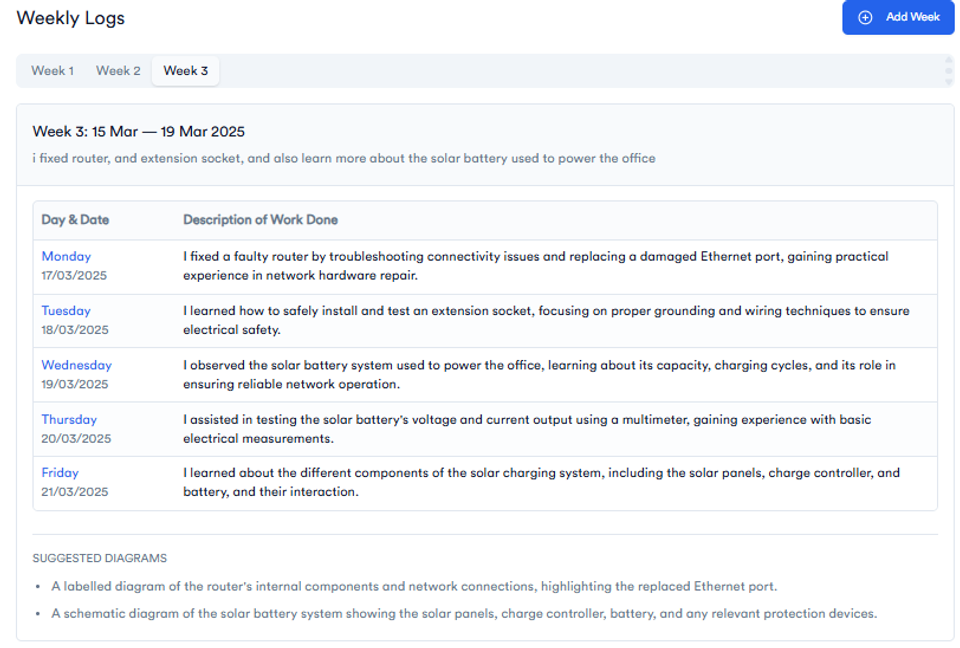
- Write a short weekly summary of your tasks (e.g., “This week I troubleshooted network issues, installed Windows software, and configured printers.”).
- The generator expands it into professional daily entries (Mon–Fri), making each day unique but still based on your actual work.
- Copy into your logbook—accurate, consistent, and easy to maintain.
Why Students Love It
✅ Saves hours of manual writing
✅ Entries stay true to your real tasks
✅ Professional, specific wording that impresses supervisors
✅ Consistency—no more bulk-filling at the deadline
When training ends, the Report Generator works the same way: you provide your company details and training summary, and it creates a polished draft you can edit into your final report.
👉 Try it free: logbook.monoed.africa | report.monoed.africa
Ready to start your SIWES journey? Find verified placements, bookmark organizations, and access full company contacts with SIWES Finder. Combine this with our Logbook and Report Generators to make your SIWES experience seamless.
FAQs for SIWES
1. What is SIWES in Nigeria?
The Students Industrial Work Experience Scheme (SIWES) is a mandatory program for Nigerian tertiary students designed to provide practical industry experience before graduation. It bridges the gap between classroom knowledge and workplace skills.
2. How long does SIWES last?
In universities, SIWES usually lasts six months (24 weeks). In polytechnics and colleges of education, it lasts four months (16 weeks). Some courses, like engineering, may extend the duration.
3. Do SIWES students get paid?
Yes. The Industrial Training Fund (ITF) pays a stipend (around ₦15,000) to eligible students. Some companies also pay allowances, which may be higher and more reliable than ITF payments. However, many students experience delays in receiving the ITF stipend.
4. Is SIWES compulsory for all students?
No. It is compulsory only for courses that require technical or practical training, such as Engineering, Sciences, Agriculture, Medical Sciences, and Vocational/Technical Education. Students in these fields cannot graduate without completing SIWES.
5. How do I fill my SIWES logbook?
Students must record daily activities, link them to their course of study, and get weekly signatures from their supervisors. Entries should be specific, professional, and detailed (e.g., stating tools or equipment used).
6. What are common mistakes in SIWES logbooks?
Common errors include writing all entries at once, copying from friends, vague entries like “helped in the office,” using shorthand, or forgetting supervisor endorsements.
7. Is there a tool to help with SIWES logbook writing?
Yes. The SIWES Logbook Generator allows students to enter a weekly summary, which is automatically converted into professional daily entries. There’s also a Report Generator that creates a ready-to-edit SIWES report draft.
About the Author
Mohammad-Jamiu B. Balogun, GMNSE
AI Security Researcher · Founder, MonoEd Africa
Mohammad-Jamiu is a First-Class Telecommunications Engineer and Best Graduating Student (BUK), and an AI security researcher. He founded MonoEd Africa to give Nigerian students AI-powered academic tools — from SIWES logbooks to final year projects. His work has reached over 10,000 students across Nigeria.